Halibut with Lemon Braised Vegetables

Updated Dec 16, 2025
This Post May Contain Affiliate Links. Please Read My Disclosure
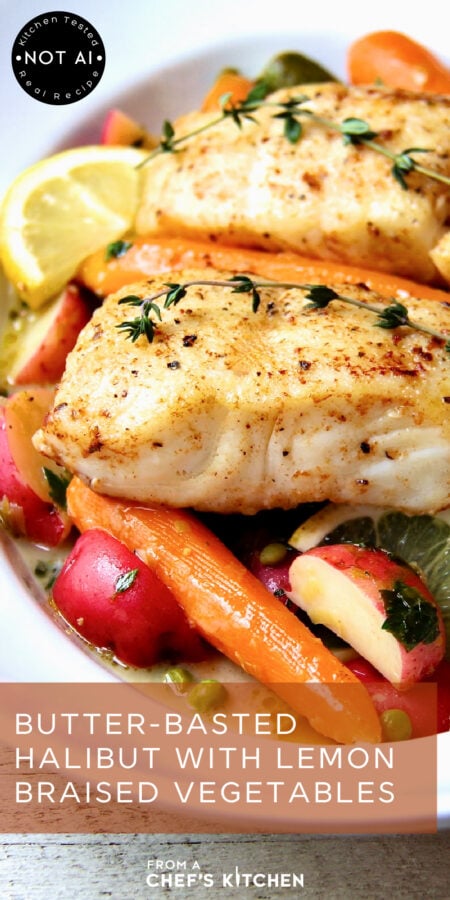
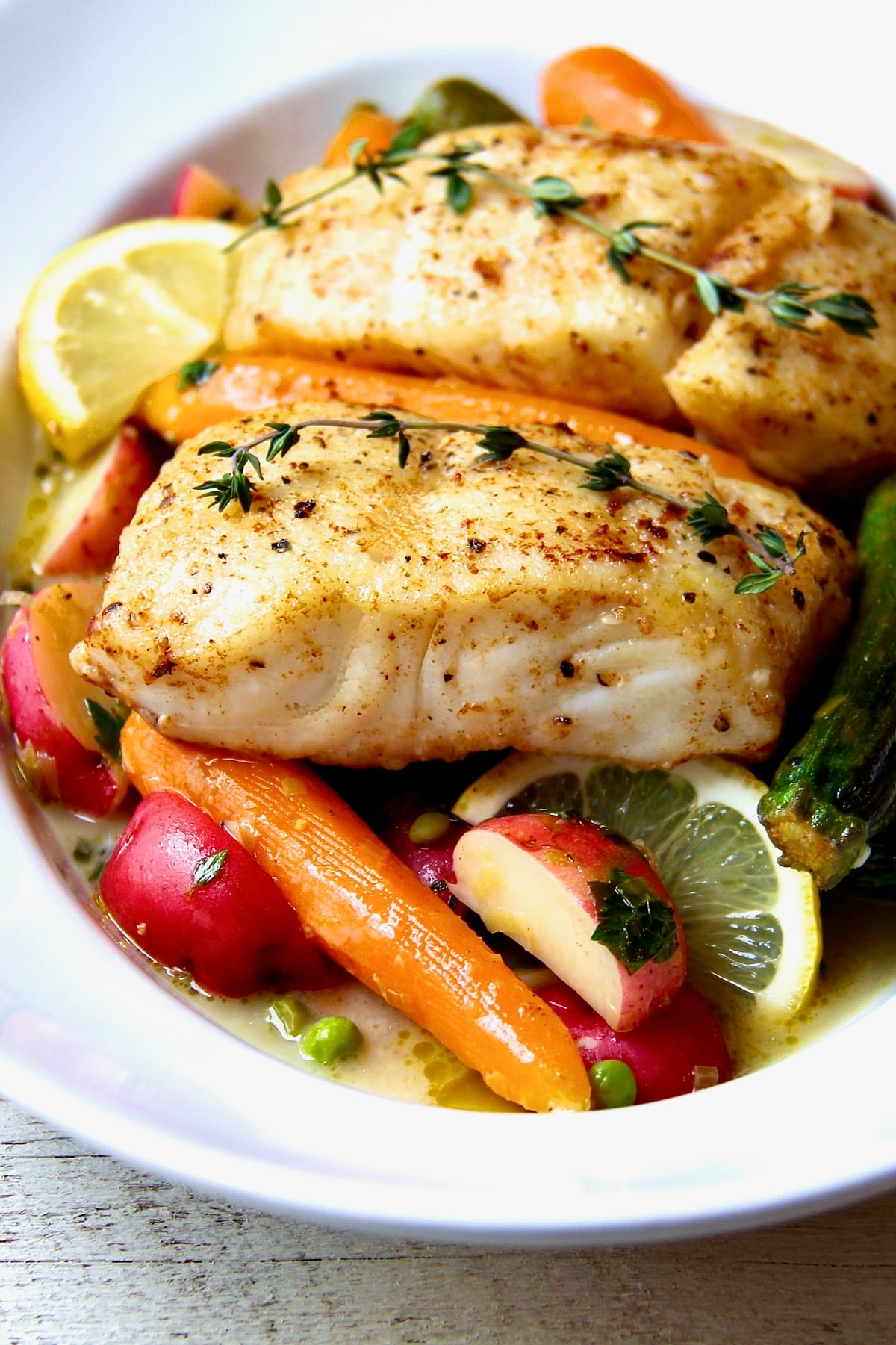
Delicate, flaky halibut doesn’t need much to shine when it has the right supporting cast. In this restaurant-style dish, it’s butter-basted and paired with baby vegetables braised with lemon for a bright contrast. It’s elegant yet unfussy for an exceptional spring dinner for two!


CHEF Tips AND TRICKS:
- When buying, look for Pacific or Alaskan halibut. It’s carefully regulated and one of the most sustainable seafood choices available. The halibut season runs from mid-March to November.
- Halibut is on the pricey side, so feel free to substitute another mild white fish, such as cod, for this dish.
MORE halibut recipes TO EXPLORE:
- Blackened Halibut with Mango and Avocado Salsa
- Prosciutto-Wrapped Halibut with Herb Caper Butter
- Halibut Ceviche
Get all my fish recipes at Fish and Seafood Recipes – From A Chef’s Kitchen.
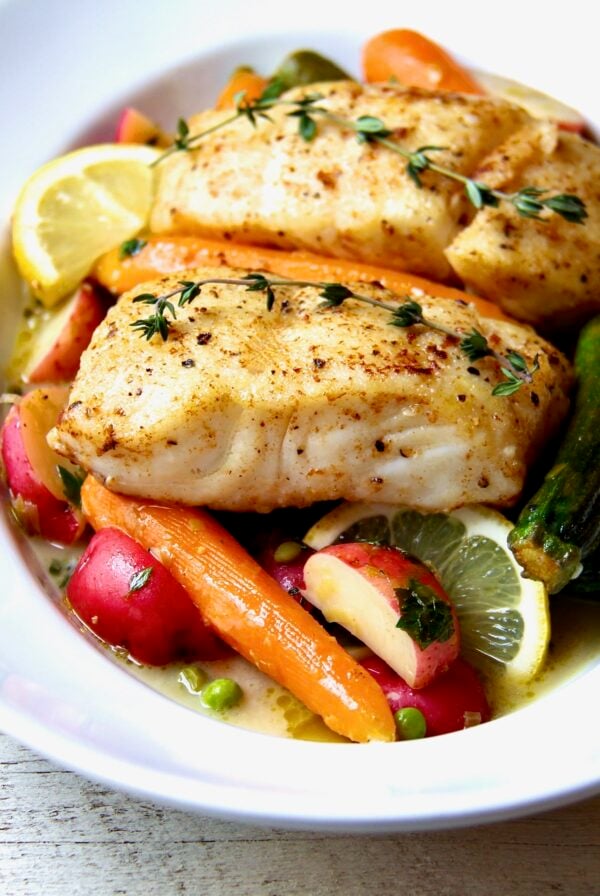
Halibut with Lemon Braised Vegetables
Delicate, flaky halibut doesn’t need much to shine when it has the right supporting cast. In this restaurant-style dish, it's butter-basted and paired with baby vegetables braised with lemon for a bright contrast. It's elegant yet unfussy for an exceptional spring dinner for two!
Ingredients
- 2 cups chicken broth
- 1/2 cup water
- 1 large lemon, juiced (about 2 tablespoons) plus lemon slices for garnish
- 2 scallions, white and light green part only, chopped
- 8 baby carrots
- 6 baby red potatoes, quartered
- 10 baby zucchini
- 1 clove garlic, minced
- 1 tablespoon fresh thyme leaves, plus sprigs for garnish
- 1 handful Italian parsley leaves, about 1/2 cup loosely packed, rough chopped
- 1/2 cup peas, fresh or thawed if frozen
- Salt and freshly ground black pepper, to taste
- 2 fillets (8-ounce) halibut fillets, skin removed
- 1 tablespoon olive oil
- 3 tablespoons butter, softened
Instructions
- Combine broth and water in a shallow saucepan and bring to a simmer over medium heat.
- Add lemon juice, scallion and carrots.
- Reduce heat to low, cover slightly and cook carrots 8 to 10 minutes or until you can just barely pierce the carrots.
- Add potatoes, cover slightly and cook 8 to 10 minutes or until potatoes are almost tender.
- Add zucchini and garlic. Cover slightly and cook 6 to 8 minutes or until zucchini is crisp-tender. Stir in thyme, parsley and peas. Season to taste with salt and black pepper. Keep warm.
- Generously season halibut on both sides with salt and black pepper.
- Heat olive oil in a nonstick skillet over medium-high heat.
- Brown the halibut fillets for 2 to 3 minutes per side.
- Add the butter to the pan and when the butter melts, tilt the skillet toward you to pool the butter.
- With a large soup spoon, begin basting the fish constantly with the bubbling butter for 5 to 6 minutes, returning the pan to a level position over the heat several times to keep the pan evenly hot.
- Let rest for 1 to 2 minutes for carry-over cooking to finish cooking the fish. The fish is cooked through when firm to the touch and easily flakes with a fork. (Exceptionally thick pieces may need a bit of time in a 400-degree oven.)
- Serve over braised vegetables and drizzle with butter from pan if desired.
Notes
SUBSTITUTIONS:
- Almost any type of thick fish fillets will work in addition to salmon. Try cod, Chilean sea bass, grouper, or mahi mahi.
- When buying, look for Pacific or Alaskan halibut. It’s carefully regulated and one of the most sustainable seafood choices available.
- Halibut is on the pricey side, so feel free to substitute another mild white fish, such as cod, for this dish.
- Cook the potatoes 1 day ahead of time and refrigerate.
Nutrition
Serving: 2Calories: 493kcalCarbohydrates: 78gProtein: 35gFat: 13gSaturated Fat: 2gPolyunsaturated Fat: 3gMonounsaturated Fat: 6gCholesterol: 3mgSodium: 965mgPotassium: 5758mgFiber: 20gSugar: 8gVitamin A: 11108IUVitamin C: 439mgCalcium: 332mgIron: 12mg
Nutritional values are automatically calculated using unbranded products and are estimates only. Actual results may vary based on ingredients used and portion sizes. Adjust as needed for dietary restrictions, allergies, or health concerns.
 Like this? Leave a comment below!


Was the liquid supposed to evaporate/soak into the vegetables or should there be a lot left? It’s really good!!
Hi, Laurie, It shouldn’t be dry (evaporated) or terribly soupy–just a nice amount of liquid left. Although there’s some butter involved, it’s a lighter dish. How did it turn out for you? And by the way… thank you!