Korean Chicken Thighs

This Post May Contain Affiliate Links. Please Read My Disclosure

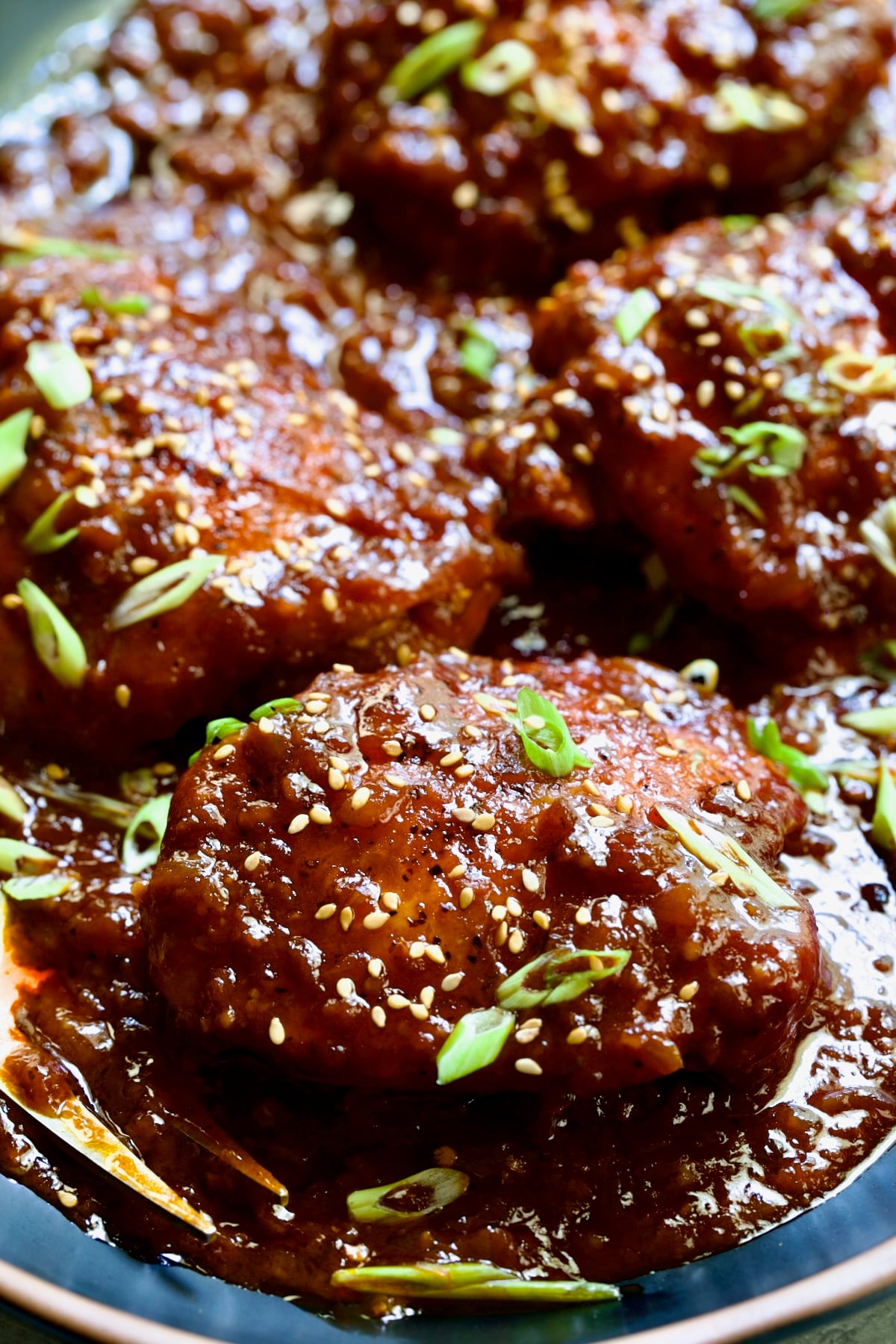
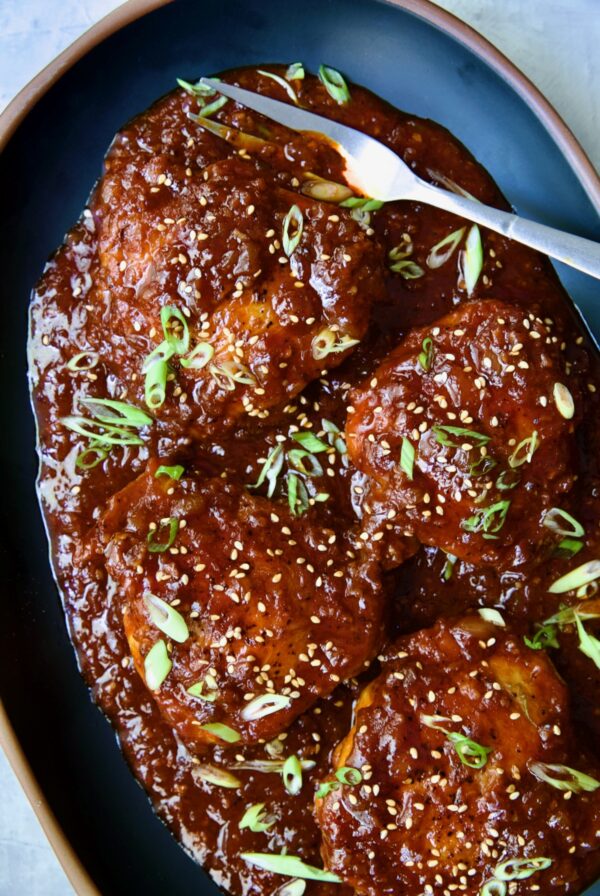
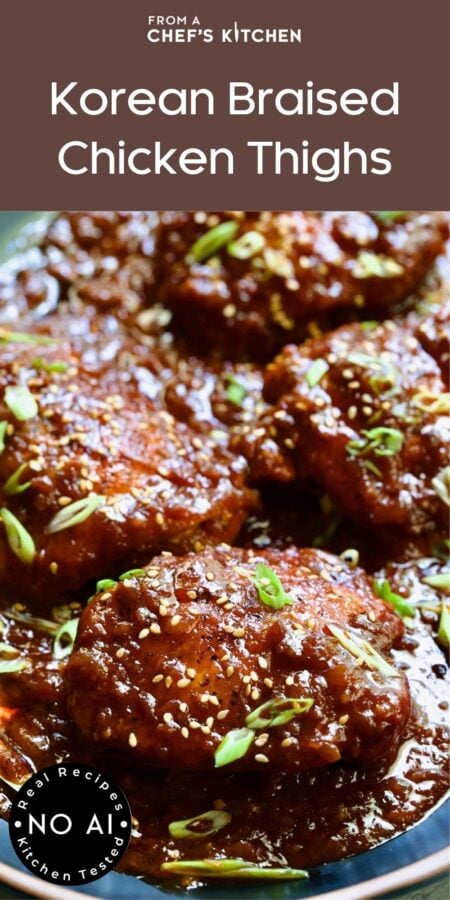
These Korean Chicken Thighs are savory, spicy, a little sweet, and packed with bold flavor! Gochujang, soy sauce, garlic, ginger, and sesame create a rich sauce that coats tender, juicy chicken thighs in every bite. Best of all, it comes together in one skillet in about an hour for an easy weeknight dinner that’s anything but ordinary. For something cool and crisp alongside the rich gochujang sauce, add my Spicy Asian Cucumber Salad.
“This was FABULOUS!!!! Going to make it again very soon… The sauce is soooooo good.” — Becky C.
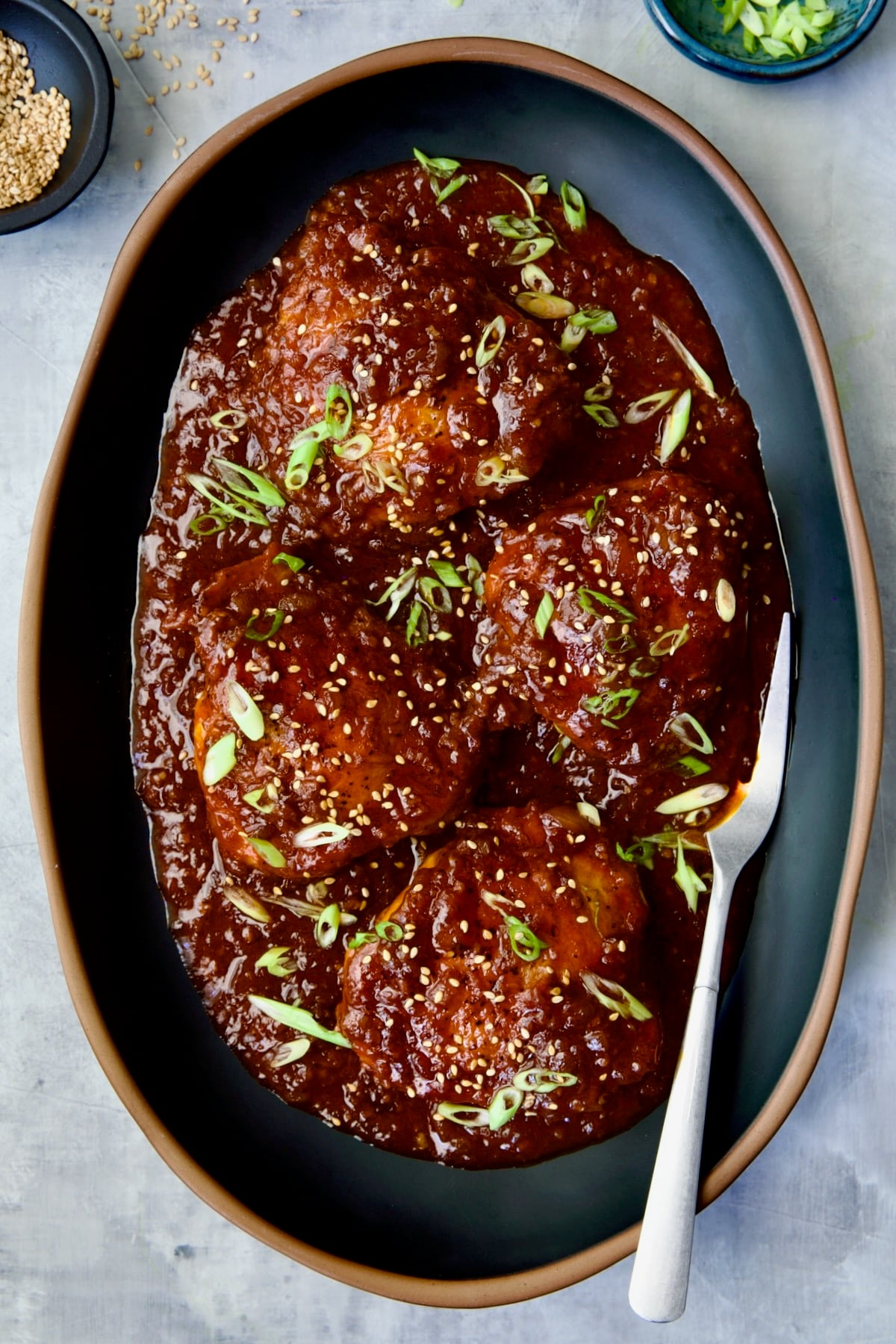
QUICK TAKE: Korean Chicken Thighs
- What It Is: Chicken thighs are braised in a bold Korean gochujang sauce with the perfect balance of savory, spicy, and sweet flavors.
- Ingredient Highlights: Bone-in chicken thighs, gochujang, soy sauce, and ginger.
- Time to Make: 15 minutes prep, 45 minutes cooking time, for 1 hour total.
- Chef’s Top Tip: Braise until truly tender. Bone-in thighs are forgiving and benefit from enough time for the connective tissue to break down, but boiling can toughen them.
- Why Make THIS Version? My Korean Chicken Thighs are seared for deep flavor, then gently braised in a gochujang sauce that strikes just the right balance of spicy, savory, subtly sweet, and umami-rich.
Table of Contents
Why This Korean Chicken Thighs Recipe is a Keeper!
Ever since publishing my Korean Short Ribs recipe, I’ve been crazy about the umami-rich flavors of Korean cuisine. Ginger, garlic, soy sauce, brown sugar, and gochujang come together in a bold balance of flavors, and a slow braise makes those short ribs fall-off-the-bone tender.
With my Korean Chicken Thighs, you get those same bold, savory-sweet flavors and tender, juicy meat in a fraction of the time. A quick sear, followed by a gentle stovetop braise, yields juicy, tender chicken thighs blanketed in a bold sauce.
This Korean Chicken Thighs recipe is:
- One-pan simplicity! Everything comes together in one skillet for easy cleanup.
- Weeknight-friendly! Straightforward ingredients and technique make this an approachable dinner that’s also perfect for casual entertaining.
- Great for meal prep! Chicken thighs reheat very well, so make a batch ahead, then reheat and serve with rice and vegetables for an easy weeknight dinner.
- Easy to customize! Adjust the gochujang to make it milder or turn up the heat. You can also adapt the recipe to boneless skinless chicken thighs, chicken breast halves, or drumsticks.
If you love Korean food but don’t have hours for a traditional slow braise, these Korean Braised Chicken Thighs are a delicious way to get dinner on the table faster. If you love this method, my Chicken Thigh Curry uses the same sear-and-braise technique with warm, Indian-inspired flavors.
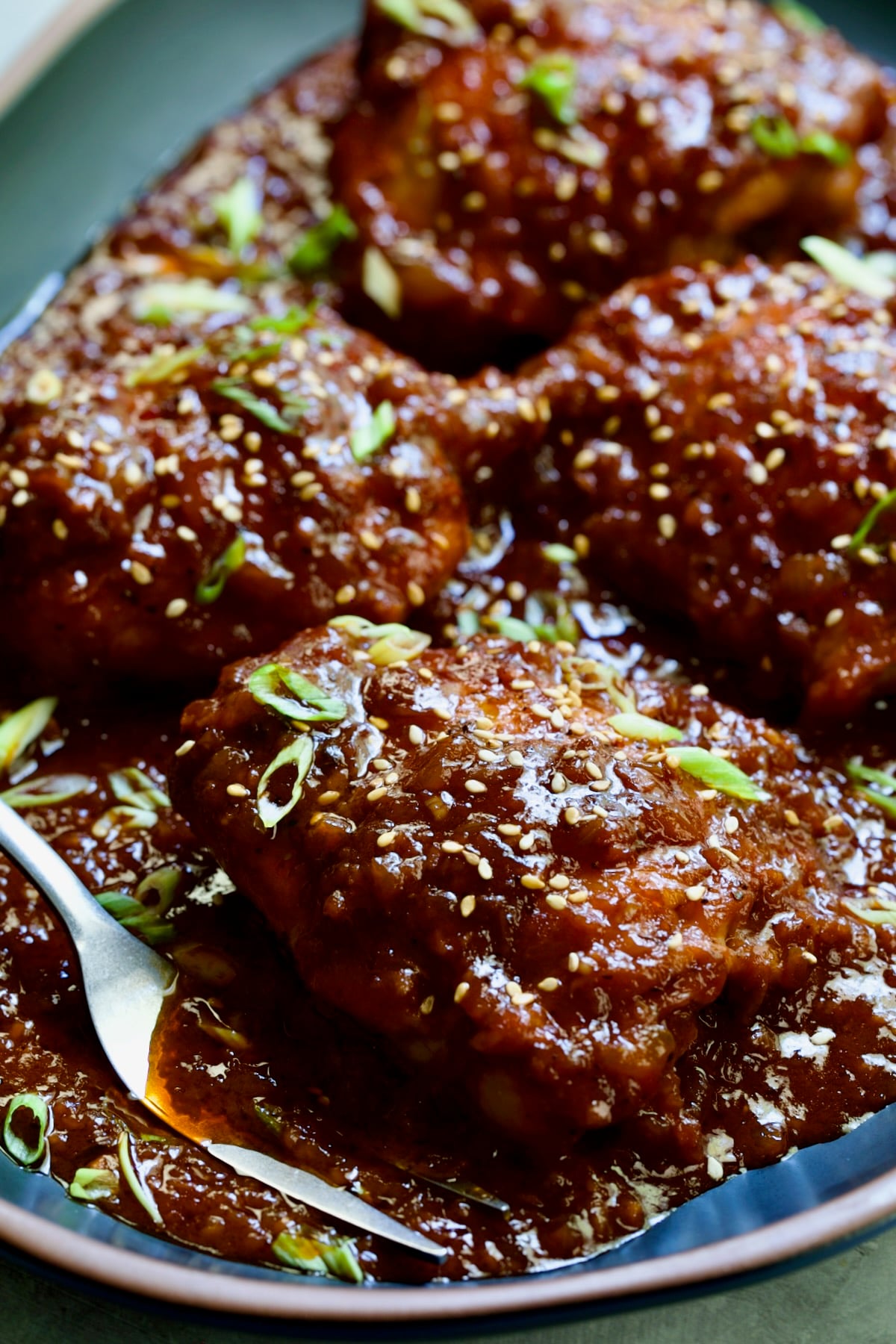
How to Make Korean Chicken Thighs:
Recipe Ingredients:
Here’s everything you’ll need to make this Korean Chicken Thighs recipe. The exact quantities are on the recipe card below.
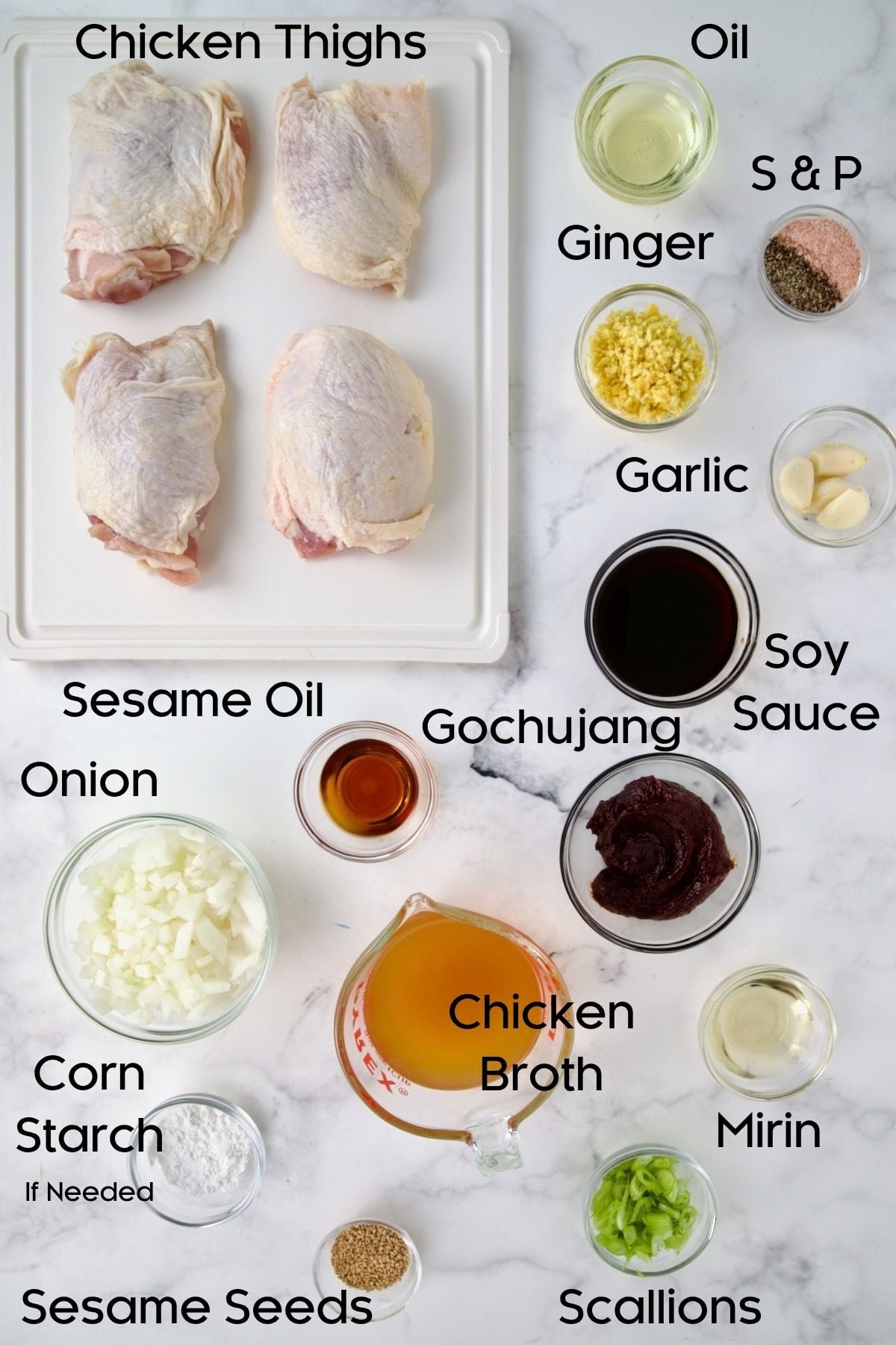
Ingredient Notes and Substitutions:
- Chicken Thighs: Bone-in, skin-on chicken thighs are ideal for braising because they stay juicy and flavorful after longer cooking. Look for thighs that are fairly uniform in size so they cook evenly. Boneless thighs, chicken breast halves, or drumsticks will also work; adjust the cooking time as needed.
- Ginger: For the best flavor, use fresh ginger rather than ground ginger or any processed paste; peel and finely mince or grate it before adding.
- Soy Sauce: I prefer to always use low- or reduced-sodium soy sauce because it gives me better control over the salt level without sacrificing savory, umami flavor. You can substitute tamari (regular or wheat-free) or coconut aminos. I like Kikkoman the best, and it’s available at any grocery store.
- Gochujang: Gochujang is a fermented red chile paste with a complex combination of spicy, savory, slightly sweet, and umami-rich flavor. Heat levels vary by brand, so adjust the amount to your taste and tolerance. Look for a Korean brand in the Asian foods section of most well-stocked grocery stores, at an Asian market, or online. I always keep it on hand for Korean-inspired dishes, including my Gochujang Eggplant and Gochujang Brussels Sprouts.
- Sesame Oil: Adds a light nutty flavor that complements the other ingredients. Use toasted sesame oil for its deeper flavor rather than sesame cooking oil; a little goes a long way.
- Mirin: A sweet Japanese rice wine that adds subtle sweetness and helps balance the sauce’s salty, spicy, and savory flavors. Kikkoman is available in most grocery stores and Asian markets. It does contain alcohol, so if you prefer not to use it, substitute 1 tablespoon brown sugar and 1 tablespoon water or broth.
Step-By-Step Instructions:
- Gather and prep all the ingredients.
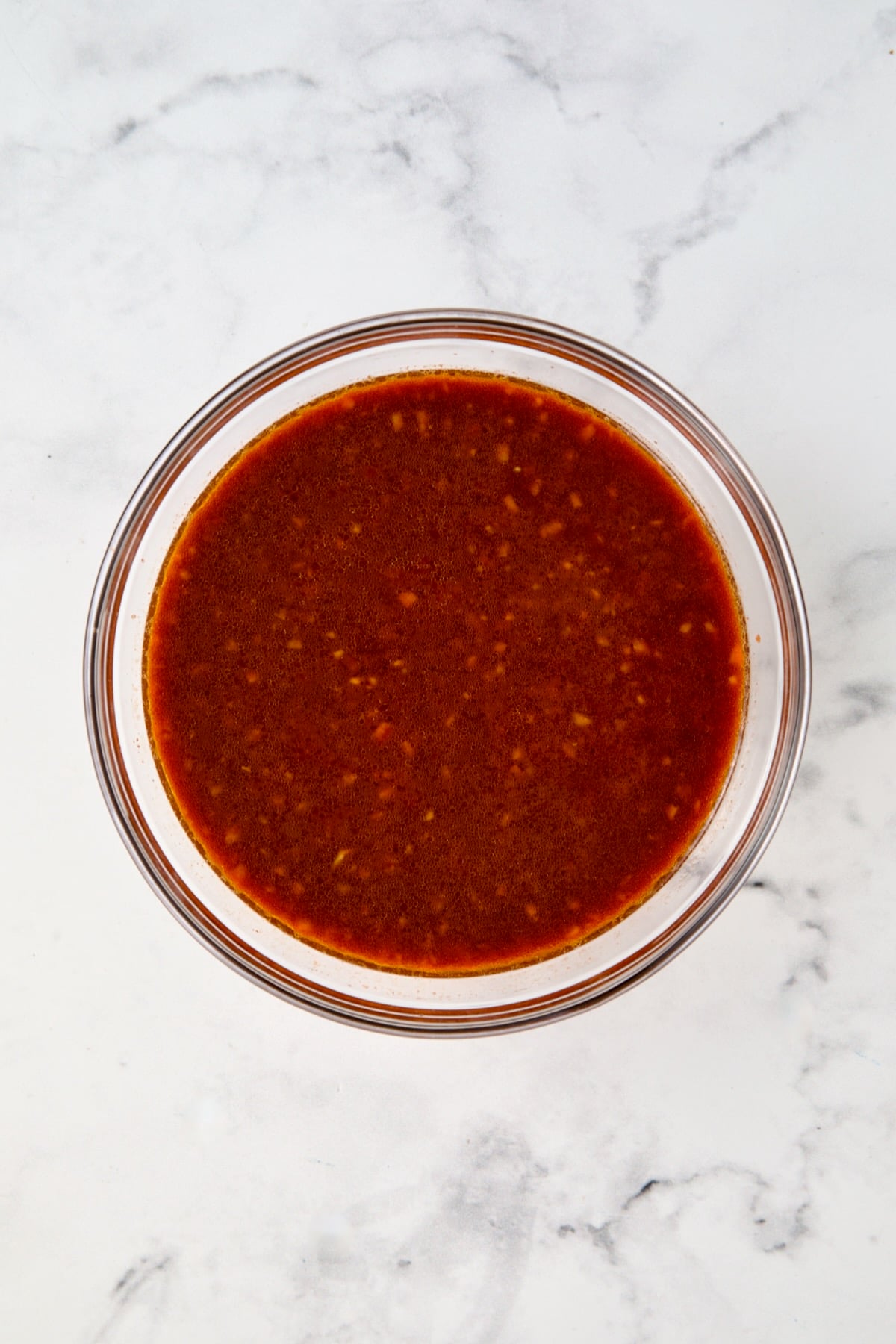
- Whisk together the garlic, ginger, chicken broth, soy sauce, gochujang, mirin, and sesame oil. Set aside.
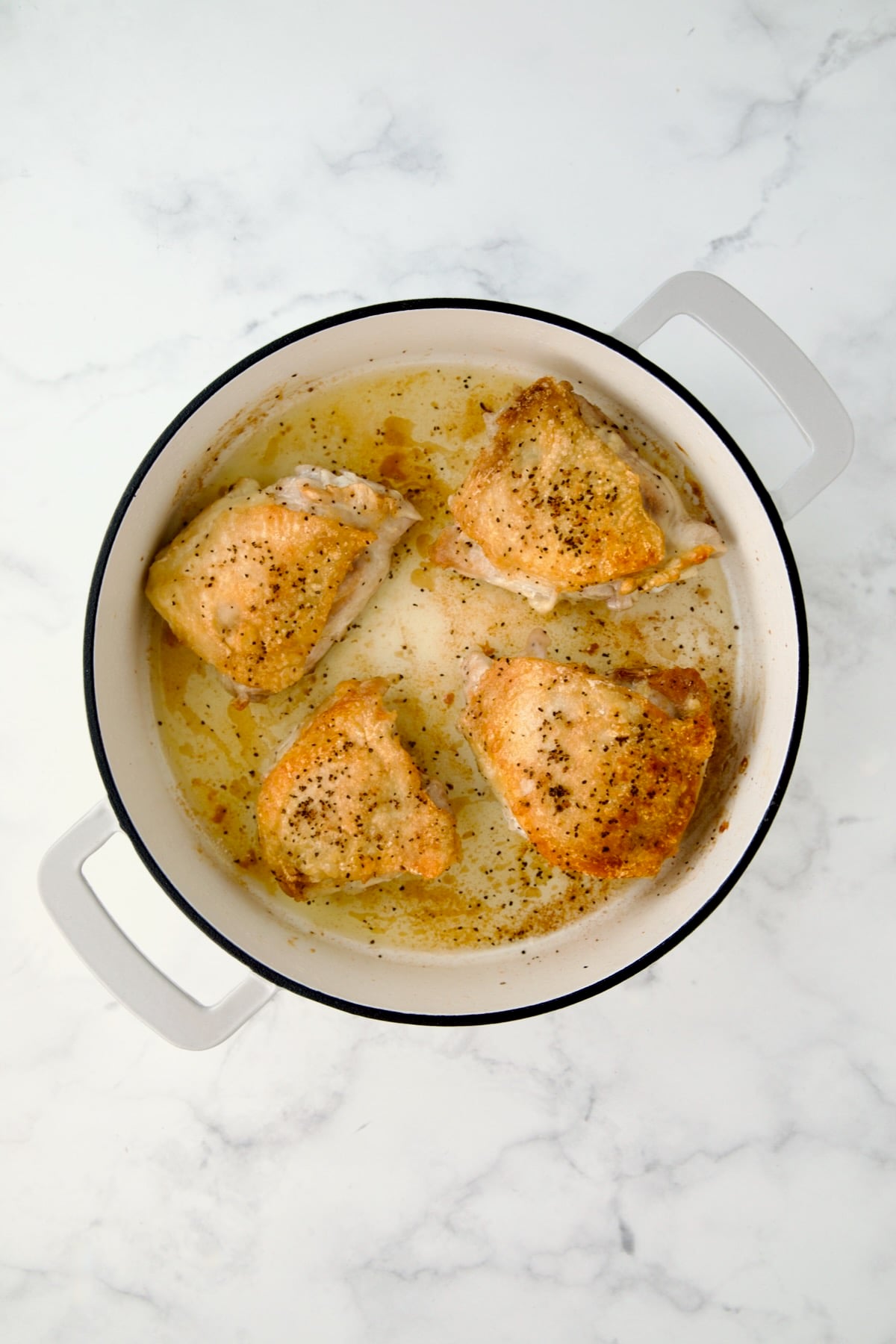
- Heat the canola oil in a cast-iron or other heavy skillet over medium-high heat. Lightly season the chicken thighs with salt and black pepper. Place the chicken thighs in the skillet, skin-side down. Cook for 4 to 5 minutes or until the skin is nicely browned. Turn and cook for 2 to 3 minutes on the second side. Transfer to a plate. Reserve the oil/fat in the pan.
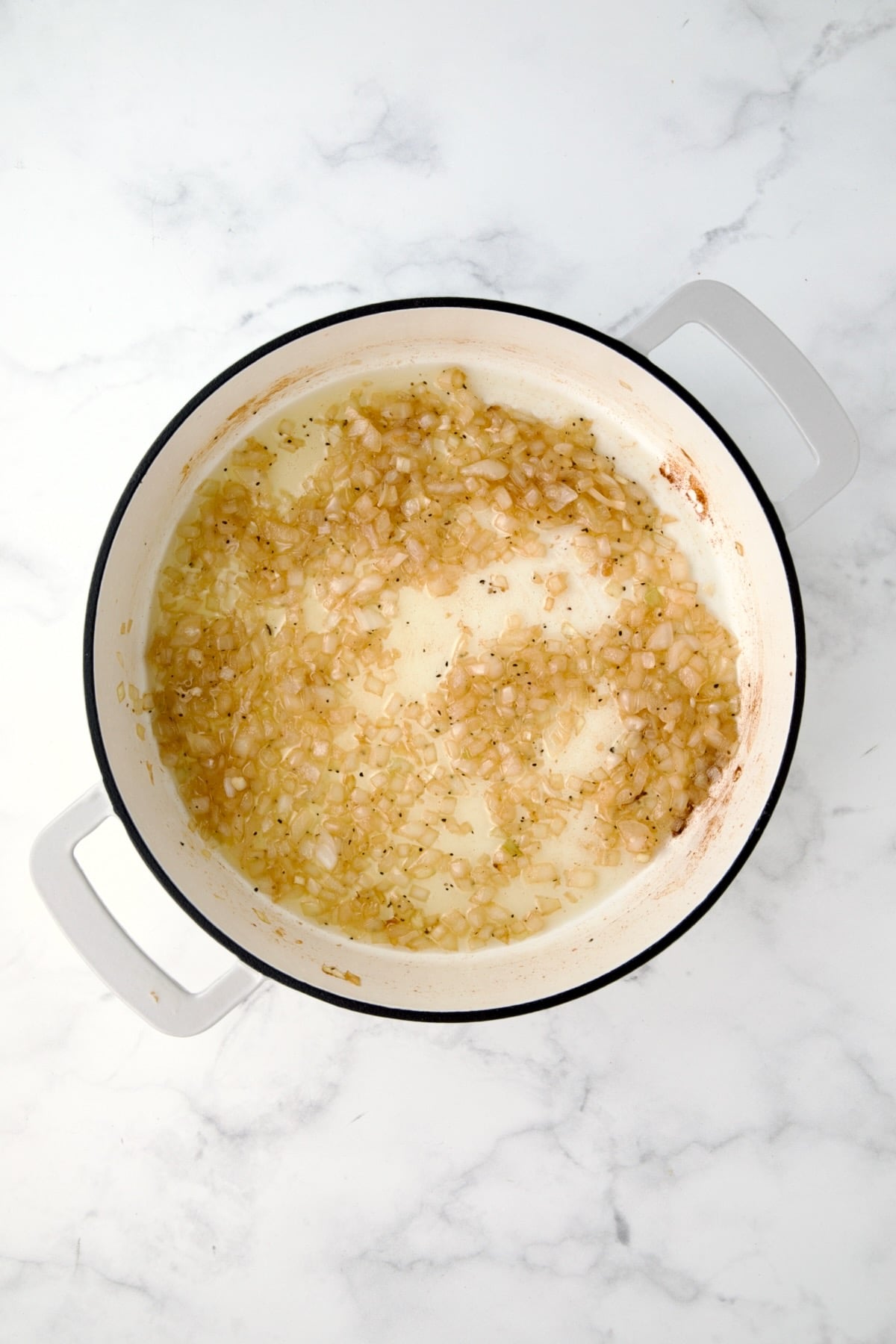
- Add the onion, reduce the heat to medium-low, and cook for 5 to 6 minutes or until softened.
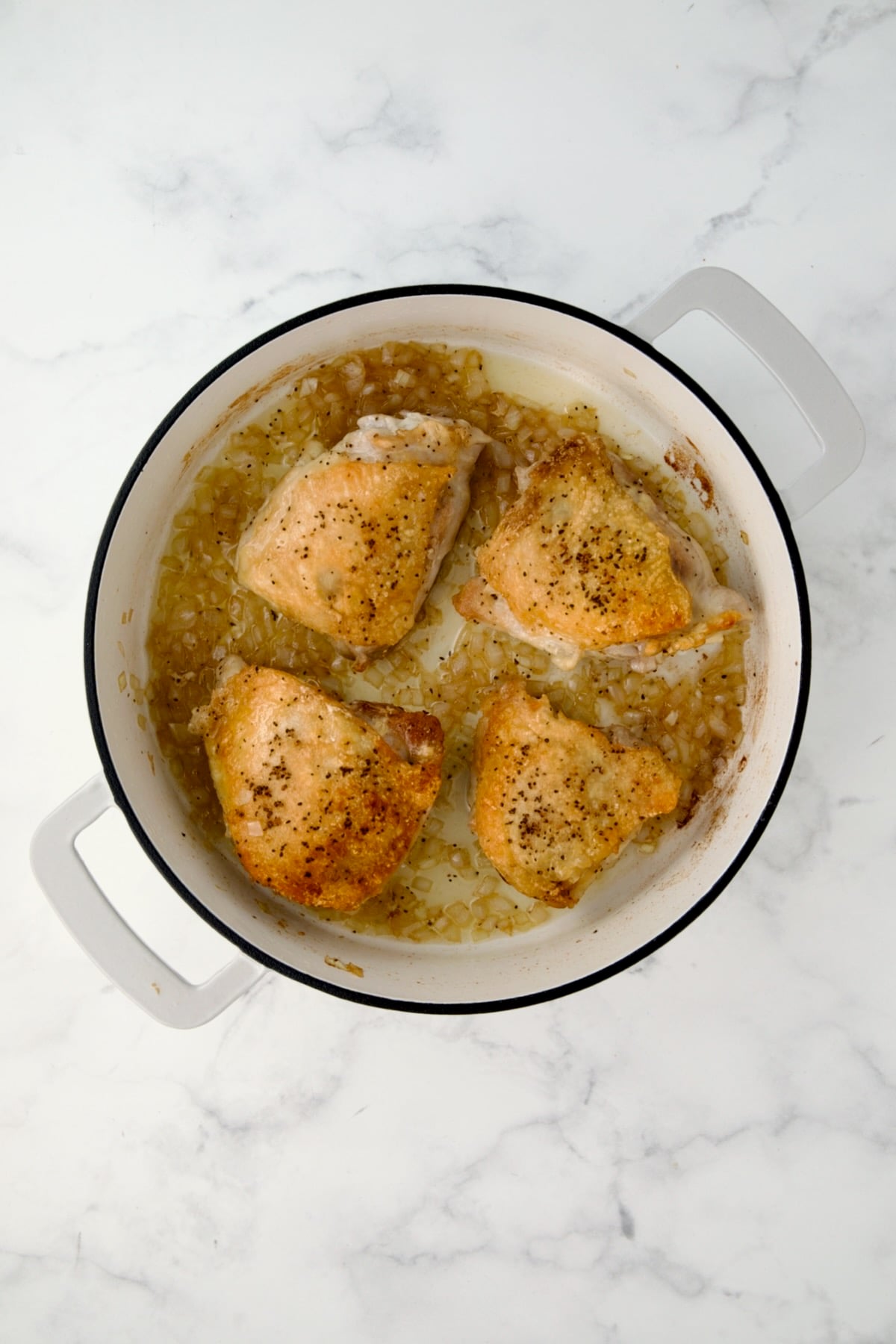
- Return the chicken thighs to the skillet…
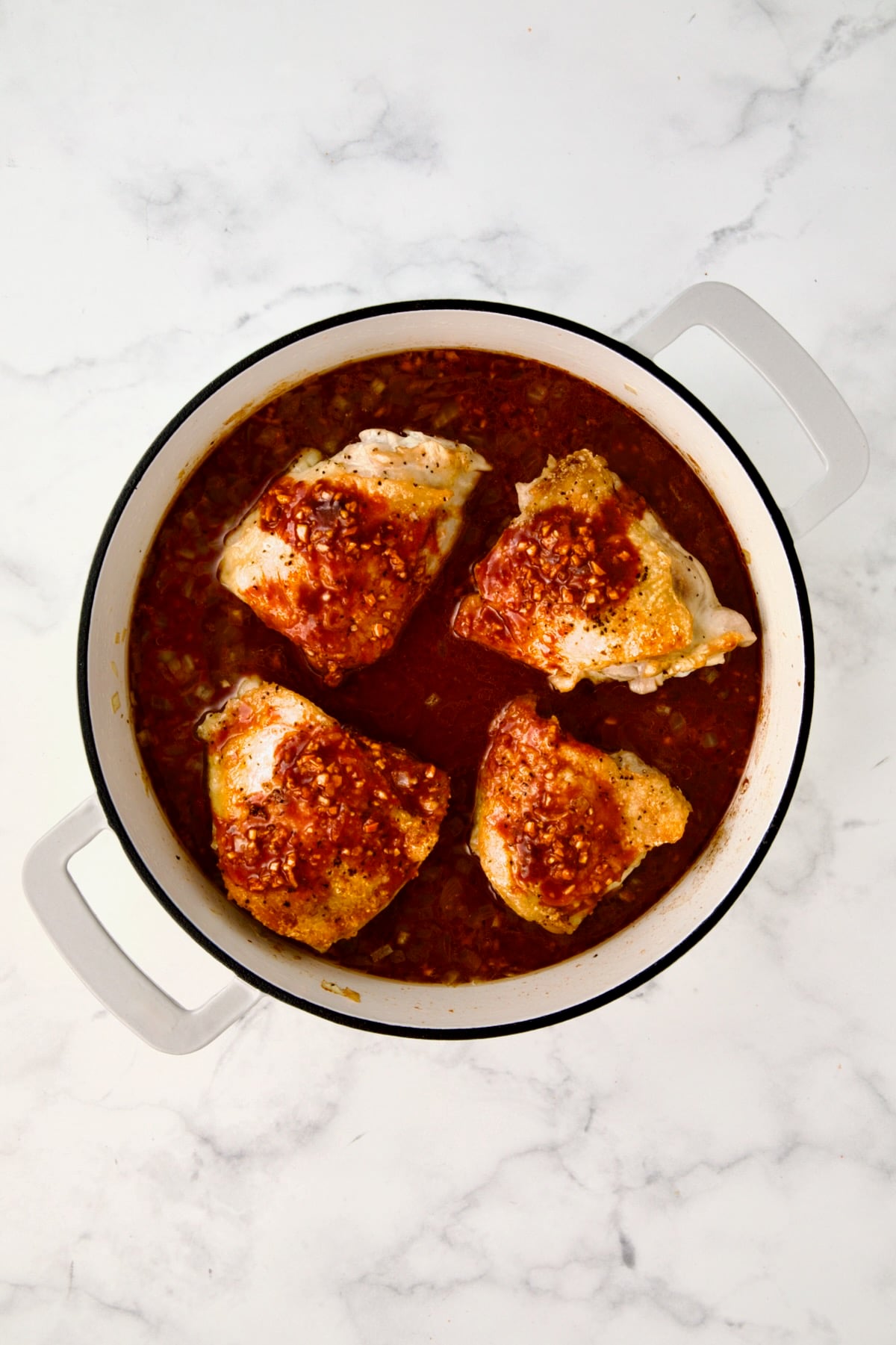
- … and pour the gochujang sauce around them. Bring to a gentle boil.
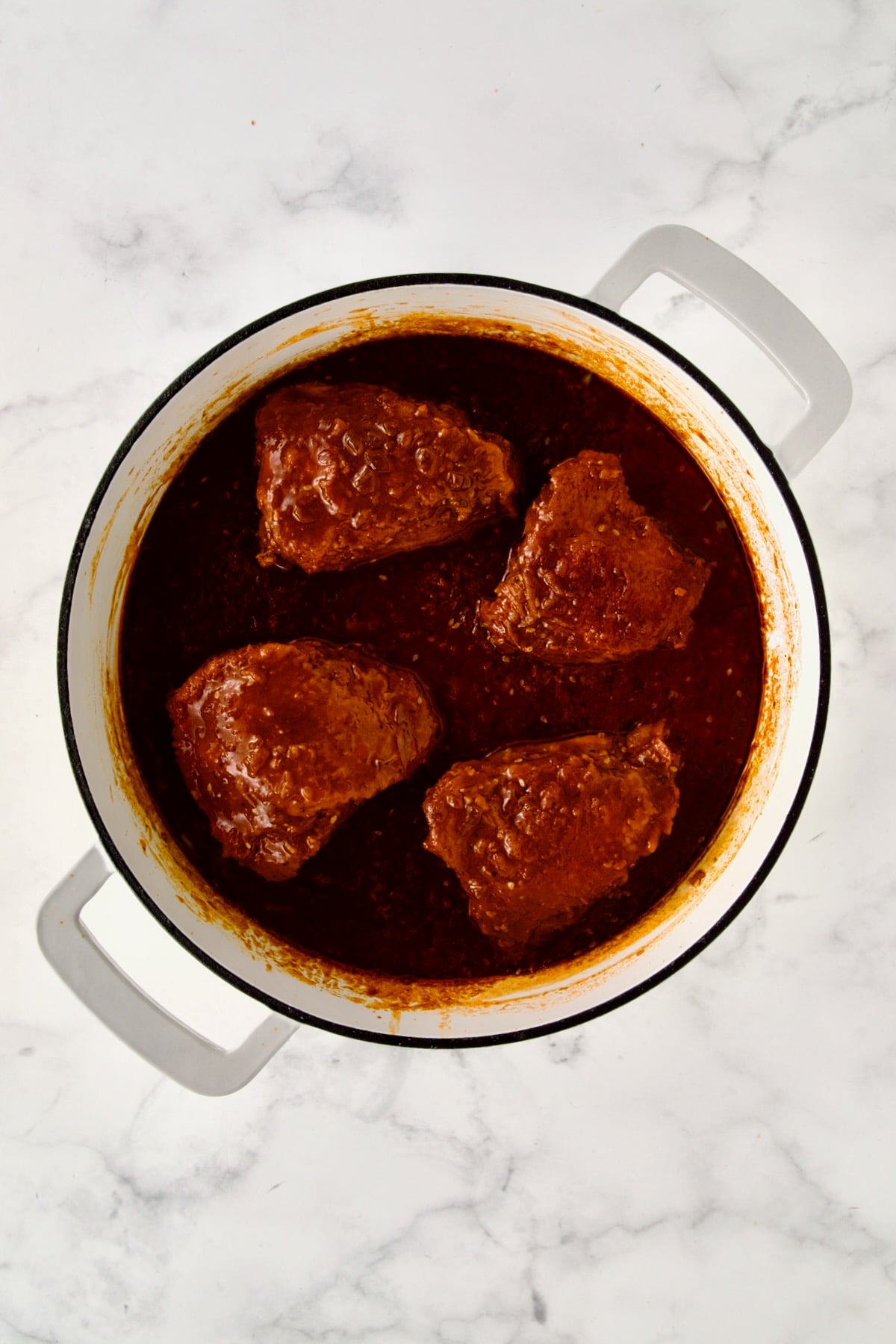
- Reduce the heat to medium-low and simmer, uncovered, for 25 to 30 minutes, turning the chicken 2 or 3 times to cook evenly. Cook until the chicken is tender and registers at least 165°F in the thickest part without touching the bone.
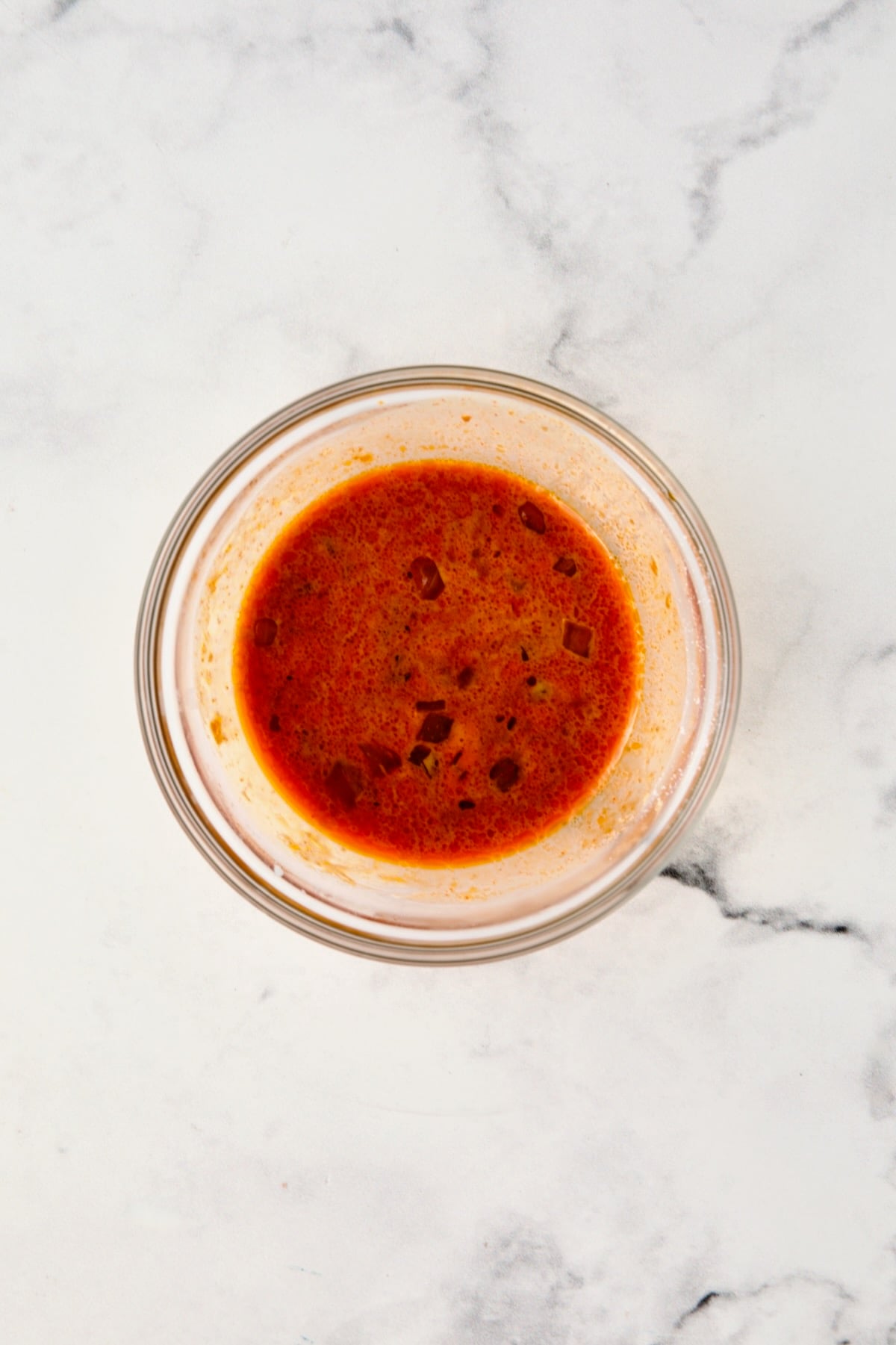
- OPTIONAL: If you prefer a thicker sauce, transfer 1/2 cup of the cooking liquid to a small bowl. Whisk in 2 teaspoons of cornstarch until smooth, then stir the mixture back into the skillet. Simmer for 2 to 3 minutes or until the sauce thickens to your liking.
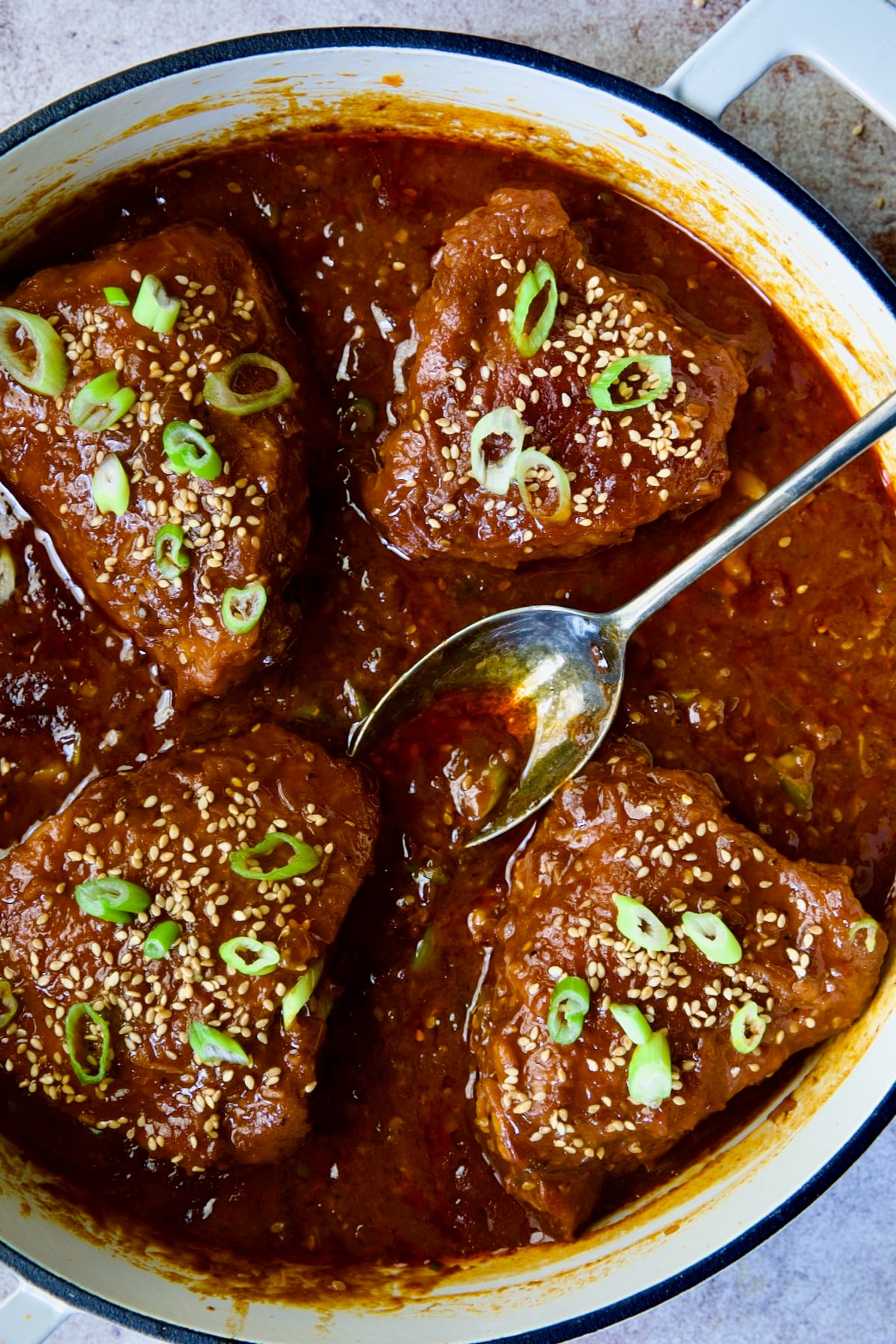
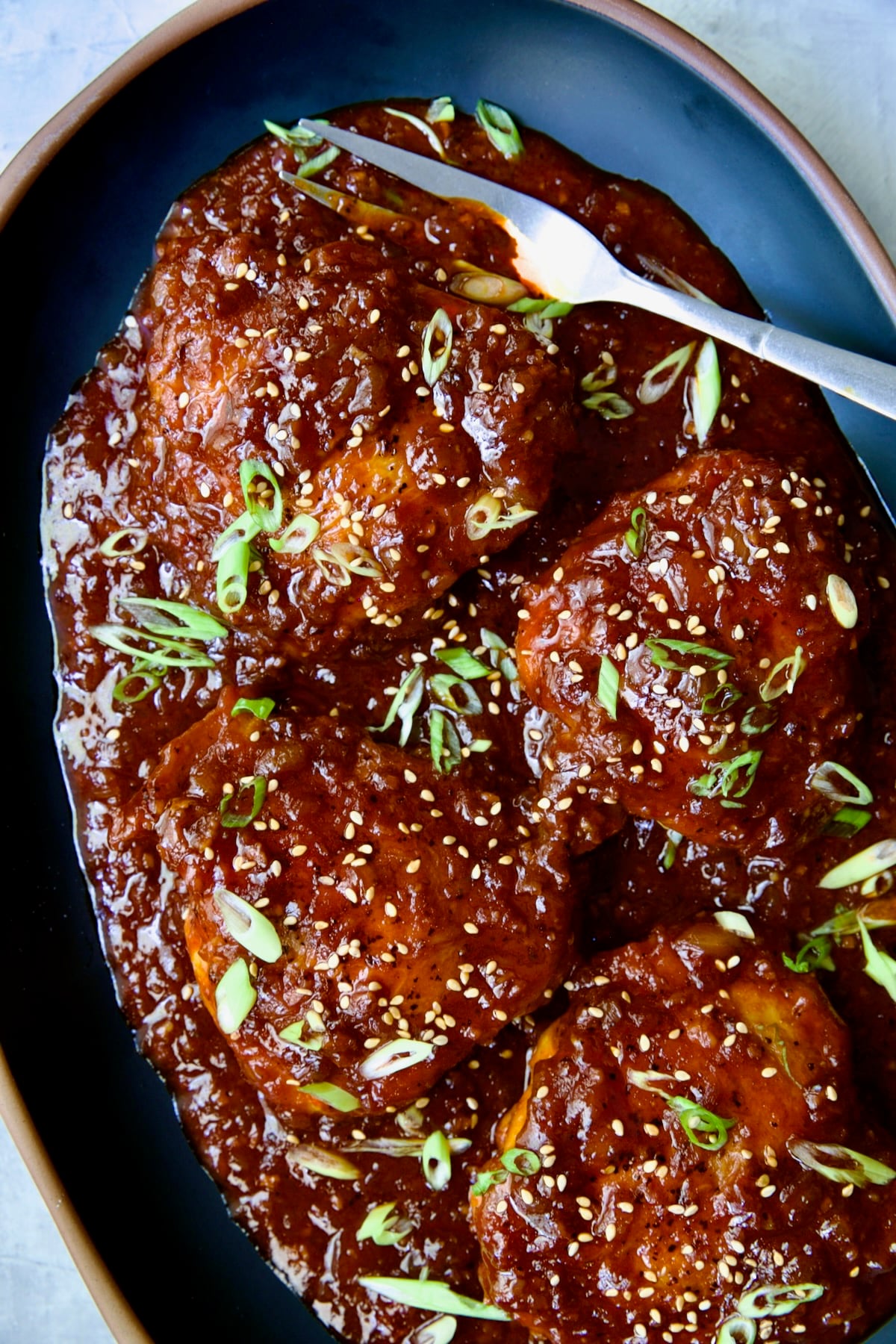
- Serve with brown rice, garnished with sesame seeds and thinly sliced scallions. Meet your new favorite dinner—tender, intensely flavorful Korean Chicken Thighs!
Chef Tips and Tricks:
- Get a good sear. Pat the chicken thighs dry before seasoning, then place them skin-side down in a hot skillet. Let them brown undisturbed so the skin develops good color and flavor.
- Season lightly at first. Soy sauce and gochujang both contain salt, so add less salt to the chicken and adjust the sauce at the end if needed.
- Once you add the sauce, keep a gentle simmer rather than a vigorous boil so the chicken cooks evenly and stays juicy.
- Chicken is safe at 165° degrees, but dark-meat thighs become more tender when cooked beyond that point. 175 to 185° degrees is often ideal for braised thighs.
- You may not need cornstarch to thicken the sauce. It will reduce naturally as the chicken braises, so wait until the end before deciding whether it needs additional thickening.
- Keep a well-stocked pantry of Asian ingredients such as soy sauce, sesame oil, mirin, and rice vinegar; you can create any Asian-inspired dish on the fly!
Korean Chicken Thigh Recipe FAQs:
Because gochujang has a distinctive fermented flavor and thick consistency, there really isn’t a good substitute. Another chile paste will provide heat, but it won’t give the sauce the same depth or flavor to the Korean Chicken Thighs.
Yes, sure can! They’re excellent for meal prep because the chicken reheats well and the flavors have even more time to meld. Add a splash of water and reheat covered on the stovetop until the internal temperature reaches 165 degrees. Reheat covered in a 350-degree oven until the thickest part reaches 165 degrees. You may also consider shredding the chicken, which makes it even easier to reheat.
Absolutely! Cool the chicken completely, then freeze the chicken with the sauce in an airtight container. Thaw overnight in the refrigerator before reheating.
Favorites From My Kitchen:
- For another way to use that jar of gochujang, try my Korean Tofu Lettuce Wraps with a spicy tahini-gochujang sauce.
- If you love how juicy dark-meat chicken stays when braised, try my Thai Red Curry Chicken Drumsticks for another flavor-packed chicken dinner.
- For a traditional Korean-inspired accompaniment, add my Easy Homemade Kimchi for a tangy, spicy contrast to the rich braised chicken.
More Winner Chicken Dinners!


If you tried my Korean Chicken Thigh recipe, please leave a 🌟 star rating and let me know how it turned out in the comments!
Korean Chicken Thighs
Video
Ingredients
- 4 cloves garlic, minced
- 2 tablespoons minced ginger
- 1 cup chicken broth
- 1/4 cup soy sauce
- 1/4 cup gochujang
- 2 tablespoons mirin
- 1 tablespoon sesame oil
- 2 tablespoons canola, vegetable, or avocado oil, or as needed
- 4 chicken thighs, on the bone with the skin (1 1/2 to 2 pounds)
- Salt and freshly ground black pepper
- 1 medium onion, finely chopped (1 1/2 cups)
- 2 teaspoons cornstarch, if needed
- Sesame seeds, for garnish
- Thinly sliced scallion, for garnish
Instructions
- Whisk together the garlic, ginger, chicken broth, soy sauce, gochujang, mirin, and sesame oil. Set aside.
- Heat the canola oil in a cast-iron or other heavy skillet over medium-high heat. Lightly season the chicken thighs with salt and black pepper.
- Place the chicken thighs in the skillet, skin-side down. Cook for 4-5 minutes or until the skin is nicely browned. Turn and cook for 2-3 minutes on the second side. Transfer to a plate. Reserve the oil/fat in the pan.
- Add the onion, reduce the heat to medium-low, and cook for 5-6 minutes or until softened.
- Return the chicken thighs to the skillet and pour the gochujang sauce around them. Bring to a gentle boil.
- Reduce the heat to medium-low and simmer, uncovered, for 25-30 minutes, turning the chicken 2 or 3 times to cook evenly. Cook until the chicken is tender and registers at least 165°F in the thickest part without touching the bone.
- OPTIONAL: If you prefer a thicker sauce, transfer 1/2 cup of the cooking liquid to a small bowl. Whisk in 2 teaspoons of cornstarch until smooth, then stir the mixture back into the skillet. Simmer for 2-3 minutes or until the sauce thickens to your liking.
- Serve with brown rice, garnished with sesame seeds and thinly sliced scallions.
Notes
- You can also use boneless, skinless chicken breasts (which cook quickly) or chicken leg quarters. Increase the cooking time for larger chicken cuts.
- Get a good sear. Pat the chicken dry, then brown it skin-side down without moving it.
- Soy sauce and gochujang are already salty, so season lightly and adjust at the end.
- Keep the sauce at a gentle simmer so the chicken cooks evenly and stays juicy.
- Although safe at 165°F, braised chicken thighs are more tender around 175 to 185°F.
- Wait before adding cornstarch. The sauce will reduce and thicken as it braises, so you may not need it.
- Add a splash of water and reheat covered on the stovetop until the internal temperature reaches 165 degrees.
- Reheat covered in a 350-degree oven until the thickest part reaches 165 degrees.
- You may also consider shredding the chicken, which makes it even easier to reheat.
- Freeze in an airtight container for up to 2 months.
- Thaw in the refrigerator.
- Reheat covered in a 350-degree oven until the thickest part reaches 165 degrees, or on the stovetop.
Nutrition
Nutritional values are automatically calculated using unbranded products and are estimates only. Actual results may vary based on ingredients used and portion sizes. Adjust as needed for dietary restrictions, allergies, or health concerns.
 Like this? Leave a comment below!




I made these the other night and they were a big hit. Instead of using the corn starch, I reduced the sauce until I could leave a trail with a spatula, then took it off the heat and stirred in some butter, like a western pan sauce. Maybe not authentic, but delicious.
This also made a lot of sauce, which I won’t complain about, but one could probably increase the chicken thighs to six or eight, given enough pan space.
Thanks so much and glad you enjoyed! Appreciate the tip on the sauce; I tend to like things fairly saucy especially if I’ve got rice on the side. Thanks again!
Hi Carol
I was looking for seafood stuffed chicken breasts when I came across your website. I used the recipe you had and they were delicious. I was so pleased to find your website because you have some great recipes that I want to try. I make supper for my son, daughter-in-law and grandson every Monday and Friday so I like to have new recipes to try. Tomorrow I am going to make the Korean Braised Chicken Thighs. I live in a small town on Vancouver Island and I have looked at all the grocery stores that are near me but none of them have gochujang. Is there something I can substitute for it? I will keep looking for it or perhaps I will have to order it through Amazon. Can’t wait to try some of your other recipes.
Hi, Joan, Thanks so much and I’m so very glad you found me, too! A food blogger friend of mine just happened to post a recipe to make your own: Here it is: Gochujang Sauce. Hope that works for you and can find those ingredients. You can also order it on Amazon. Thanks again and so glad you enjoyed the Crab-Stuffed Chicken Breasts!
Do you cover it while it’s simmering? I’m guessing not, to let the sauce reduce? It’ll affect the cooking time so it’s good to know for sure.
Hi, Curious, Thanks so much for your question. I don’t cover it for that reason. You could cover for 10-15 minutes to speed it up but then uncover and let it reduce. Fortunately, chicken thighs can take the heat and don’t dry out as quickly. Thanks again and hope you enjoy!
Too spicy for my Mum’, but it didn’t bother me, I loved it and was practically licking the pan when finished. I will say that one piece of chicken per person isn’t enough, but aside from that, AMAZING!
We made these tonight. They were fabulous. We did marinate the chicken in a combo of soy, canola, sesame oil, Korean pepper flakes, and salt/pepper for a few hours. That was only our variance from the recipe. The entire family including our 15 year picky daughter LOVED them. They will go into rotation from here on out.
Hi, Michelle, Thanks so very much and so glad everyone enjoyed! Love that your picky daughter even enjoyed it!
My husband made this for dinner last night and it was delicious! Thank you!
Hi, Heather, Thanks so very much and glad you and he enjoyed it! If you love Korean food, be sure to try my Korean short ribs, too. Thanks again!
I made this last night and it was fabulous! My husband hasn’t stopped talking about it. I had steamed some broccoli and added it toward the end just to get it coated with the sauce and that was good too! This sauce would be so good on shrimp too. Thank you so much!
Hi, Lin, Wow! Thank you SOOOO very much! You really made my day! So happy you and your husband enjoyed it! Thanks again!
I love this recipe and have made it a few times! However, I’ve made a few adjustments. Hope you don’t mind. First, I assume you meant 1/4 cup soy sauce [it just says 1/4 soy sauce above]. I personally use half soy sauce, half ponzu. the ponzu makes the dish slightly brighter. Then, I shred carrots and marinate them in a couple of teaspoons rice vinegar and a tablespoon of sesame oil, salt & pepper and place it on top of the chicken and rice once done. I think the carrots help enormously to counterbalance the richness of the sauce and chicken. I also add a pinch of really hot Indian spice [sorry, not sure what’s in it] to the sauce, because I like it hot! Thank you so much for the recipe.
Thanks so much, Amanda! So glad this has become a favorite of yours! Also, thanks for pointing out the missing information in the recipe; I’ve corrected it. I’m also happy that you tweaked the recipe to make it your own–recipes are a roadmap but how you get to the final destination is up to you. Thanks again!
Made these tonight but finished them in the oven! Delicious! I am a new lover of gochujang sauce!!
Thanks so much, Jaime! So glad you enjoyed! I know about the gochujang–it is positively addictive! Thanks again!
Oven: What temperature and for how long?
Hi, Deb, Thanks so much for your question. I haven’t made this in the oven but would bake at 375 degrees with the onion in a baking dish for at least 30 minutes or until cooked through. Combine the sauce ingredients along with the cornstarch and bring that to a simmer on the stovetop until thickened. Serve that over the chicken. Chicken thighs tend to render off a lot of liquid in the oven so would really dilute the sauce. Hope this helps and let me know how it goes!
I made this last night. It was wonderful and so easy to prepare. Keep em coming.