Moroccan Beef Stew

This Post May Contain Affiliate Links. Please Read My Disclosure
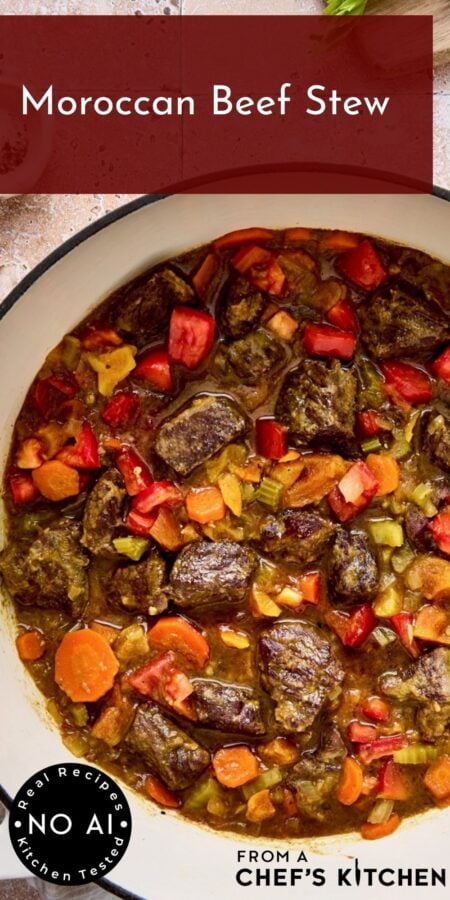
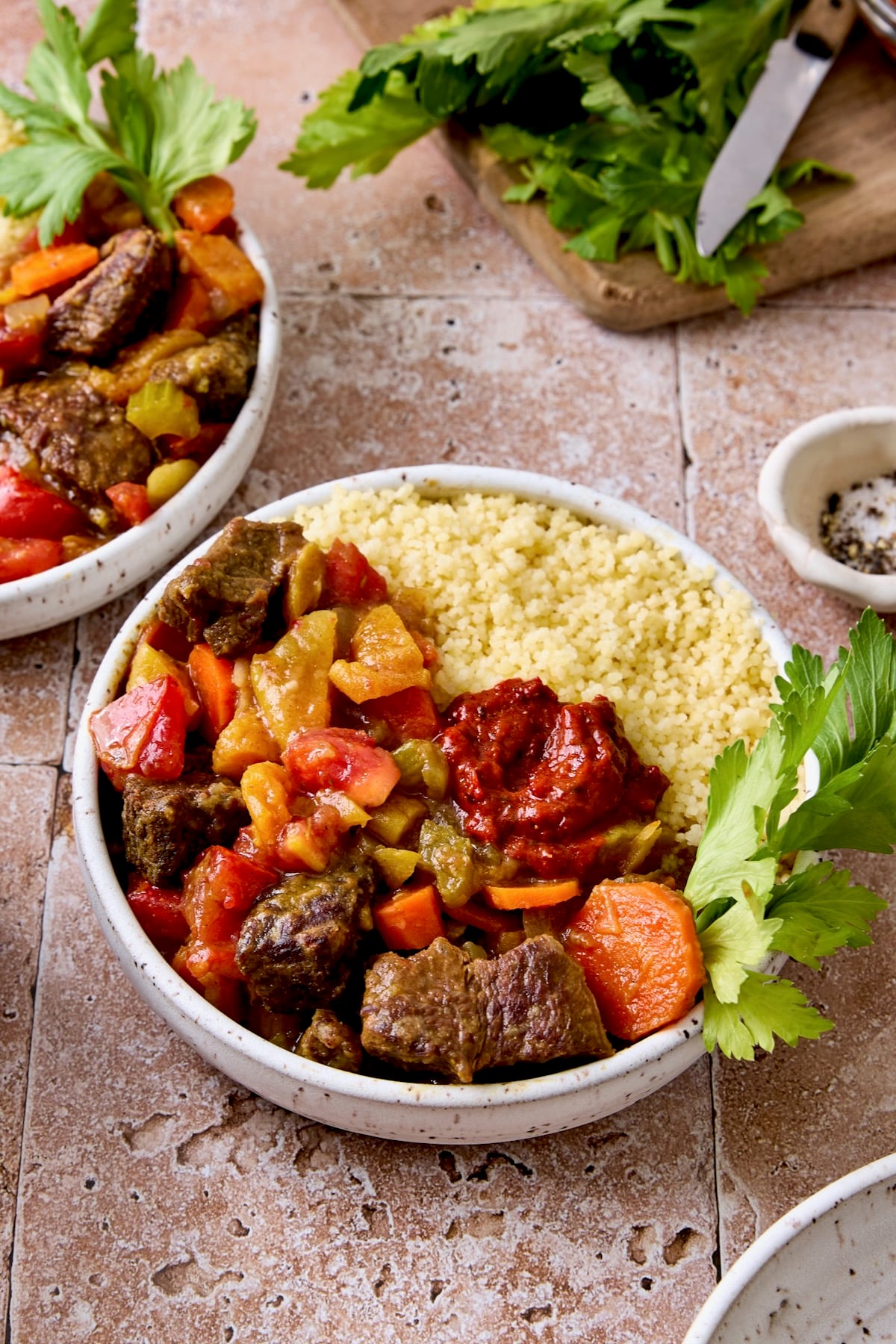
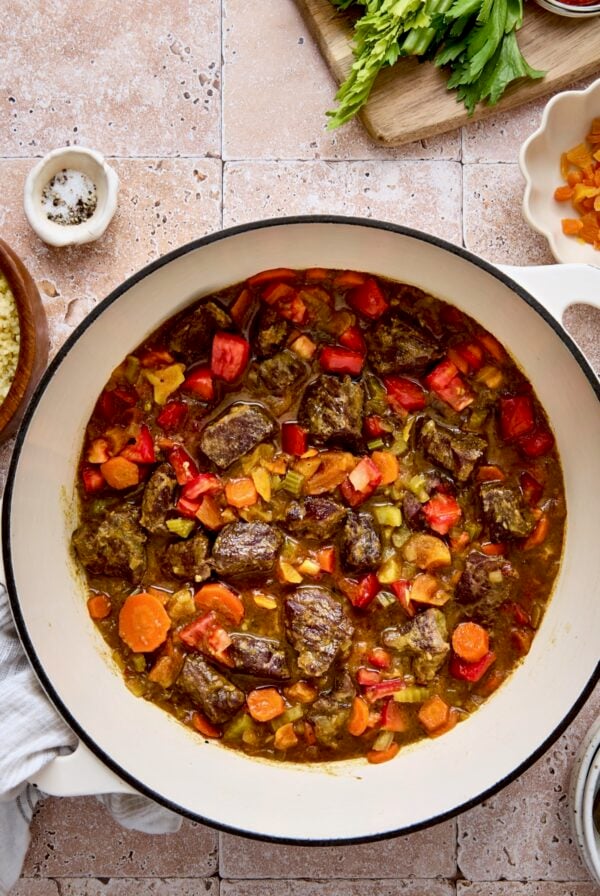
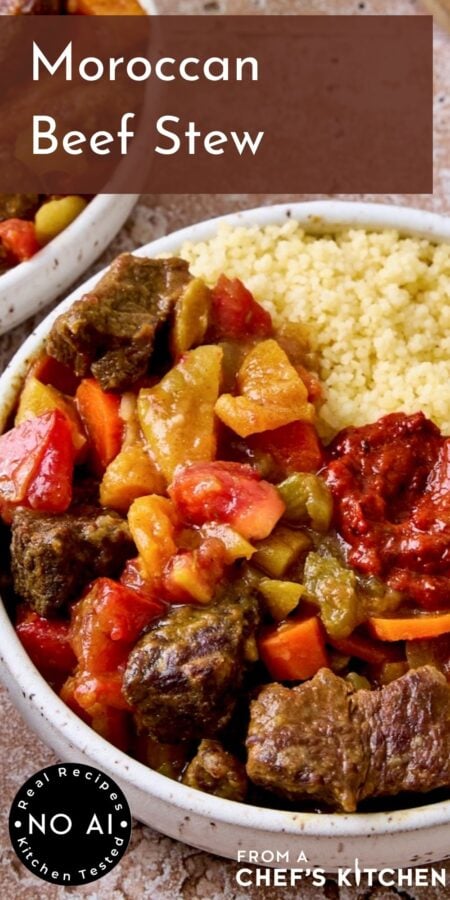
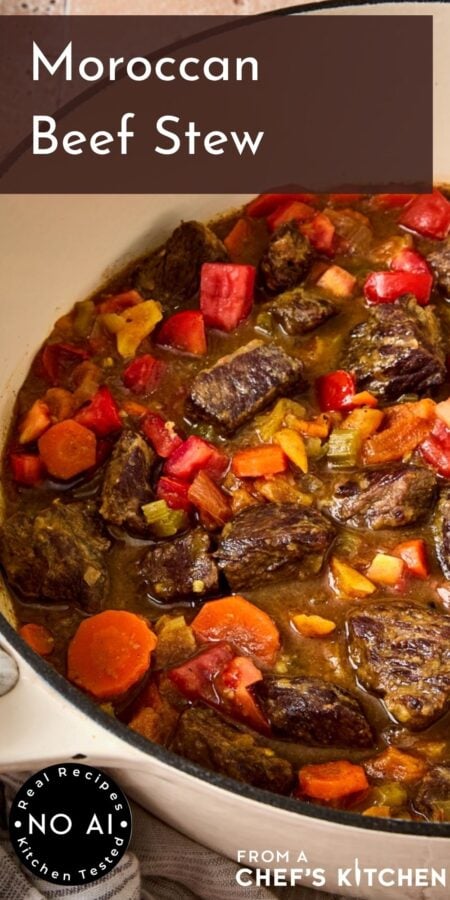
Moroccan Beef Stew combines tender, slow-simmered beef, hearty vegetables, warm aromatic spices, and a touch of sweet dried apricots for a delicious twist on traditional beef stew. It’s a satisfying one-pot meal that’s easy enough for an elevated family dinner yet special enough to serve to guests. Serve over couscous, quinoa, or rice, or alongside my Potato Tagine!
“Marvelous stew! … 10/10, I will make this many more times in the future.” — Alexandra
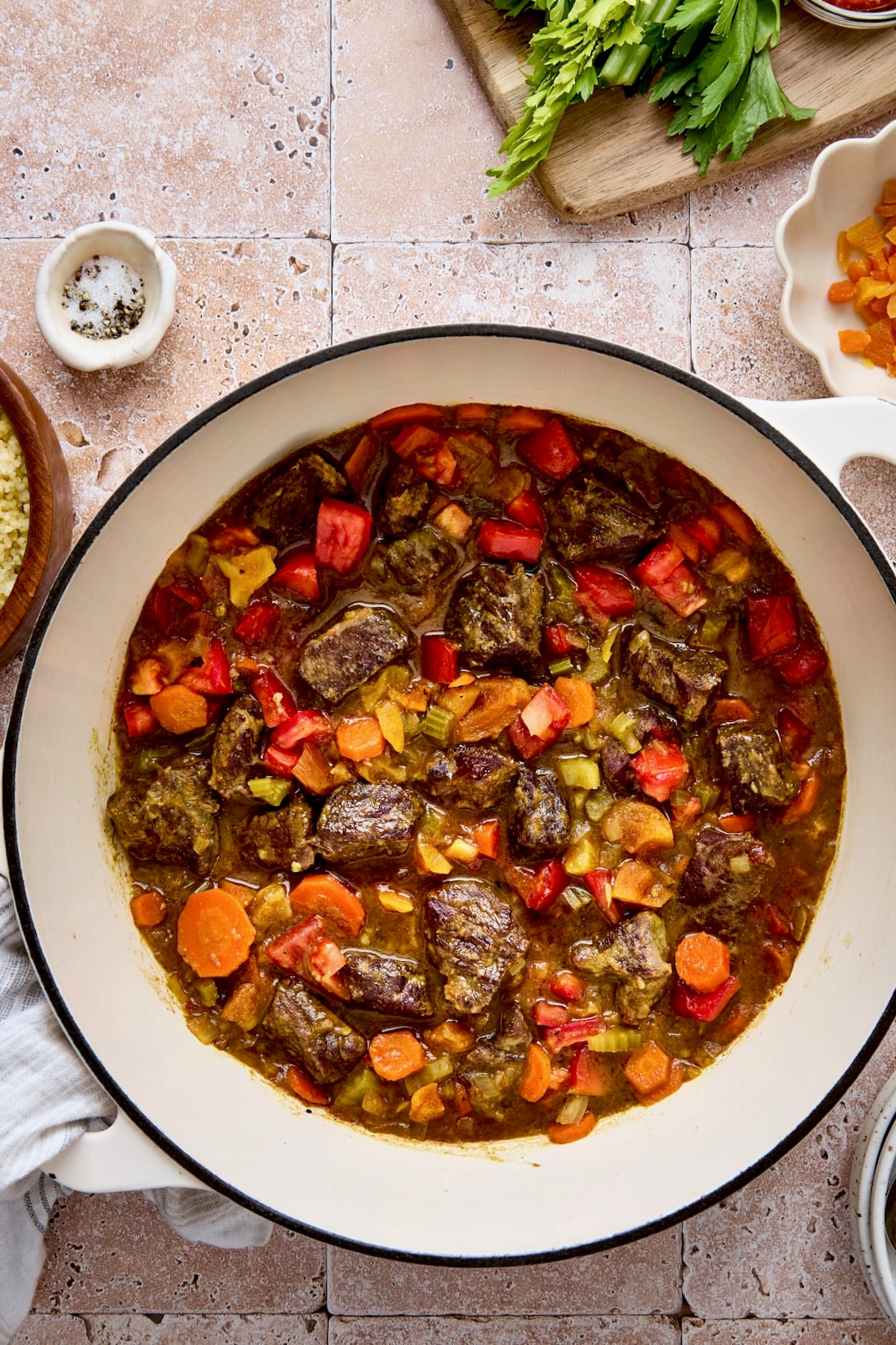
QUICK TAKE: Moroccan Beef Stew
- What It Is: A rich, hearty, award-winning Moroccan-inspired beef stew with layers of warm, savory flavor and a hint of sweetness for a global twist on traditional beef stew.
- Ingredient Highlights: Tender beef chuck, vegetables, warm spices, and sweet dried apricots.
- Time to Make: 30 minutes of prep, 1 1/2 to 2 hours of cooking, for about 2 1/2 hours total.
- Chef’s Top Tip: Brown the beef in batches to develop a rich, flavorful base, and let the stew rest before serving so the flavors can meld.
- Why Make THIS Version? This stew balances savory, sweet, and gently spicy flavors for a delicious change from traditional beef stew. It’s also make-ahead friendly and tastes even better the next day!
Table of Contents
Why This Moroccan Beef Stew Recipe is a Keeper!
My mother, Ann Ramczyk, was an award-winning cook. She won numerous local and state cooking competitions and represented Wisconsin twice at the Pillsbury Bake-Off and twice at national beef and chicken cook-offs. This Moroccan Beef Stew won first place in the 1988 Wisconsin Beef Cook-off. Other award winners include creamy Potato Cucumber Salad and easy Raspberry Coffee Cake.
Mom went a little light on the spices in her original recipe, so I’ve increased them to give this stew more of the warm, aromatic flavor Moroccan cuisine is known for while keeping the heart of her award-winning recipe intact. The fragrant spices that make this beef stew so delicious also shine in my Moroccan Eggplant Stew.
Here’s why you’ll love it, too!
- Award-winning roots! This Moroccan Beef Stew is a family and personal chef client favorite with a winning history that’s stood the test of time.
- Easy! It’s easy enough for a weeknight meal but distinctive enough to serve to guests.
- Amazing flavor balance! Warm spices and a touch of sweetness create a delicious savory-sweet balance. Top it off with harissa for a North African-inspired kick that takes the flavor to another level! If you love harissa, you’ll also enjoy my Harissa Chicken Meatballs.
- Make-ahead friendly: Like most stews, the flavors of this Moroccan stew recipe get even better after a day in the refrigerator as they meld.
- Freezer-friendly! Perfect for preparing ahead and having a delicious, satisfying meal ready whenever you need one.
This Moroccan Beef Stew has been a family favorite for decades, and I’m happy to share my updated version of Mom’s award-winning recipe. I think she’d be pleased to know it’s still bringing people together around the dinner table!
How to Make Moroccan Beef Stew:
Recipe Ingredients:
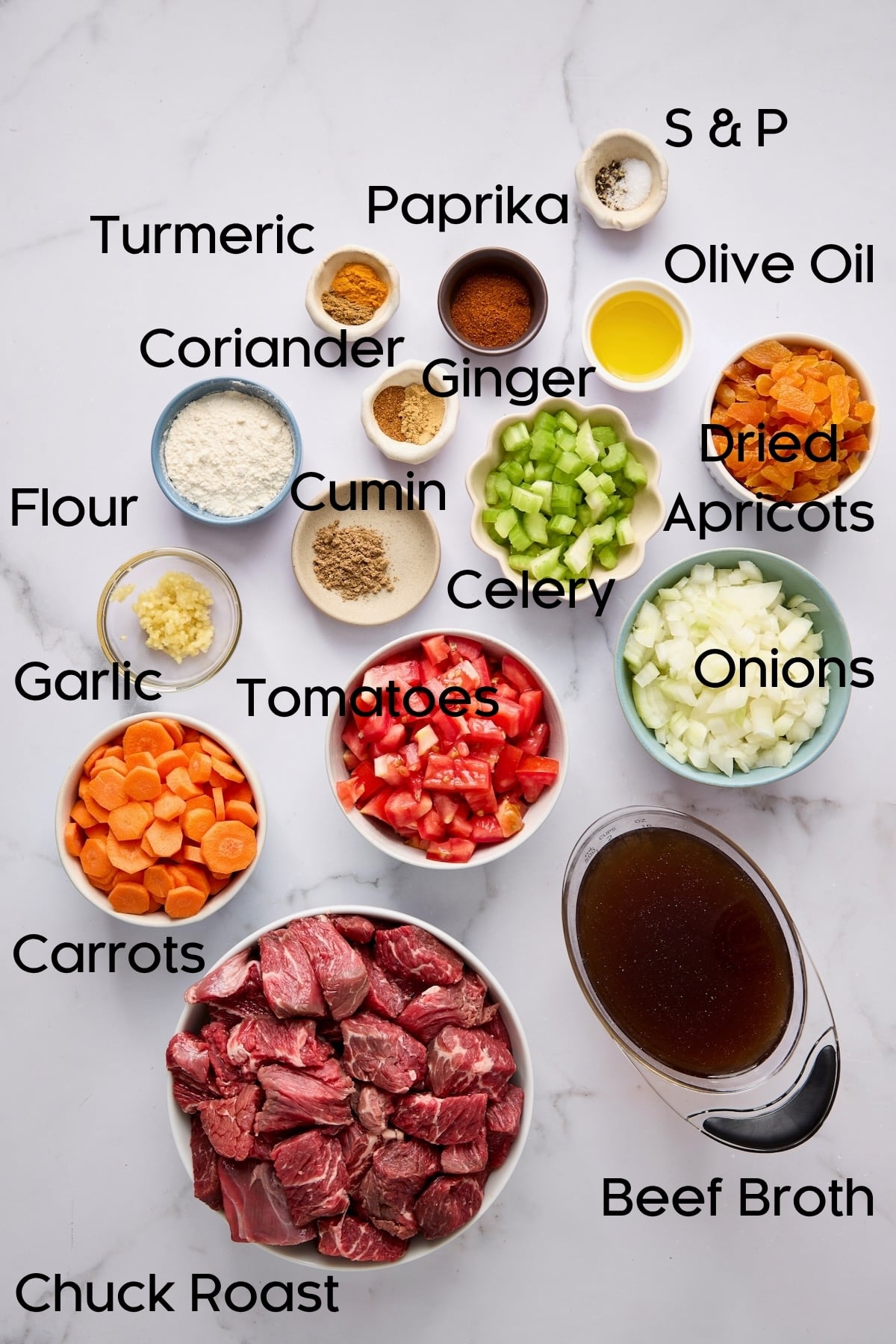
Here’s everything you’ll need to make this Moroccan Beef Stew recipe. The exact quantities are on the recipe card below.
Ingredient Notes and Substitutions:
- Paprika: Adds color, mild sweetness, and depth without making the stew spicy. Use sweet paprika rather than smoked paprika so it doesn’t overpower the stew. Hungarian sweet paprika is also an excellent choice for its rich color and full flavor, as in my Hungarian Goulash Soup, another hearty stew.
- Ginger: Use ginger powder rather than fresh ginger for a subtle peppery bite.
- Cumin and Coriander: These two spices are essential to the stew’s warm, earthy flavor. Cumin adds richness and depth, while coriander contributes subtle citrusy notes.
- Dried Apricots: Apricots add natural sweetness that balances the beef and warm spices. They soften as the stew simmers.
- Tomatoes: Mom always used fresh tomatoes whenever possible, especially when the garden was overflowing! However, canned diced tomatoes work just as well when fresh tomatoes aren’t in season. For the best result, use one (14.5-ounce) can of drained diced tomatoes in place of the three fresh plum tomatoes. Draining prevents the canned tomatoes from adding too much liquid and diluting the flavor.
- Beef Broth: Use low-sodium beef broth or stock so you can better control the saltiness as the stew simmers and reduces.
- Chuck Roast: Some things Mom just knew best — like using a chuck roast for the stew meat and hand-trimming it. Chuck roast is ideal for stews because the connective tissue breaks down during cooking, resulting in tender, flavorful beef. Avoid lean cuts, which can dry out and become tough. I don’t buy anything labeled “beef stew meat,” which is often bits and pieces from a variety of cuts that can create different meat textures in the stew. Instead, I buy a 2 1/2- to 3-pound chuck roast, and after trimming and cubing it, I get just over two pounds of meat with a consistent texture throughout. You can also use lamb shoulder.
Step-By-Step Instructions:
- Gather and prep all the ingredients.
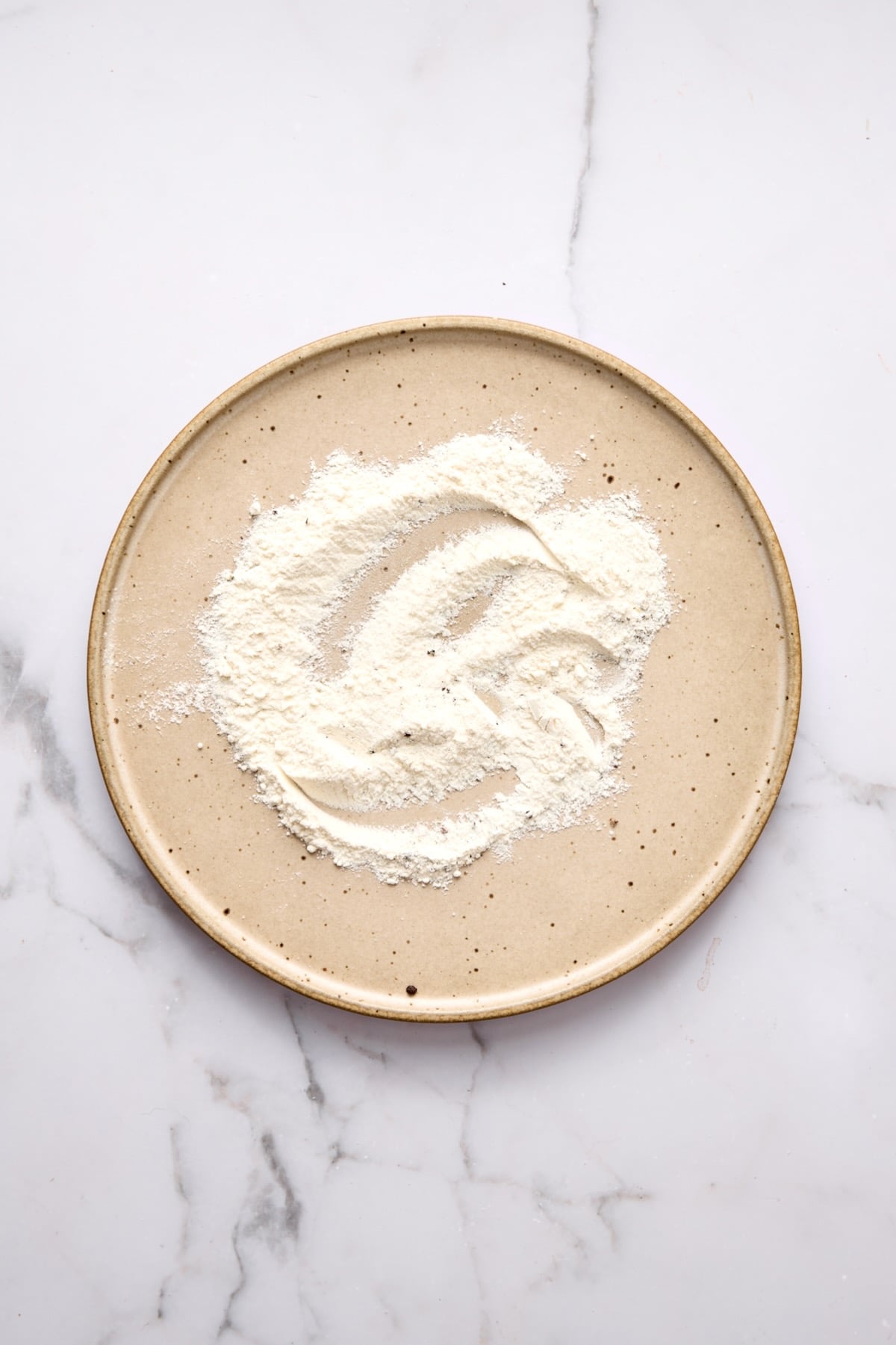
- Combine the flour, salt, and pepper on a plate …
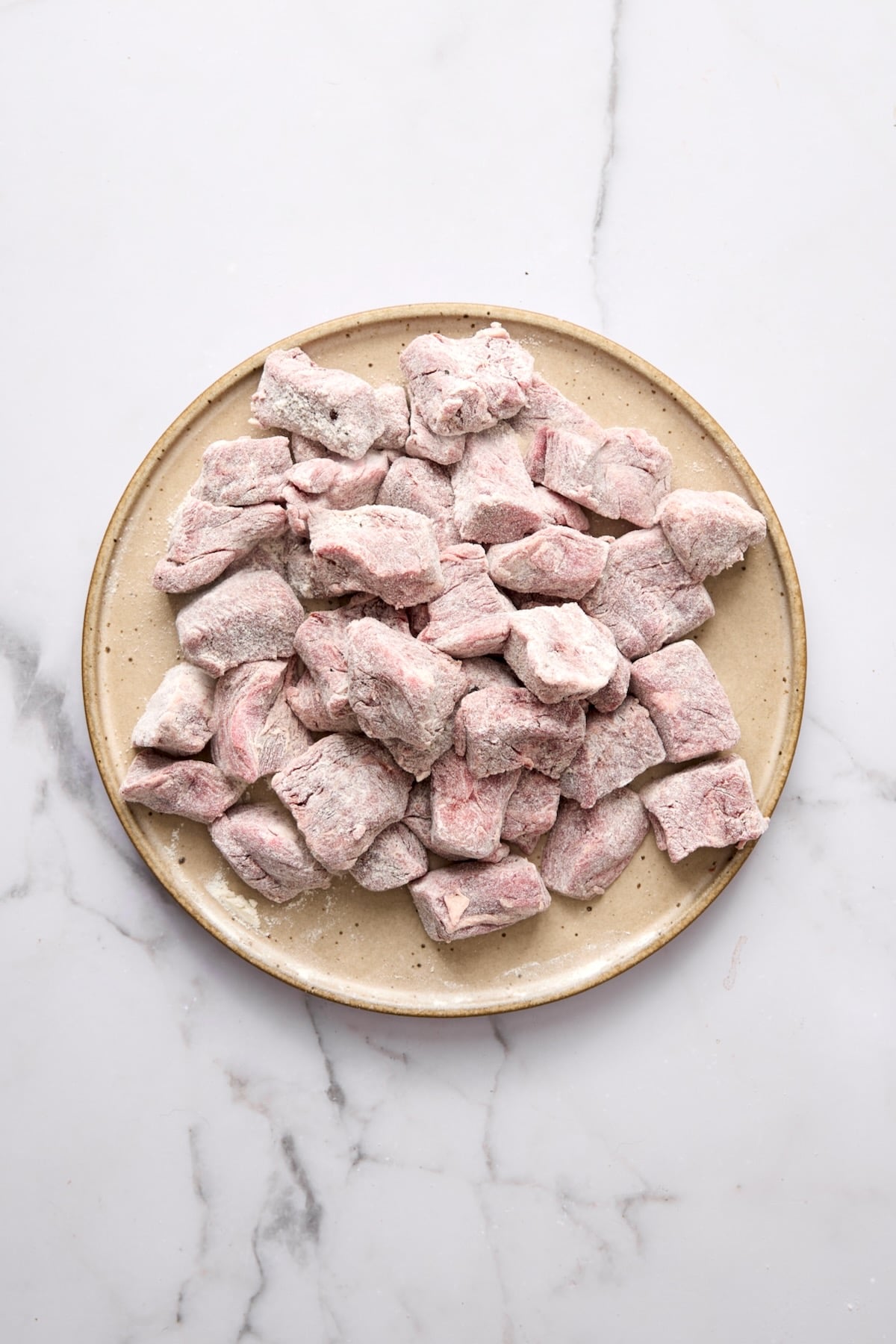
- … then dredge the beef pieces.
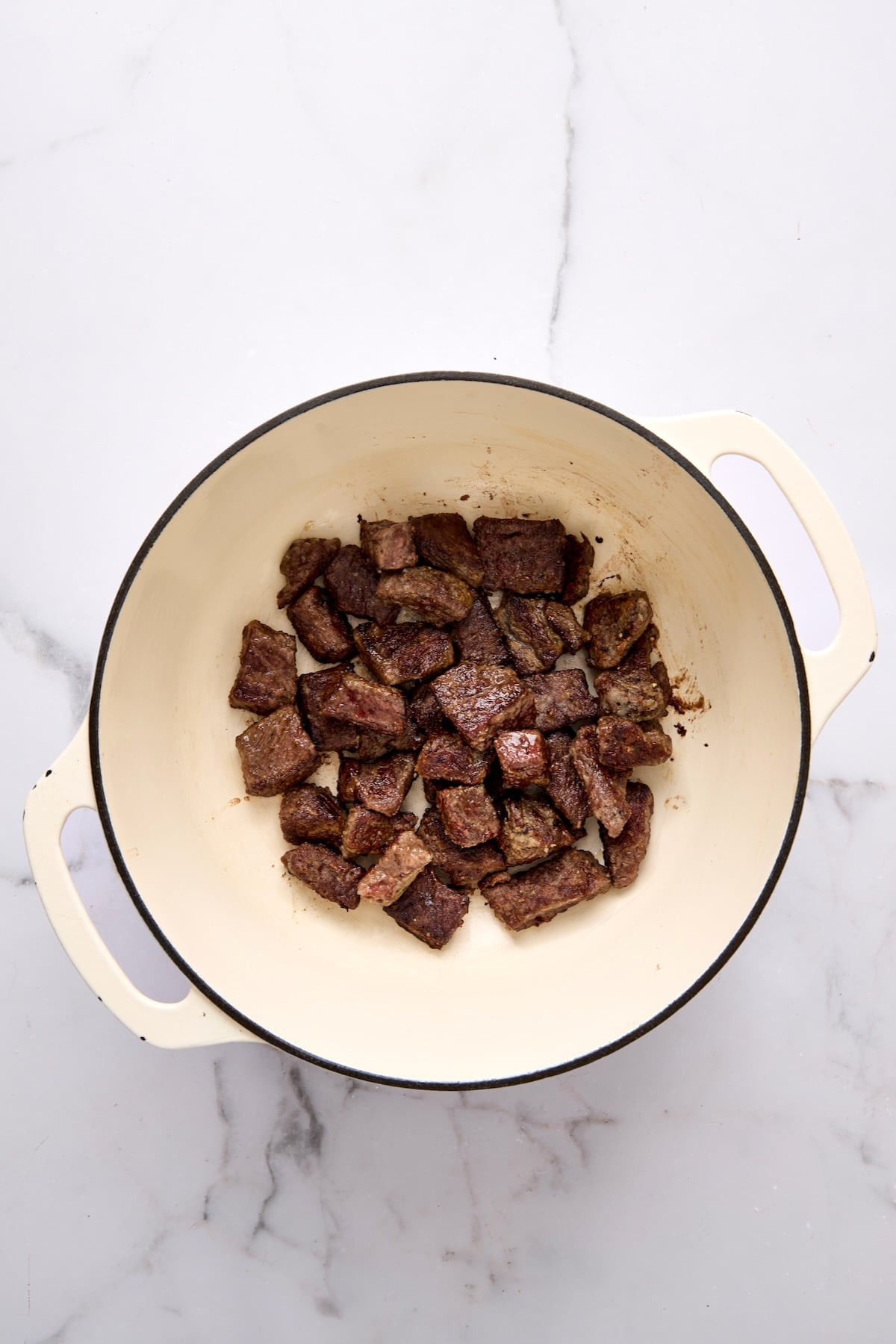
- Heat olive oil in a Dutch oven over medium-high heat, then brown the beef in batches. Pour off excess drippings.
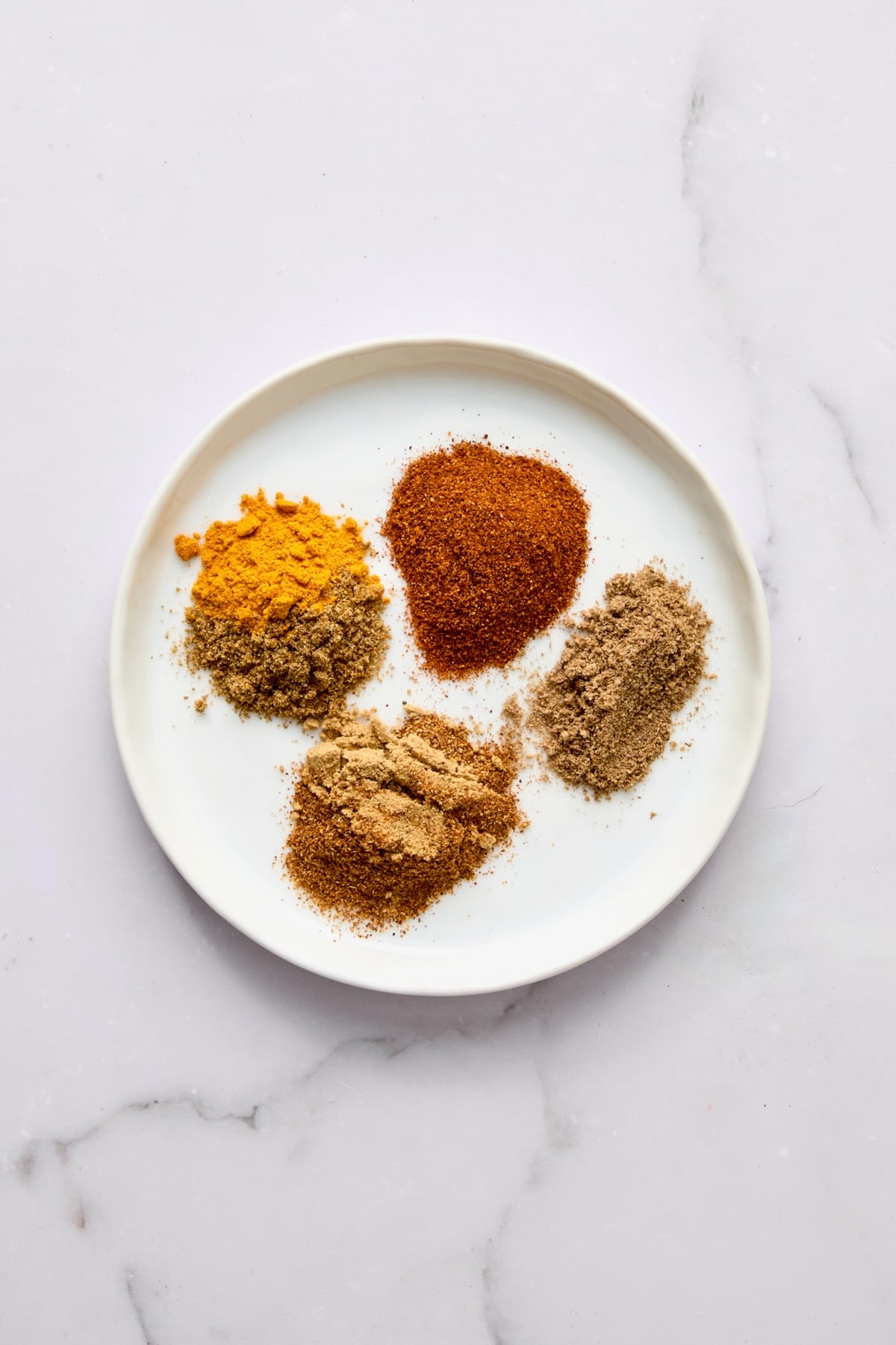
- Combine the paprika, coriander, turmeric, cumin, ginger, and cayenne …
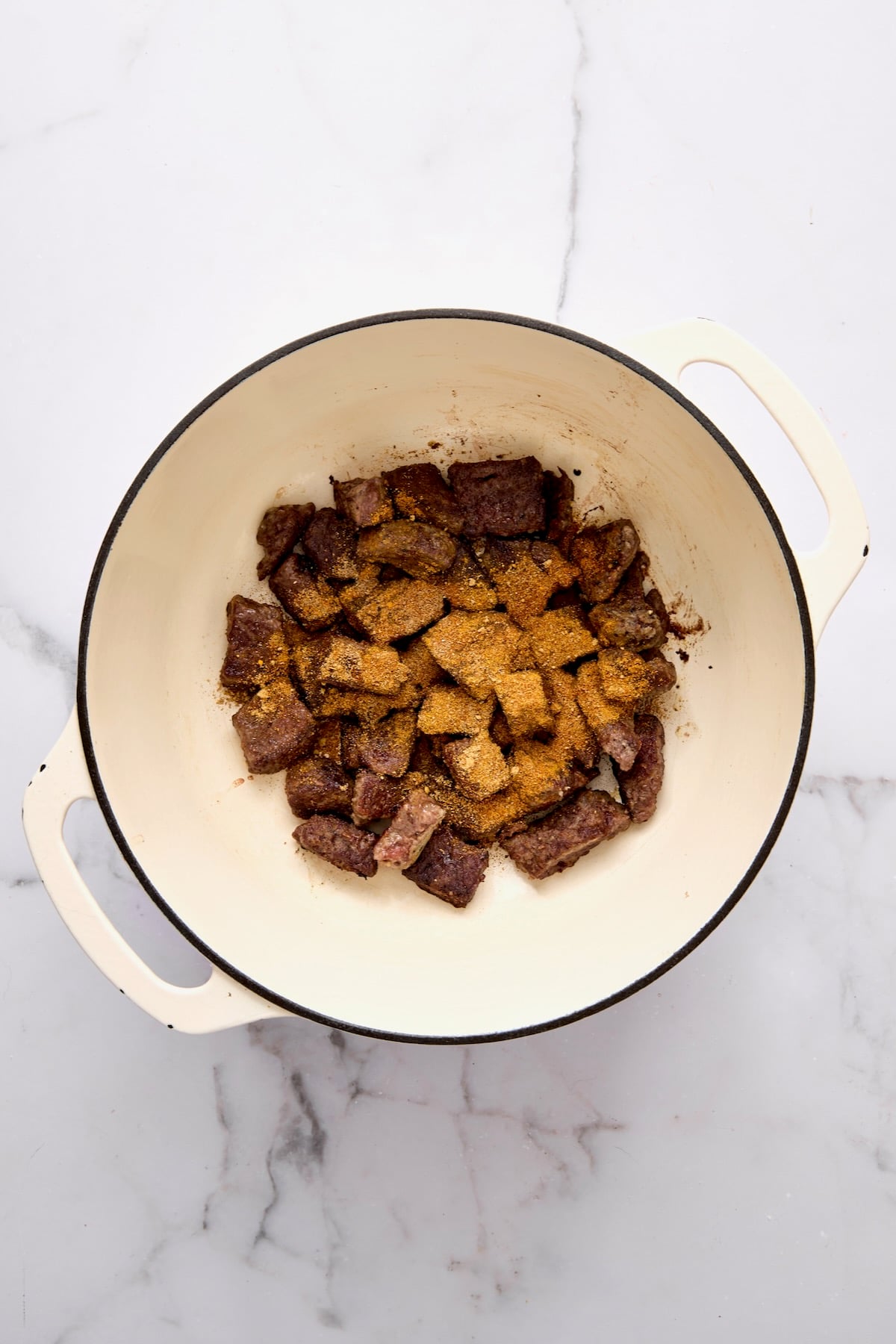
- … then sprinkle over the beef.
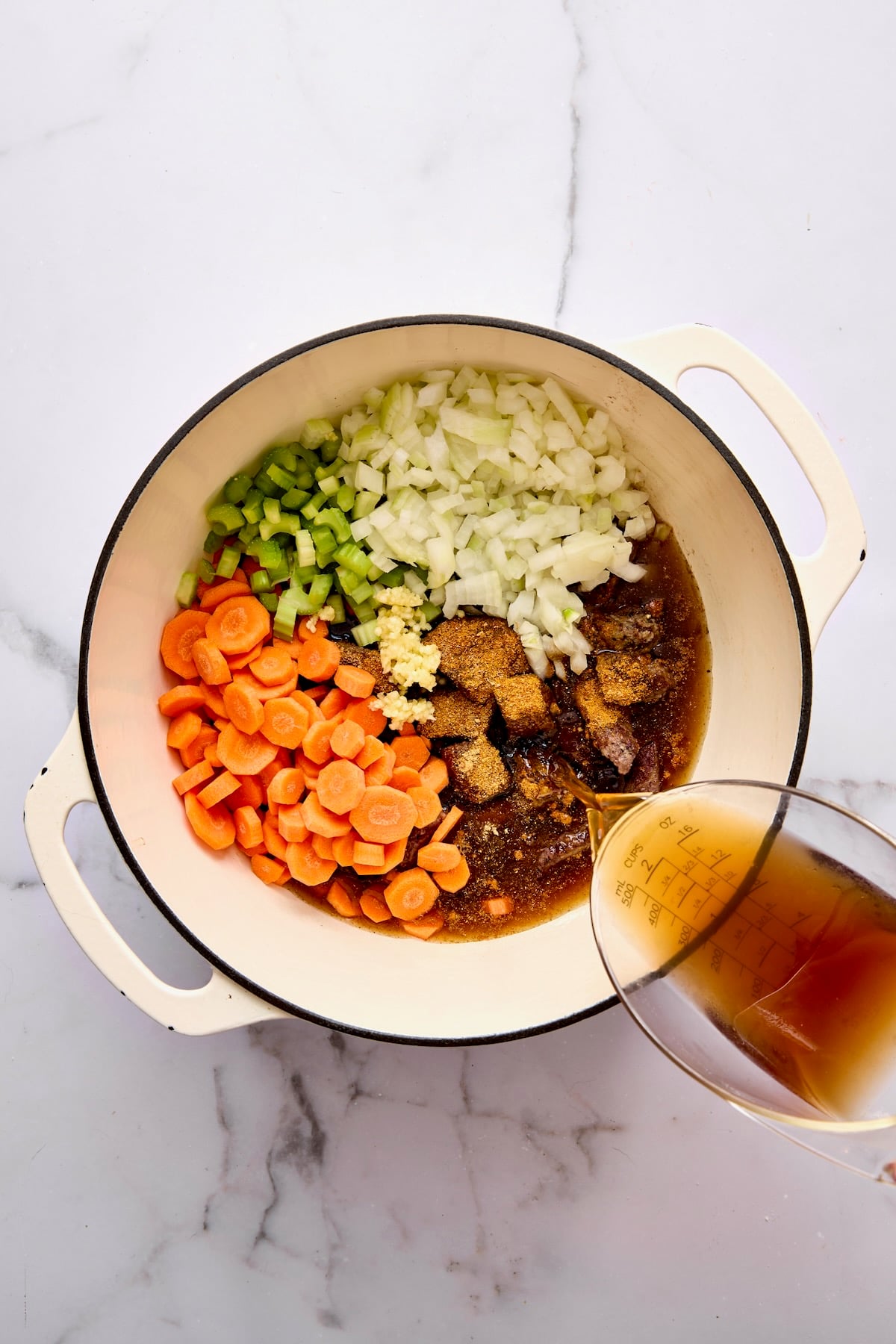
- Add the celery, onion, carrot, garlic, and beef broth.
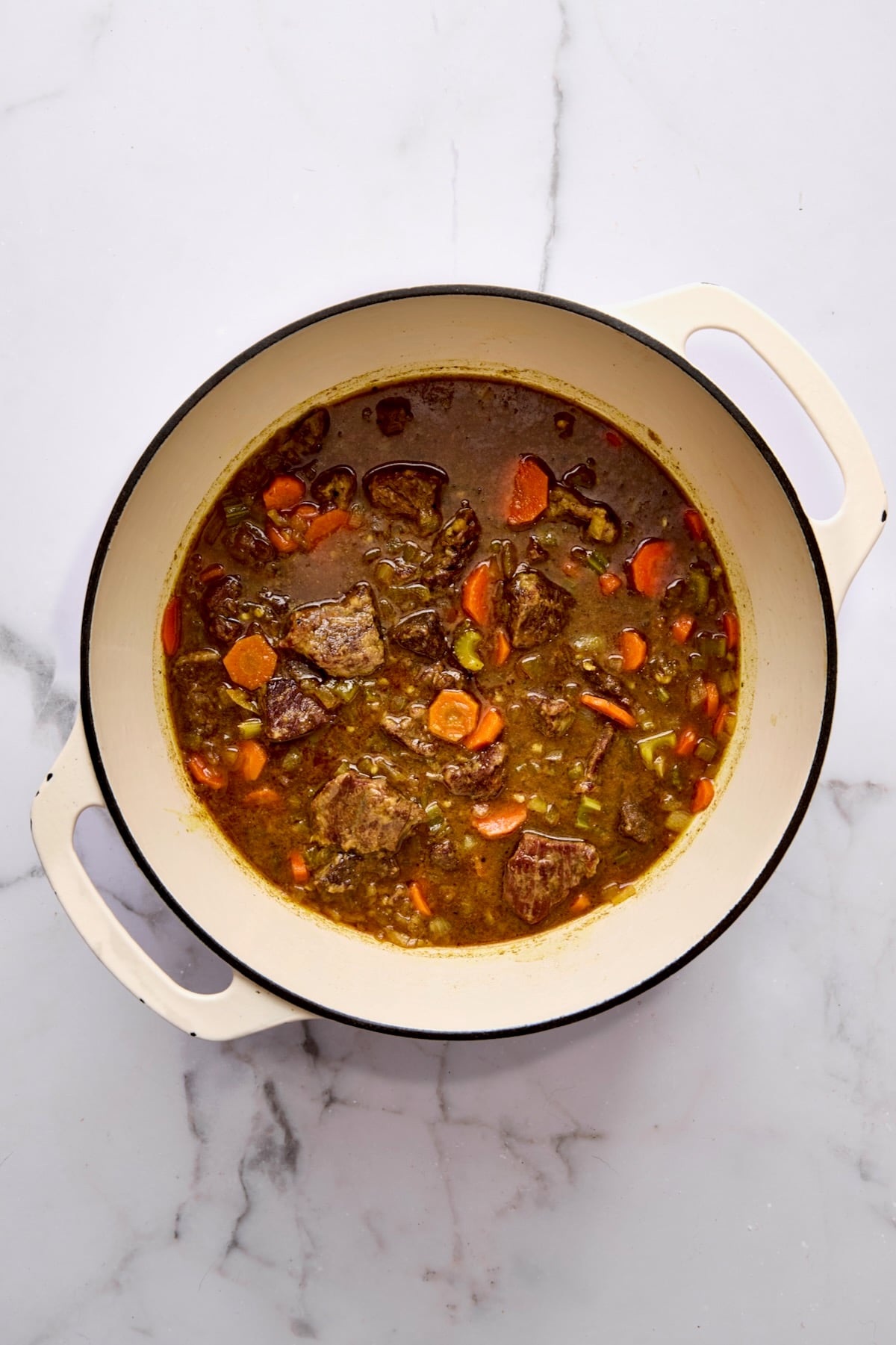
- Bring to a boil, reduce heat to low, cover, and cook for 1 1/4 hours to 1 1/2 hours or until the beef and vegetables are tender.
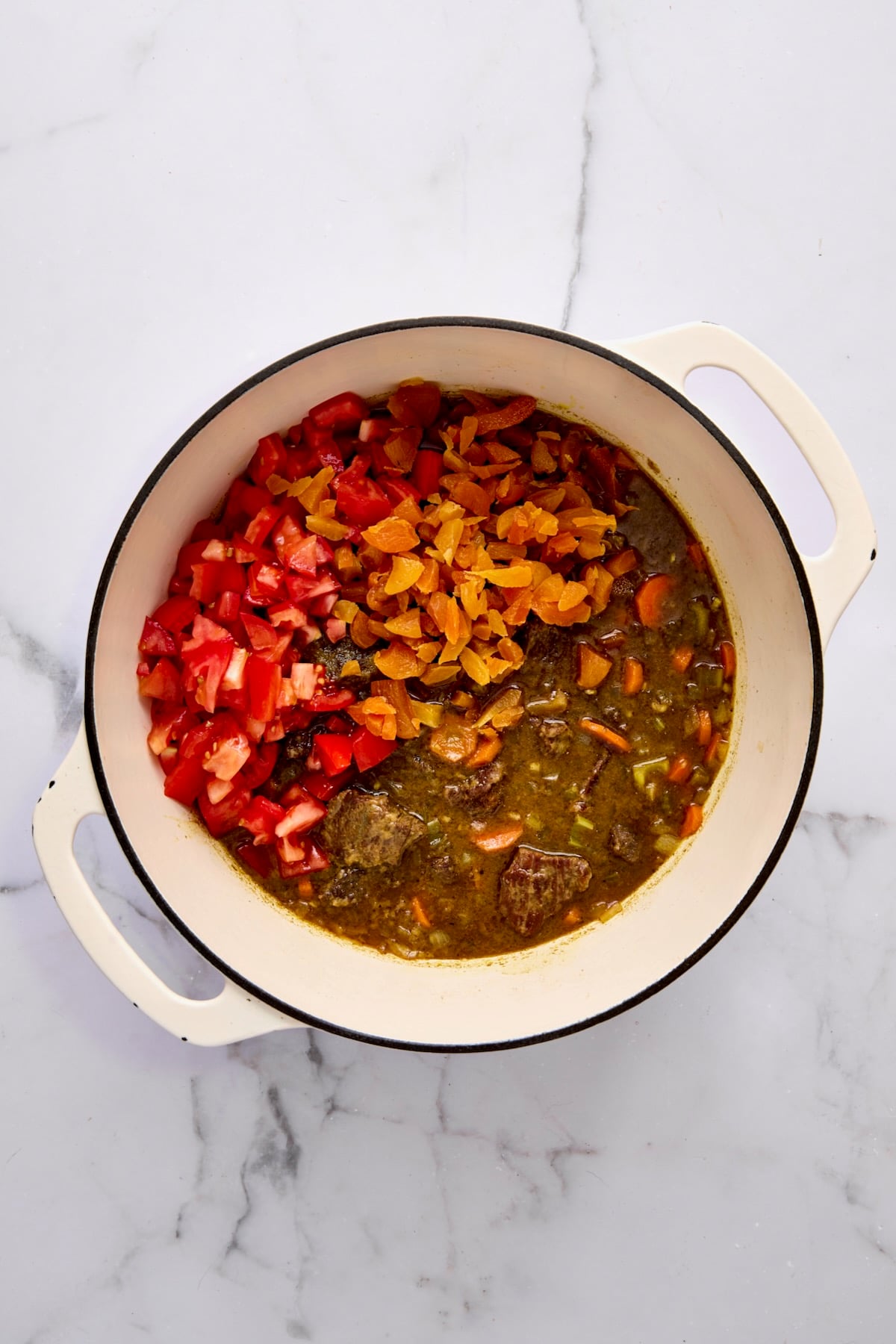
- Add the apricots and tomatoes.
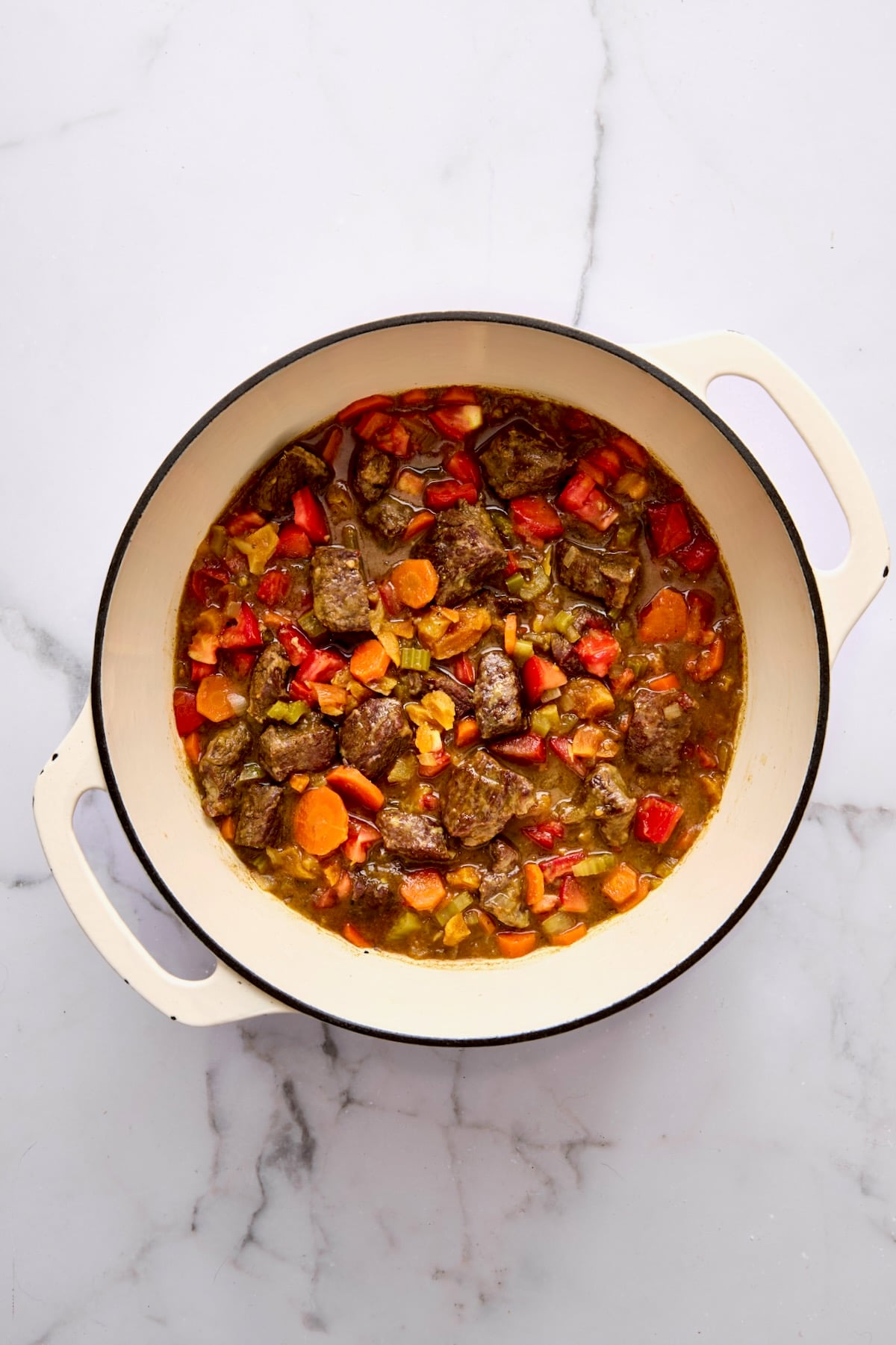
- Cook for 15 more minutes or until the tomatoes and apricots soften.
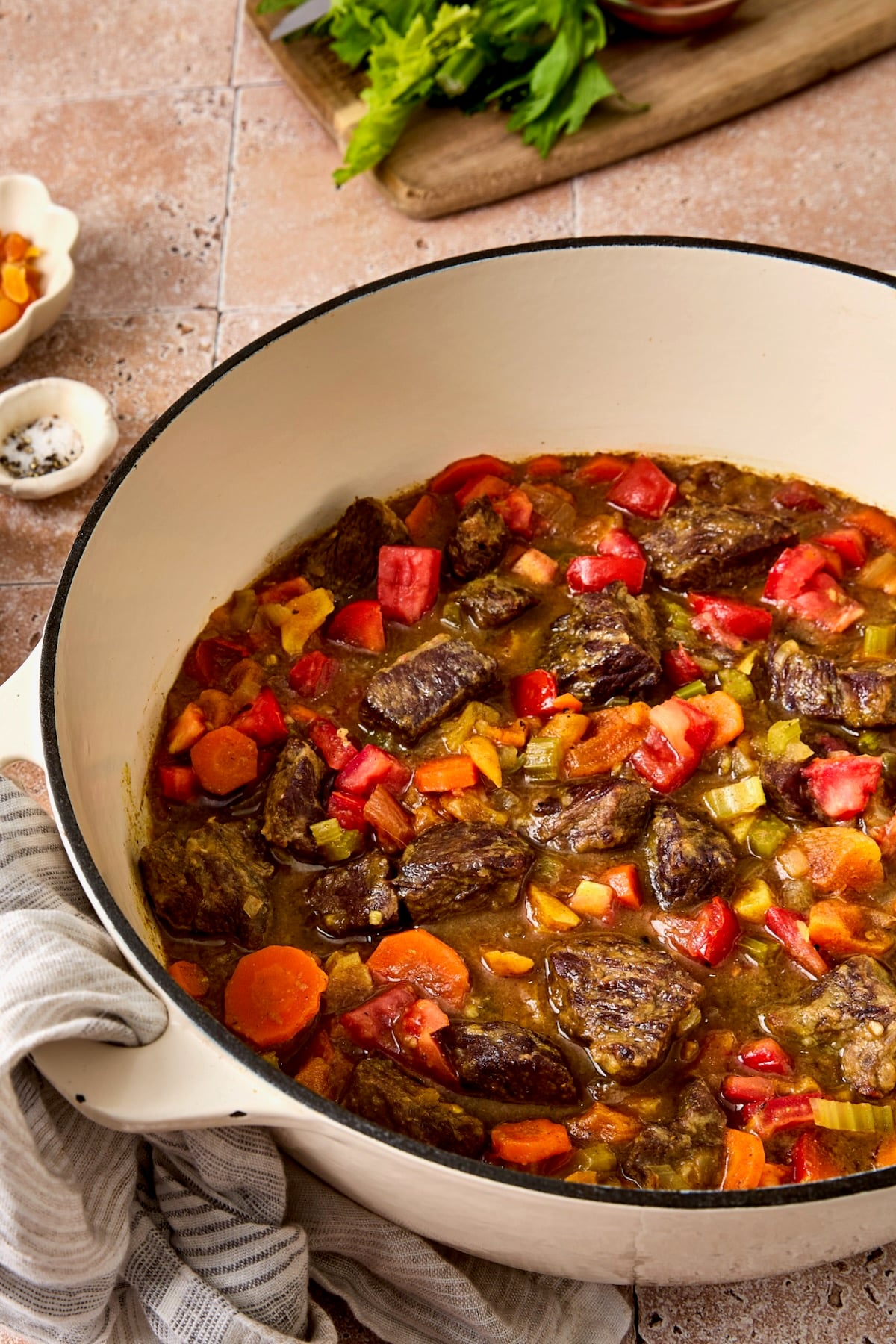
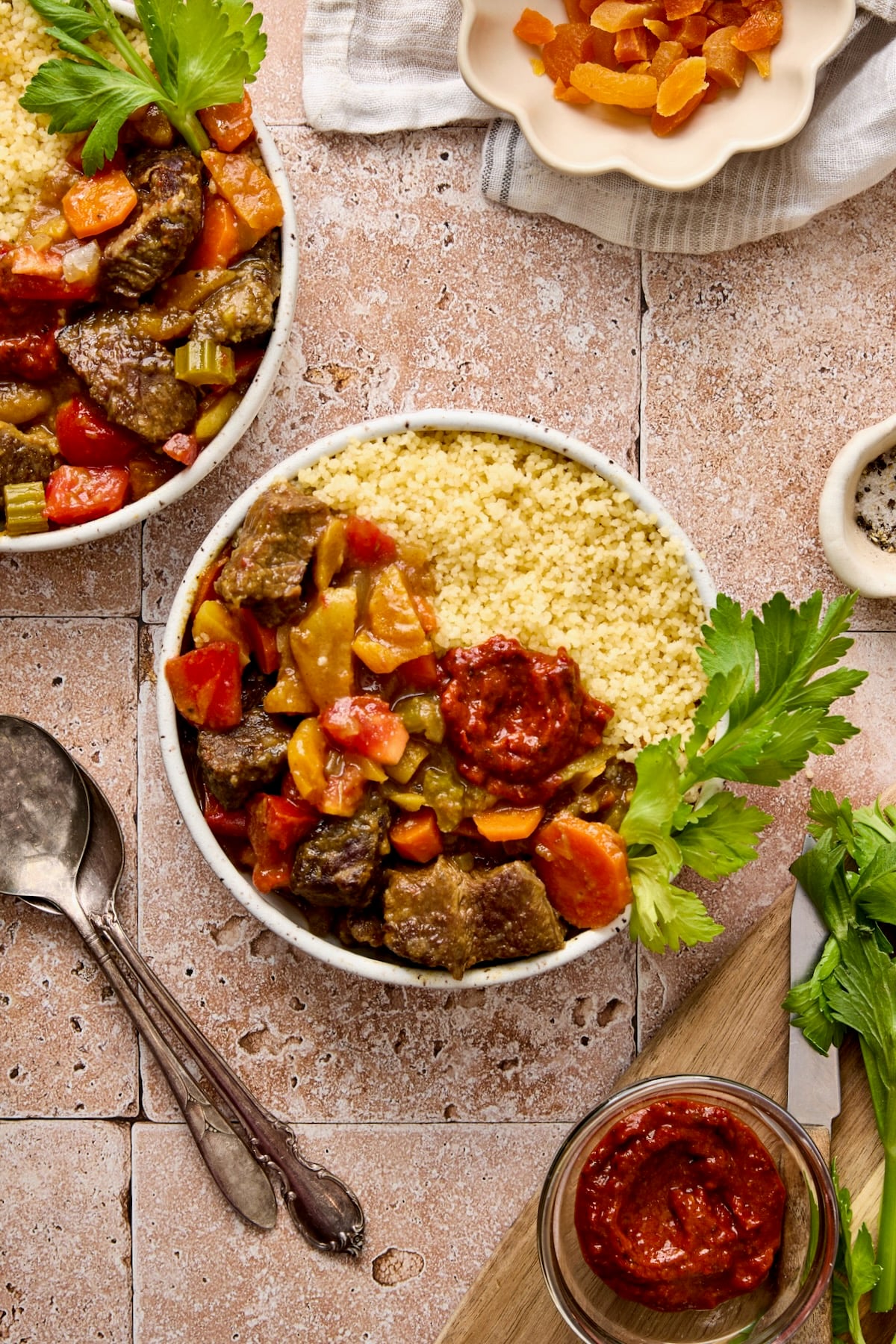
- Garnish with celery sprigs and serve with harissa.
Chef Tips and Tricks:
- Mom slow-cooked her stew on the stovetop. However, my secret for getting stews done quickly is an electric pressure cooker. She never used the old stovetop pressure cookers because they had a reputation for exploding. However, today’s pressure cookers — both electric and stovetop — are extremely safe. An added bonus with electric pressure cookers is that they are often 3-in-1 devices that also include a rice cooker and slow cooker.
- Because you’re coating the beef with flour before browning, watch the heat carefully. Flour can scorch if the pan gets too hot, leaving a bitter flavor in the stew. Brown the beef over medium-high heat, adjusting as needed.
- Brown the beef in batches. Don’t overcrowd the pan or the beef will steam rather than brown. A good sear develops rich flavor that carries through the entire stew.
- Watch the liquid level. The beef doesn’t need to be completely submerged, but there should be enough liquid to keep everything moist. Add a little more broth if the stew reduces too quickly.
- Like most stews, Moroccan Beef Stew tastes even better after the flavors have had time to meld. Make it a day ahead if possible, then gently reheat before serving.
- My final touch is adding harissa, a spicy condiment common in North African cuisine. Garnish with celery leaves (another frugal tip from Mom).
Moroccan Beef Stew Recipe FAQs:
Yes, sure can! Yes! Brown the beef and sauté the vegetables and spices, then transfer everything to a slow cooker. Because slow cookers can water down flavor, sautéing the vegetables adds another layer of flavor. Cook on LOW for 7 to 8 hours or HIGH for 4 to 5 hours, until the beef is fork-tender. Add the tomatoes and apricots halfway through. You may need slightly less broth because slow cookers retain moisture.
Yes! Brown the beef in batches using the sauté function, then cook the aromatics and spices. Follow the directions for your brand of electric pressure cooker. In my Cuisinart, beef stew typically takes 20 to 22 minutes on HIGH pressure. For an Instant Pot, a beef stew can take 30 to 35 minutes. When the stew is done, release the pressure as gradually as possible. If you release it too quickly, the meat can seize and toughen up.
Yes! In fact, it’s even better the next day because the flavors have more time to develop. Refrigerate in an airtight container for up to 2 to 3 days, then reheat gently on the stovetop.
Yes! Cool the stew promptly, then transfer it to airtight, freezer-safe containers. Freeze for up to 3 months for the best quality. Thaw overnight in the refrigerator, then reheat gently until fully hot.
Favorites From My Kitchen:
- For another hearty, Moroccan-inspired meal that’s perfect for family dinners, try my Moroccan Meatball Stew.
- The sweet-and-savory balance in this beef stew makes my Moroccan Chicken Tagine delicious, too!
- My Moroccan Caponata is another example of how Moroccan-inspired spices can transform simple ingredients into something special.
More Globally Inspired Comfort Food!


If you tried my Moroccan Beef Stew recipe, please leave a 🌟 star rating and let me know how it turned out in the comments!
Moroccan Beef Stew
Video
Equipment
Ingredients
- 3 tablespoons all-purpose flour
- 2 teaspoons salt
- 1 teaspoon freshly ground black pepper
- 1 (2-pound) chuck roast, trimmed and cubed into approximately 1-inch cubes
- 2 tablespoons olive oil
- 2 teaspoons sweet paprika
- 1 teaspoon ground coriander
- 1 teaspoon ground cumin
- 1/2 teaspoon ground turmeric
- 1/2 teaspoon ground ginger
- 1/4 teaspoon cayenne pepper, optional
- 2 stalks celery, chopped
- 1 medium onion, chopped
- 2 large carrots, sliced
- 4 cloves garlic, sliced
- 2 cups beef broth
- 3 small plum tomatoes, coarsely chopped –OR– one 14.5-ounce can drained diced tomatoes
- 1 cup dried apricots, coarsely chopped
- Celery leaves, for garnish
Instructions
Stew
- Combine the flour, salt, and pepper on a plate, then dredge the beef pieces.
- Heat olive oil in a Dutch oven over medium-high heat, then brown the beef in batches. Pour off excess drippings.
- Combine the paprika, coriander, turmeric, cumin, ginger, and cayenne, then sprinkle over the beef.
- Add the celery, onion, carrot, garlic, and beef broth.
- Bring to a boil, reduce heat to low, cover, and cook for 1 1/4 hours to 1 1/2 hours or until the beef and vegetables are tender.
- Add the apricots and tomatoes. Cook for 15 more minutes or until the tomatoes and apricots soften.
- Garnish with celery sprigs and serve with harissa.
Notes
- You can also use lamb shoulder.
- Canned diced tomatoes work just as well when fresh tomatoes aren’t in season.
- Avoid anything labeled “stew meat.” It’s usually a mix of cuts, which can create different meat textures in the stew.
- Because the beef is coated in flour, watch the heat when browning; it can scorch. Adjust the heat as needed.
- Brown the beef in batches without overcrowding the pan. Otherwise, it will steam rather than brown.
- The beef doesn’t need to be submerged, but add more broth if the stew reduces too quickly.
- Brown the beef and sauté the vegetables and spices, then transfer everything to a slow cooker.
- Cook on LOW for 7 to 8 hours or HIGH for 4 to 5 hours, until the beef is fork-tender.
- Add the tomatoes and apricots halfway through.
- You may need slightly less broth because slow cookers retain moisture.
- Brown the beef in batches using the sauté function, then cook the aromatics and spices. Follow the directions for your brand of electric pressure cooker.
- In my Cuisinart, beef stew typically takes 20-22 minutes on HIGH pressure.
- For an Instant Pot, a beef stew can take 30-35 minutes.
- When the stew is done, release the pressure as gradually as possible. If you release it too quickly, the meat can seize and toughen up.
- Refrigerate in an airtight container for up to 2-3 days.
- Reheat gently on the stovetop.
- Cool the stew promptly, then transfer it to airtight, freezer-safe containers.
- Freeze for up to 3 months.
- Thaw overnight in the refrigerator, then reheat gently until fully hot.
Nutrition
Nutritional values are automatically calculated using unbranded products and are estimates only. Actual results may vary based on ingredients used and portion sizes. Adjust as needed for dietary restrictions, allergies, or health concerns.
 Like this? Leave a comment below!







How would you compare time of cooking between the stovetop and slow cooking in pressure cooker ?
Hi, Marek, Thanks so much for your question. Instruction #4 has to simmer on the stovetop for 1 1/4 to 1 1/2 hours. If you do the stew in a pressure cooker, it will take approximately 22 minutes on HIGH. Now, that’s not an Instant Pot, I have a Cuisinart electric pressure cooker which is faster than an IP. An IP will take 30 minutes or so. For a slow cooker, I would do 4-6 hours on high or 8 hours on low. Thanks again and hope you enjoy!
Very good. First time using pressure cooker. Will make for wine tasting group. I served it over couscous, but could have been cauliflower rice. Good amount of sauce. Ok. I hate celery texture (raw or cooked), so used celery flakes. Did not notice your harissa part of recipe, so had leftover plain yoghurt and added cumin, coriander, harissa dry spice, za’atar, olive oil and vinegar to spoon over stew. Yummy. What would be a good side dish? Not that a side is needed for us, but company coming.
Hi, Jeannine, Thanks so much and glad you enjoyed. For a side dish, I would suggest simply-prepared green beans and a Moroccan-style salad of greens, orange wedges, red onion, radishes and black olives. Thanks again and hope your group enjoys, too!
My mom went to a class about the benefits of turmeric, and I told her I’d find recipes that had turmeric in them, this…you! This dish is so amazing, and everyone that has had it had me send this link while still at the table. So…brava. My local store has a Harissa mix in the bulk spice section, so maybe people want to see about that where they shop. It was a mite less tasty than yours but it did save a step in a pinch.
I thought this was a recipe from a person from Morocco. Anyway, I am trying this tonight. I can’t wait. I love this time of year when we can make yummy soups!
Hi, Ameerah, Just my mom’s award-winning recipe. Thanks so much and hope you enjoy!
How long would you cook the tomatoes and apricots if you made it in a slow cooker?
Hi, Emily, Thanks so much for your great question! It will depend on the amount of time you have the slow-cooker set for. For a 4-hour setting, I would add when one hour is left to go. Thanks so much and I adjusted the recipe to include that information. Hope you enjoy!
Made this for dinner last night and it was really yummy. I also made couscous and ganished the with pomegranate seeds and parsley sprigs and it look really pretty.
Thanks so much, Selena! Glad you enjoyed and your presentation sounds gorgeous!
This looks great! When you are using a pressure cooker, do you do a quick release so you can add the apricots and tomato in? Also, after it’s finished, is the additional minute a quick or natural release? Thank you!!
Hi, Tasha, Thanks for your good question! I would recommend a slow release after the initial cooking period. If you release the pressure too quickly, the beef can seize up and become tough again. That extra minute at high pressure shouldn’t affect the beef too much and should be just enough to get the apricots and tomato soft. I’d still do a semi-slow release–not natural, not quick–somewhere in between. Please let me know how it goes!
Hi,
I’d like to try this recipe, it sounds delicious. But I wonder about the harissa…do you use all of this spices in one single meal, or do you mix the spices and then use just some of it (how much?) and keep the rest for later occasions?
Thanks:-)
Anne
Hi, Anne,
Thanks for your question. Use as much or as little as you want on the stew. If you don’t like things spicy, you could leave off if you like. Hope you enjoy!
This was delicious . The combination of spices and the apricots was wonderful.
Thank you so much! I appreciate the feedback and please stay in touch.
This looks delicious. Could it be doubled or tripled for the pressure cooker? I don’t have one, although do have access to my mom’s old (’40’s or 50’s cooker) and have considered buying one.
Hi, Lee,
Yes, it can be doubled. Pressure cookers have a limit as to how much liquid/contents you can place in them. There has to be some space left at the top. I highly recommend electric pressure cookers. (I have a Cuisinart.) You can set them and forget them and you free up a burner. Be careful of those old pressure cookers; they don’t have any safety measures built in. Thanks so much for your question. Let me know how it goes!