Greek Roast Chicken (Spatchcock-Style)

This Post May Contain Affiliate Links. Please Read My Disclosure
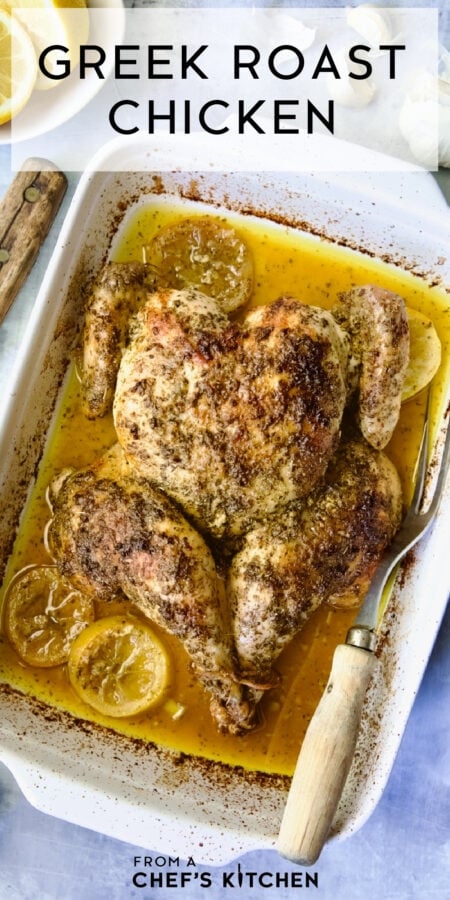
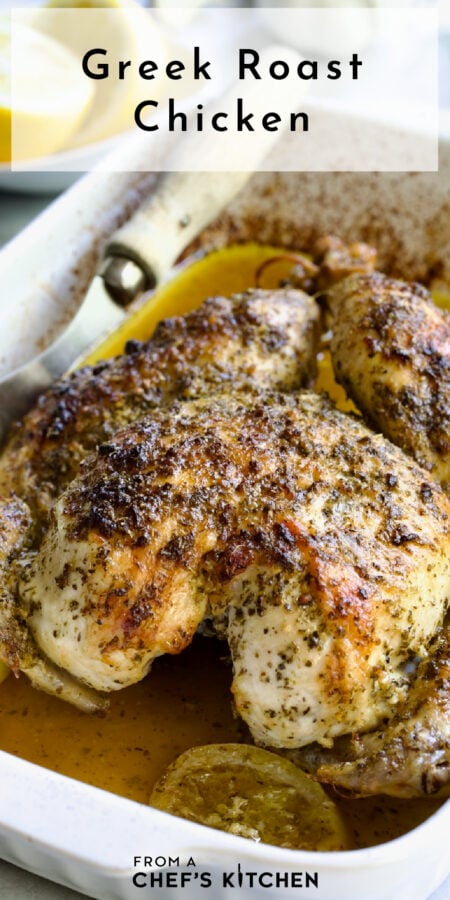
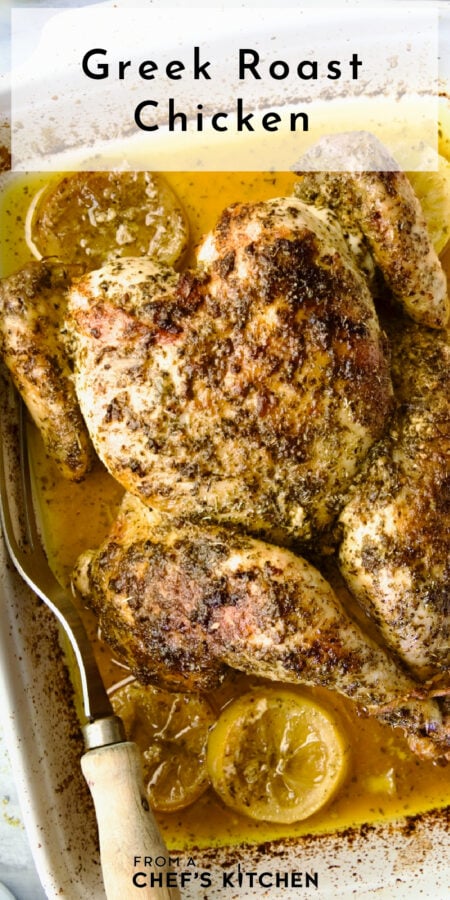
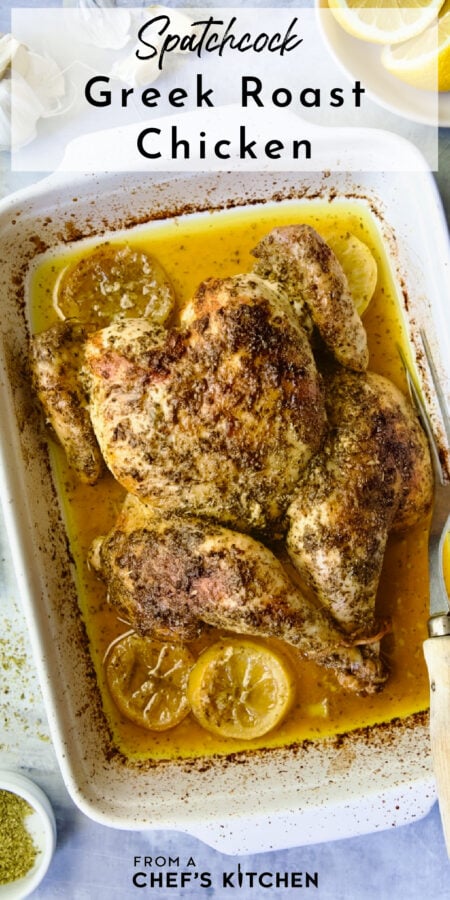
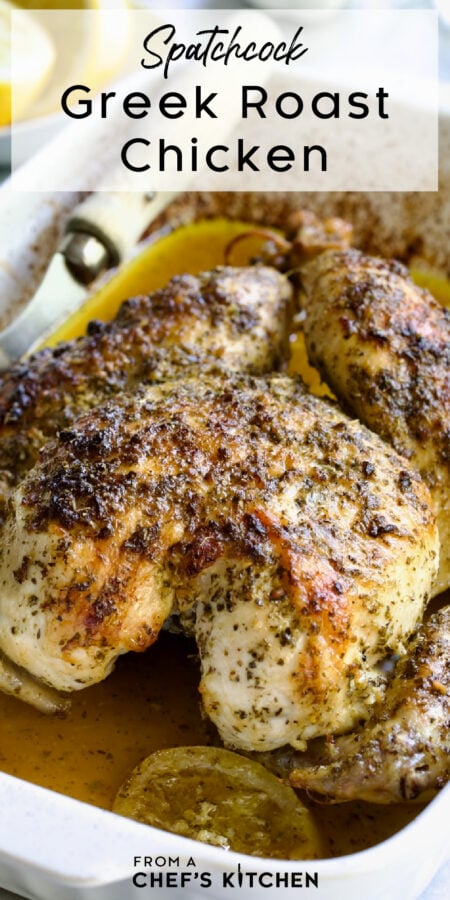
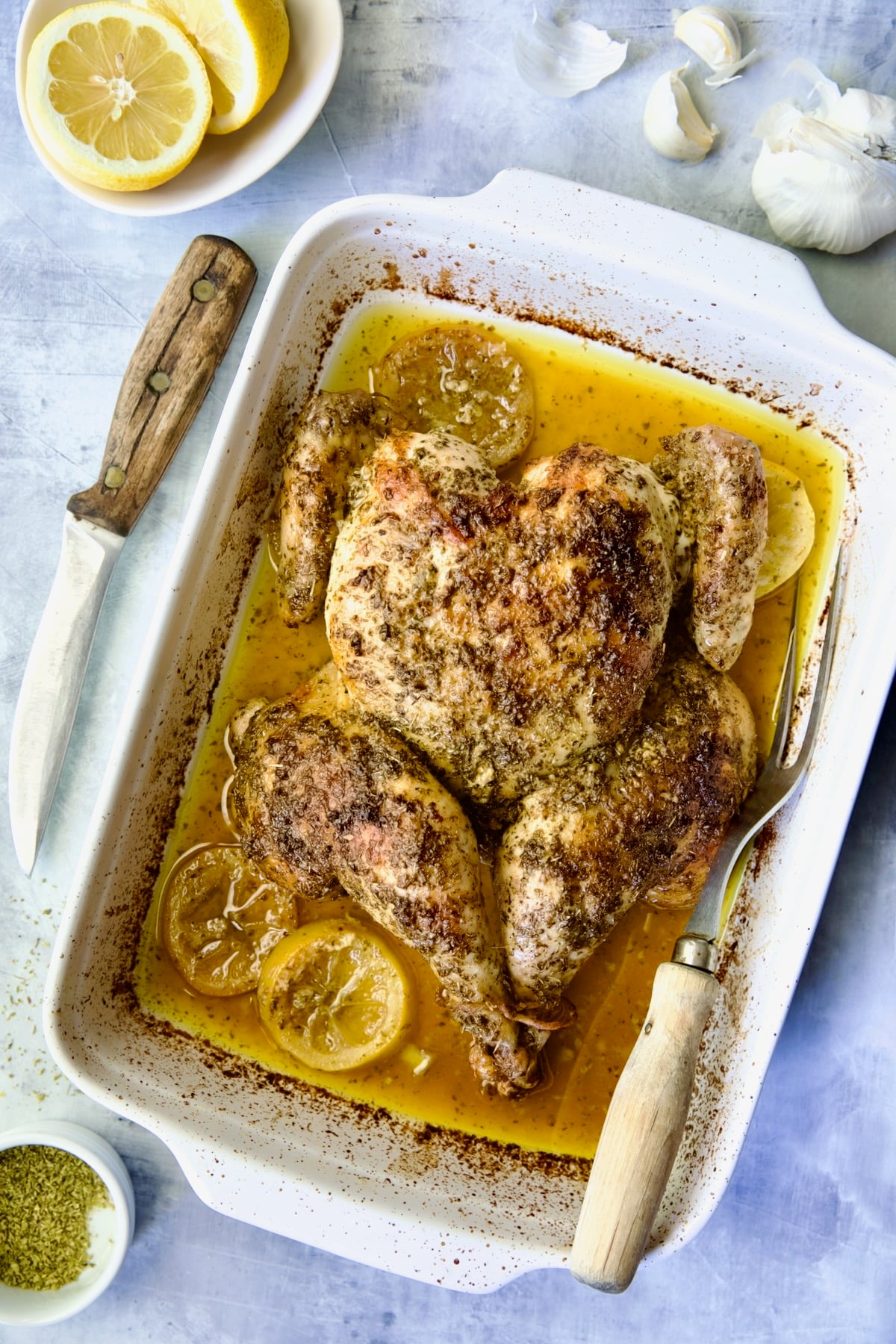
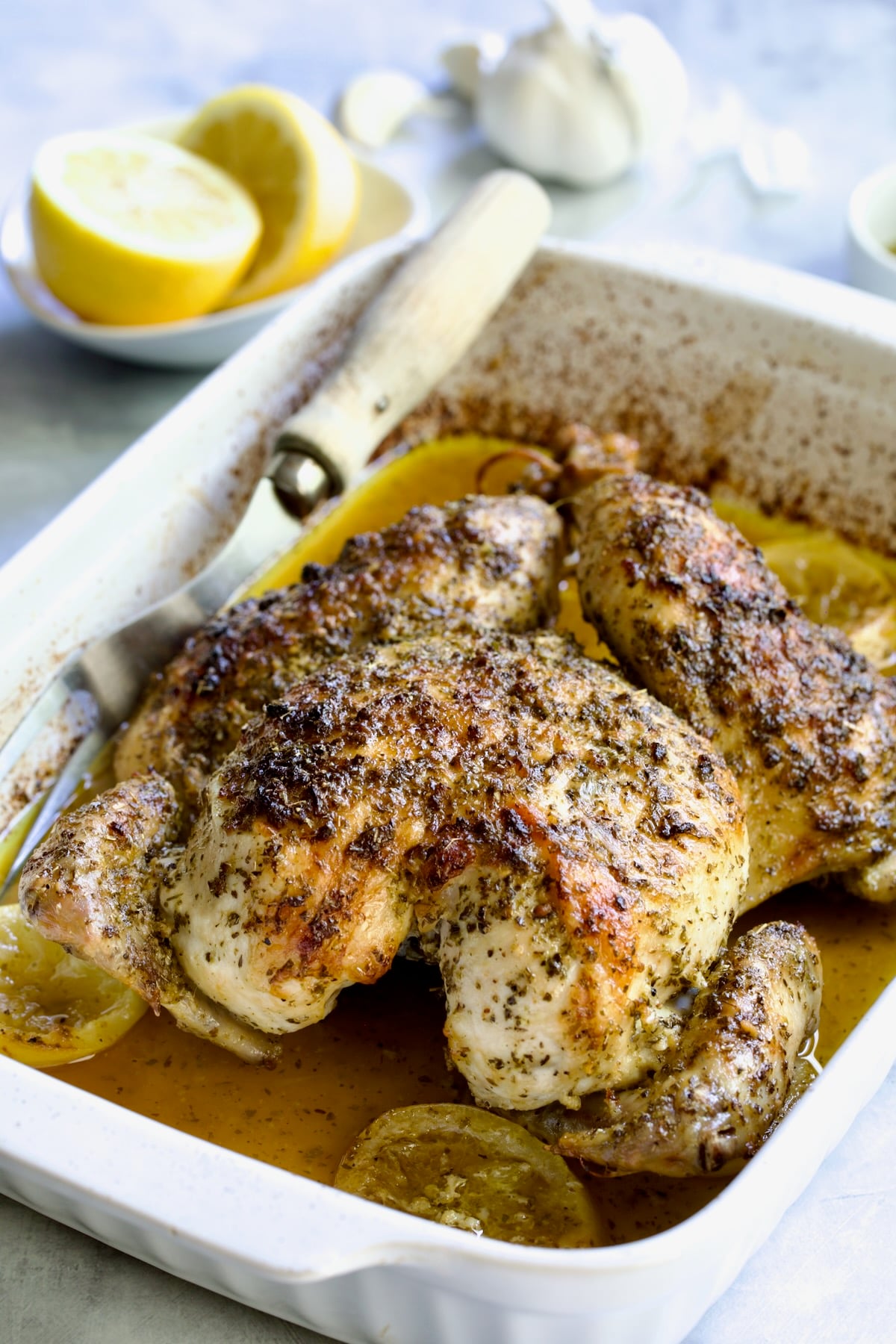
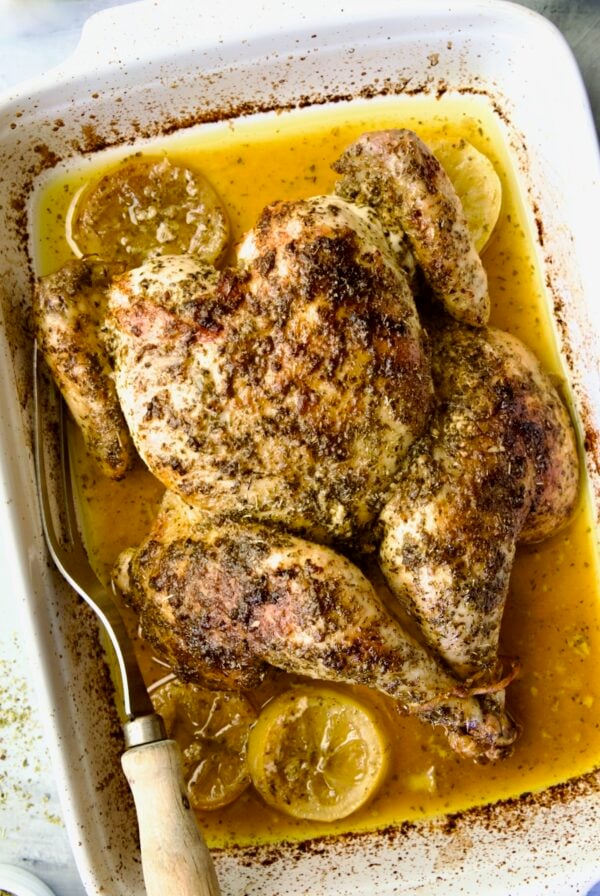
Bring the flavors of a Greek taverna home with this Greek Roast Chicken! Bright lemon, garlic, and oregano infuse the meat while roasting to golden perfection. Spatchcocking helps the chicken cook faster and more evenly. Perfect alongside potato galettes, a classic Greek salad, and buttery tender Greek Green Beans.
Why This Recipe is a Keeper!
If Greek food’s fresh, vibrant flavor makes your heart skip a beat, you’ll want to master this easy Greek Roast Chicken. Infused with lemon, garlic, oregano, and olive oil, it’s everything you love about classic Mediterranean cooking in one simple recipe.
Roasted to perfection with crisp skin and juicy, tender meat, this authentic roast Greek chicken is weeknight-friendly yet impressive enough for entertaining.
This Greek Roast Chicken recipe is :
- Authentic! This roasted Greek chicken recipe has authentic flavor! It’s the chicken served here at a popular local Memphis Greek Fest, and from their cookbook.
- Evenly Cooked. Spatchcocking ensures the chicken roasts evenly, so the breast doesn’t dry out while waiting for the legs to finish cooking.
- Easy! Just a few simple, flavor-packed ingredients elevate roast chicken to a showstopping meal with minimal effort.
How to Make greek roast chicken:
Recipe Ingredients:
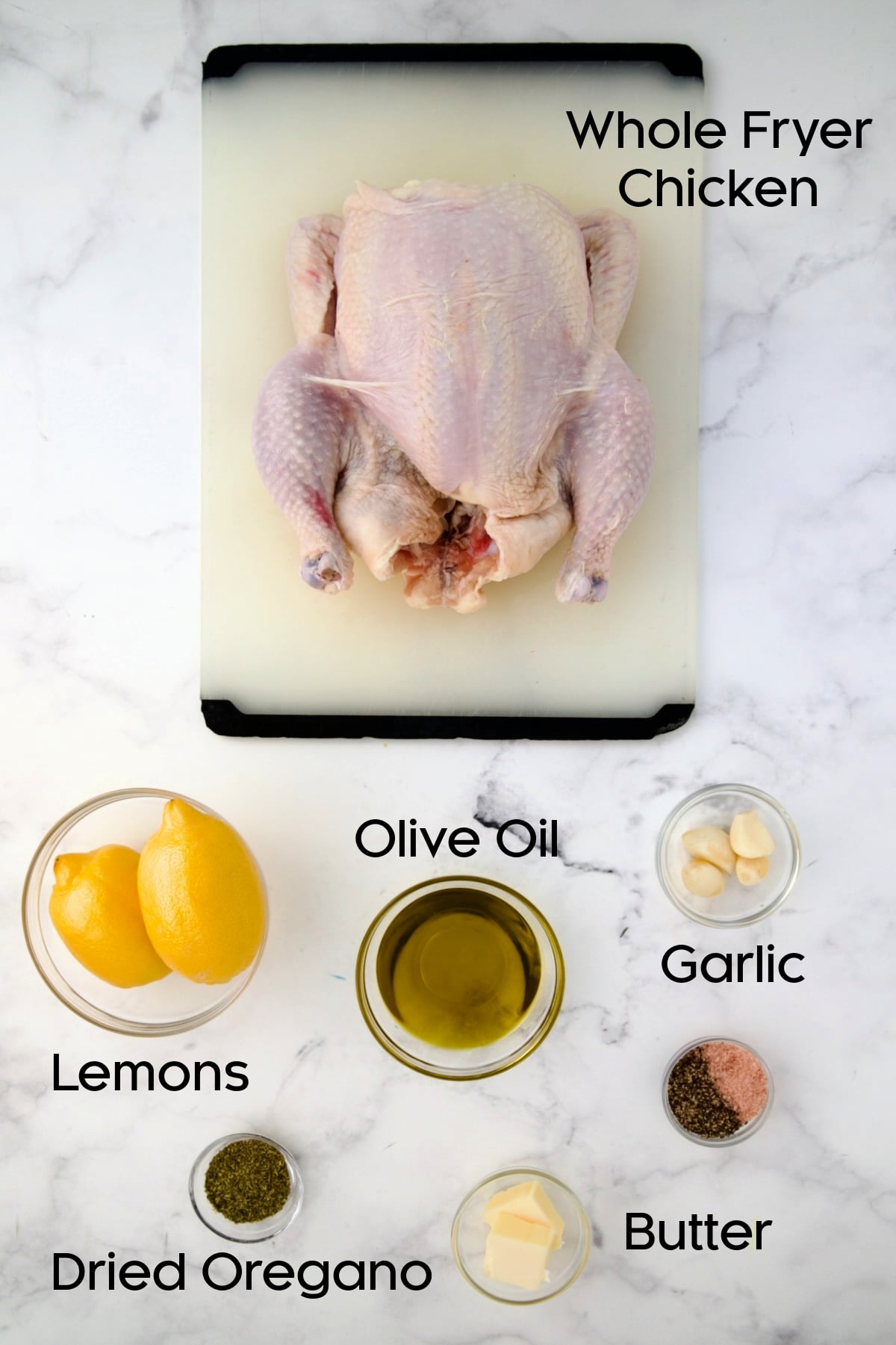
Here’s everything you’ll need to make this Greek chicken recipe. The exact quantities are on the recipe card below.
Ingredient Notes and Substitutions:
- Whole Fryer Chicken: Fryer-size chickens are generally six to ten weeks old and weigh between 2 1/2 and 3 1/2 pounds. Because they’re young, the meat is tender and they cook faster, so it doesn’t dry out. You can also use a roasting chicken, which is 3 1/2 pounds to 5 1/2 pounds, but you’ll need to add additional roasting time. Other options are a half roasting chicken or split chicken breasts.
- Olive Oil: Use a good, Greek extra-virgin olive oil if possible.
- Dried Oregano: Greek cooks use dried oregano with abandon. Use a good Greek oregano if possible.
Step-By-Step Instructions:
- Gather and prep all the ingredients.
- Preheat oven to 350 degrees.
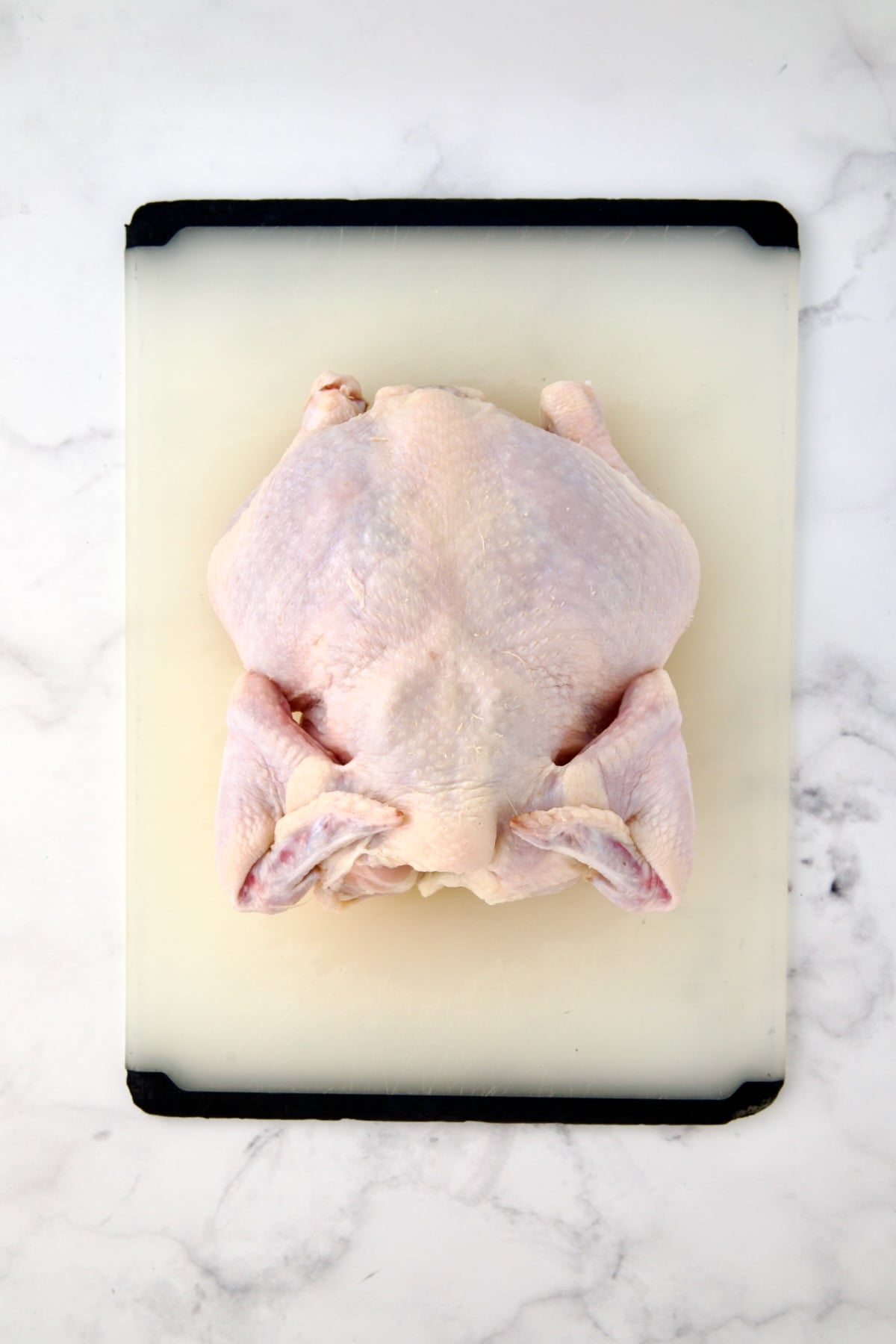
- Rinse the chicken and pat dry with paper towels. Place the chicken, breast side down, onto a plastic cutting board. Tuck the wings behind the chicken for a neat presentation and to prevent the tips from getting overly browned. (Can also be done after removing the backbone.)
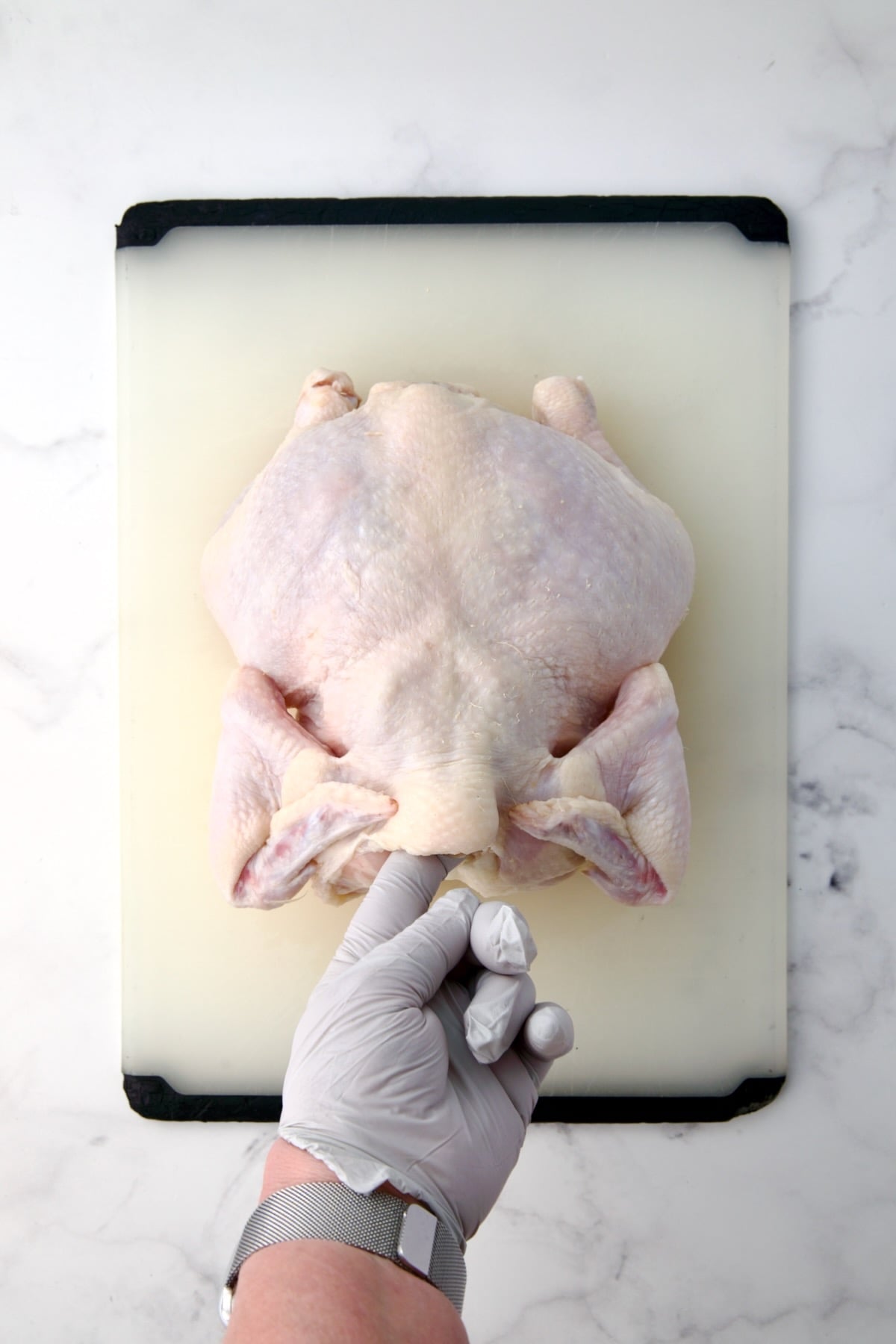
- Starting at the neck, find the backbone.
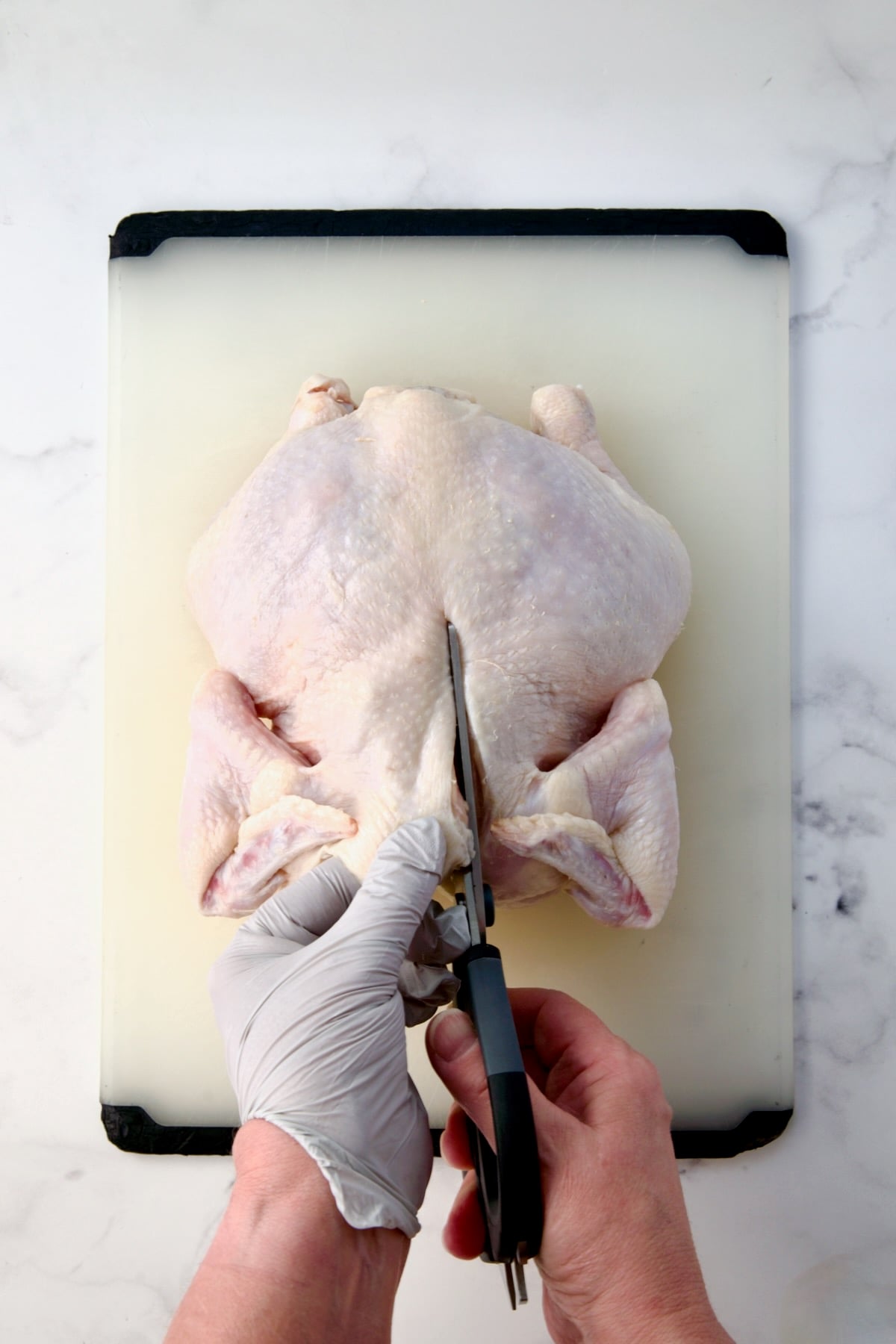
- Cut along the backbone with good, sharp kitchen shears until you get to the tail.
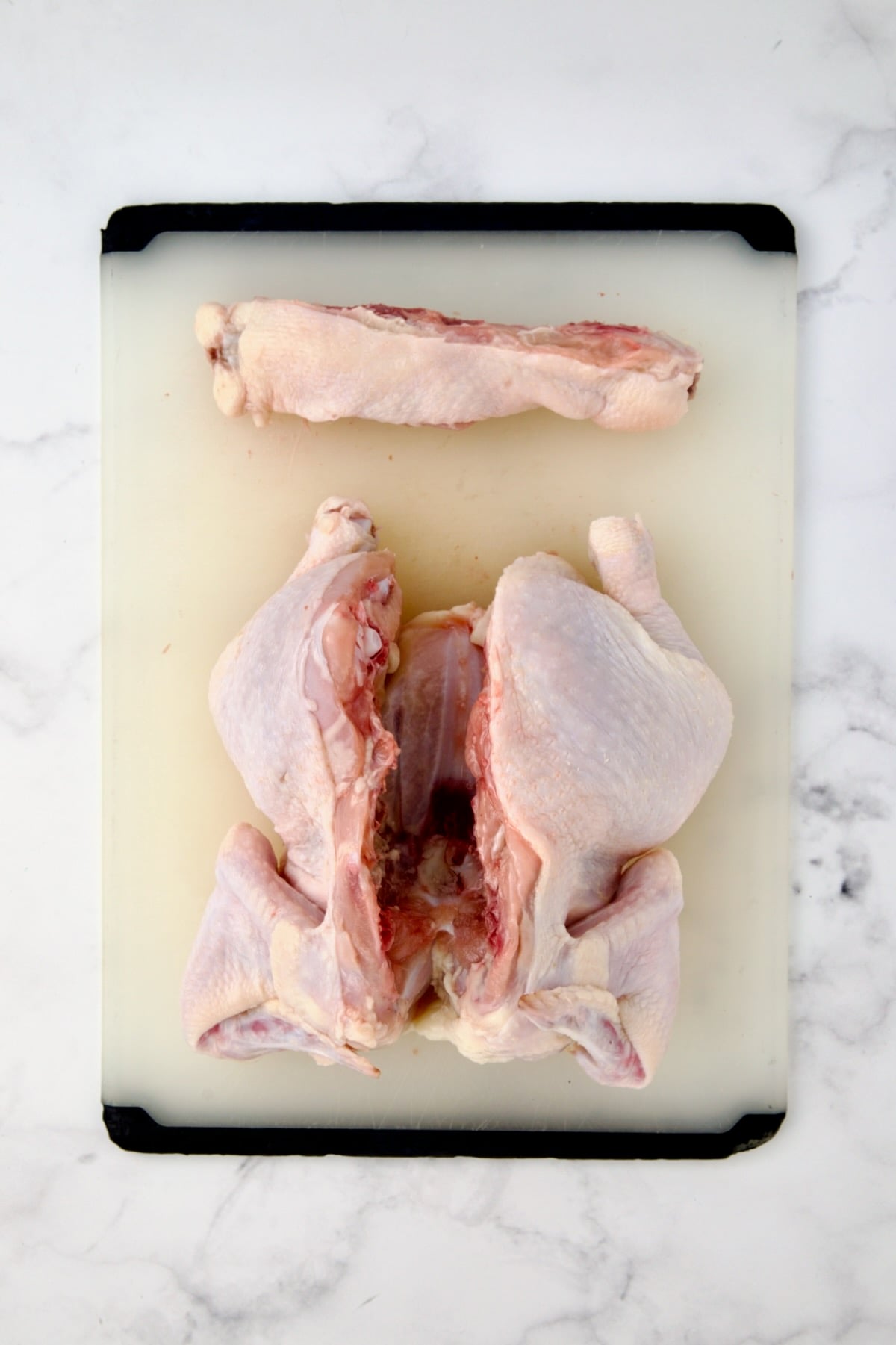
- Repeat on the other side of the backbone until you’ve removed it. (One spot near the thigh will require a little extra effort, but it can still be cut with kitchen shears.) Discard or freeze for stock.
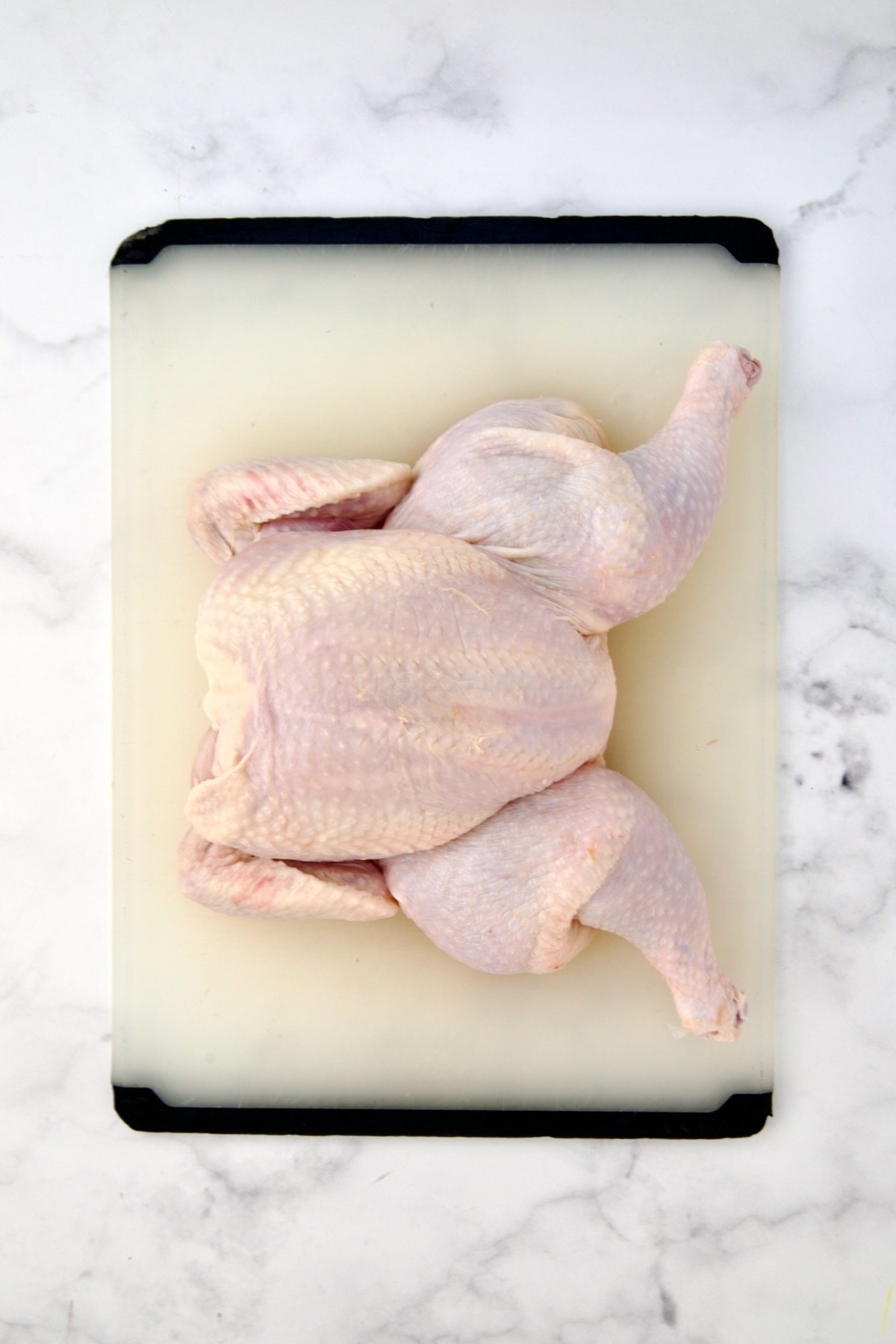
- Ta-daa!
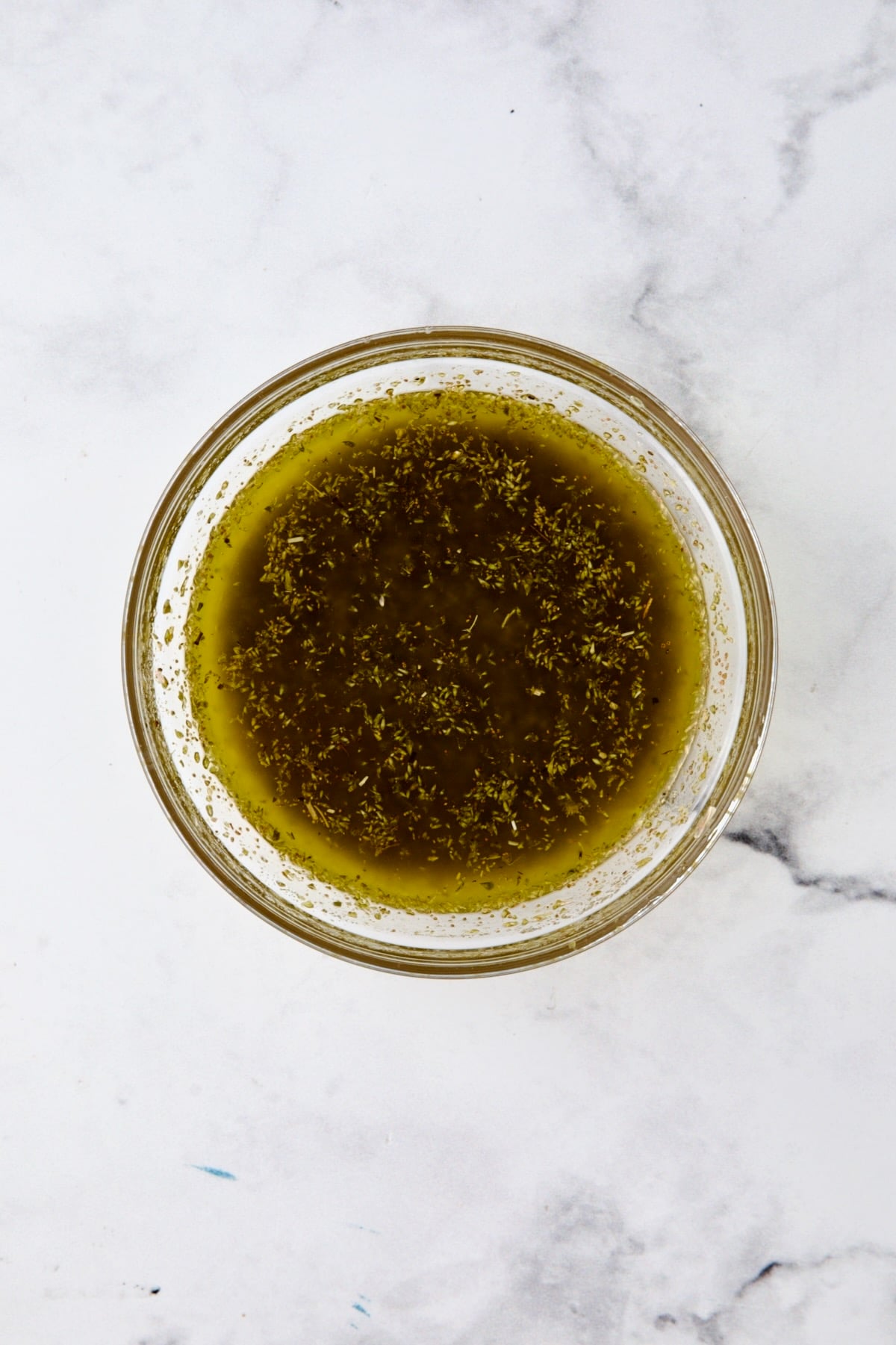
- Whisk together the lemon juice, olive oil, garlic, salt, and pepper in a small bowl.
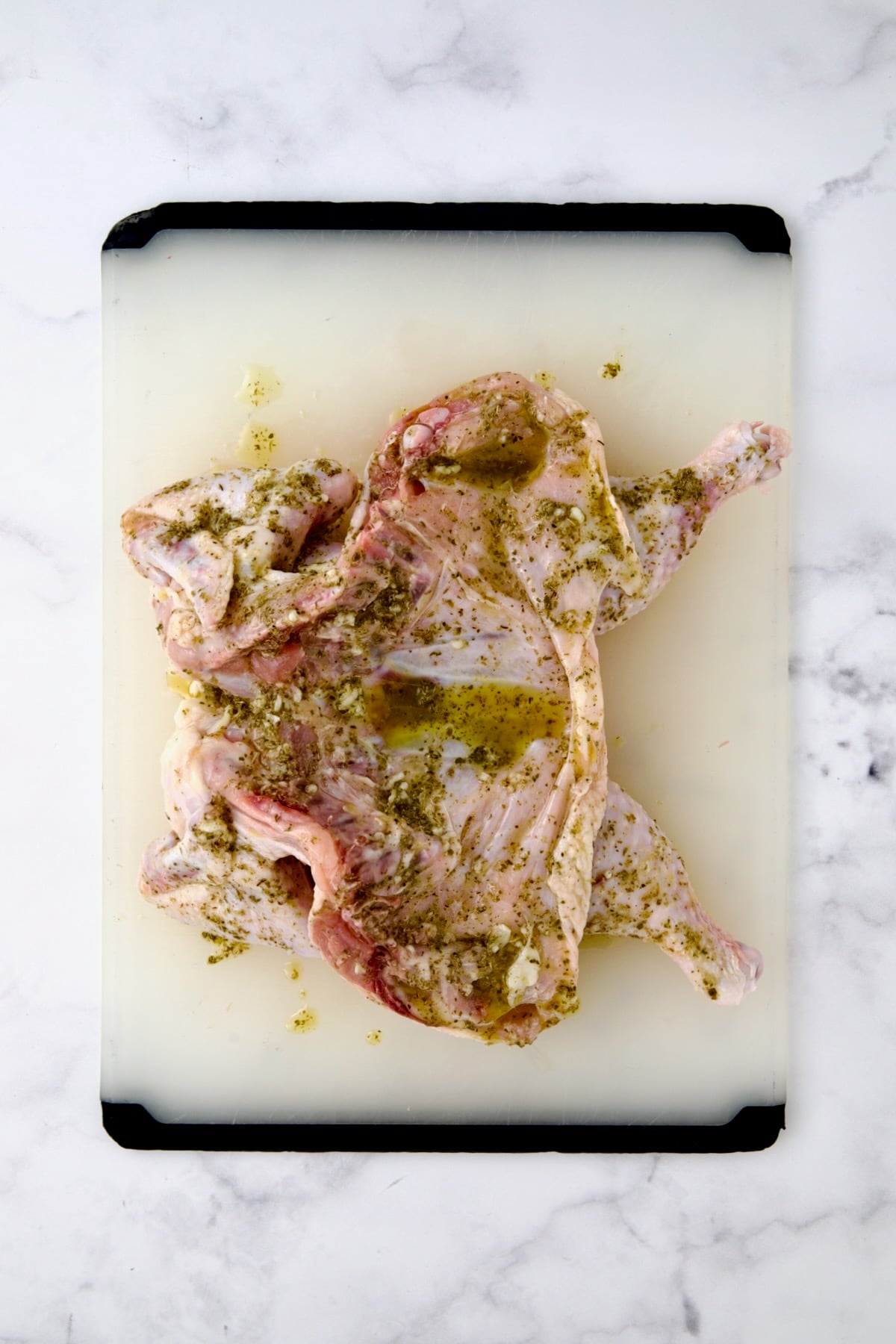
- Pour over the chicken, ensuring the chicken is evenly covered with oregano.
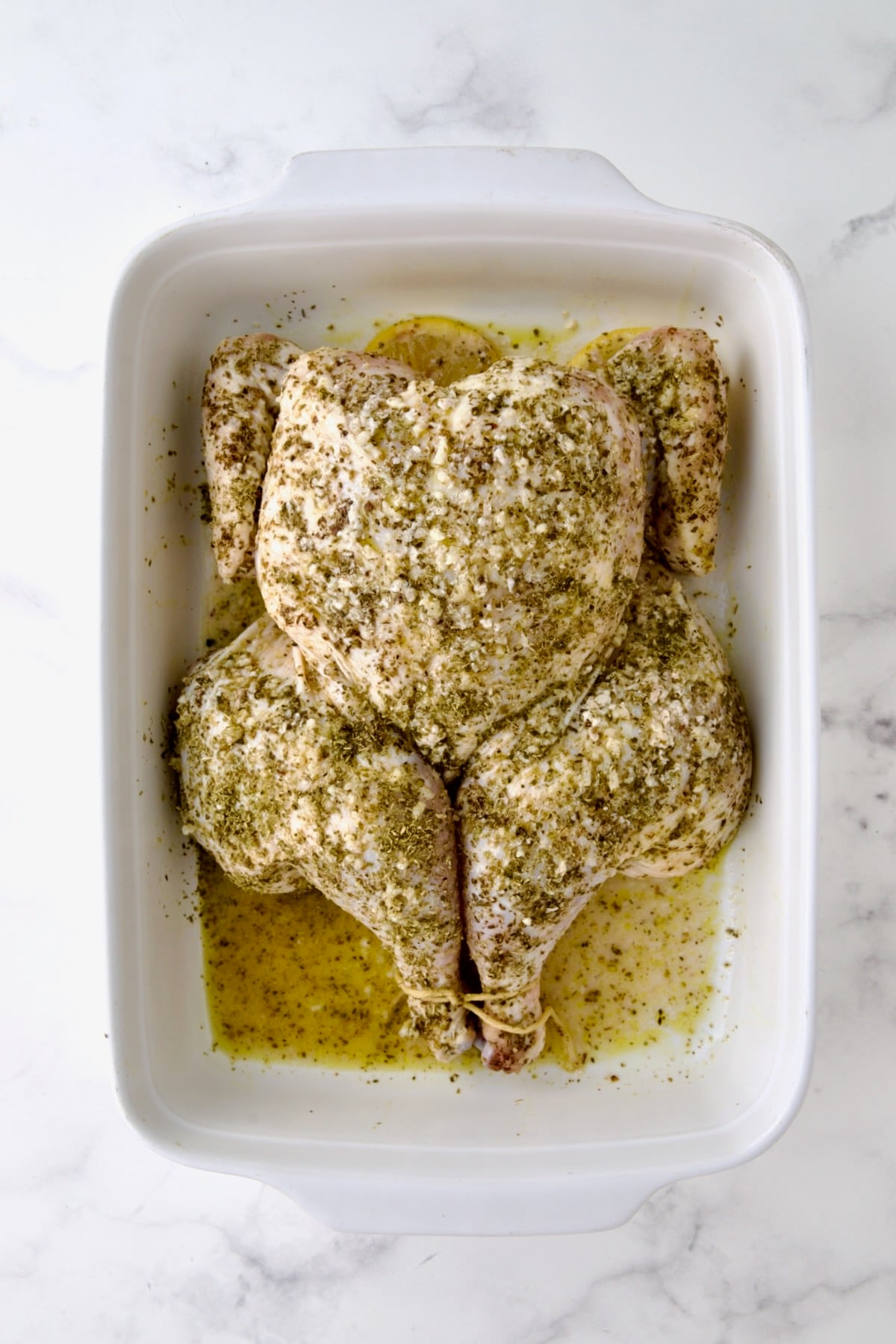
- Place the lemon slices in the bottom of a 13 x 9-inch baking dish. Place the chicken–breast side up–over the lemon slices. Ensure the wings are still tucked under the back and arrange the legs to come together at the chicken’s claw (or foot). Tie with butcher’s twine to keep the legs together while roasting. (If your baking/roasting pan is large enough, you can leave the legs spread out.)
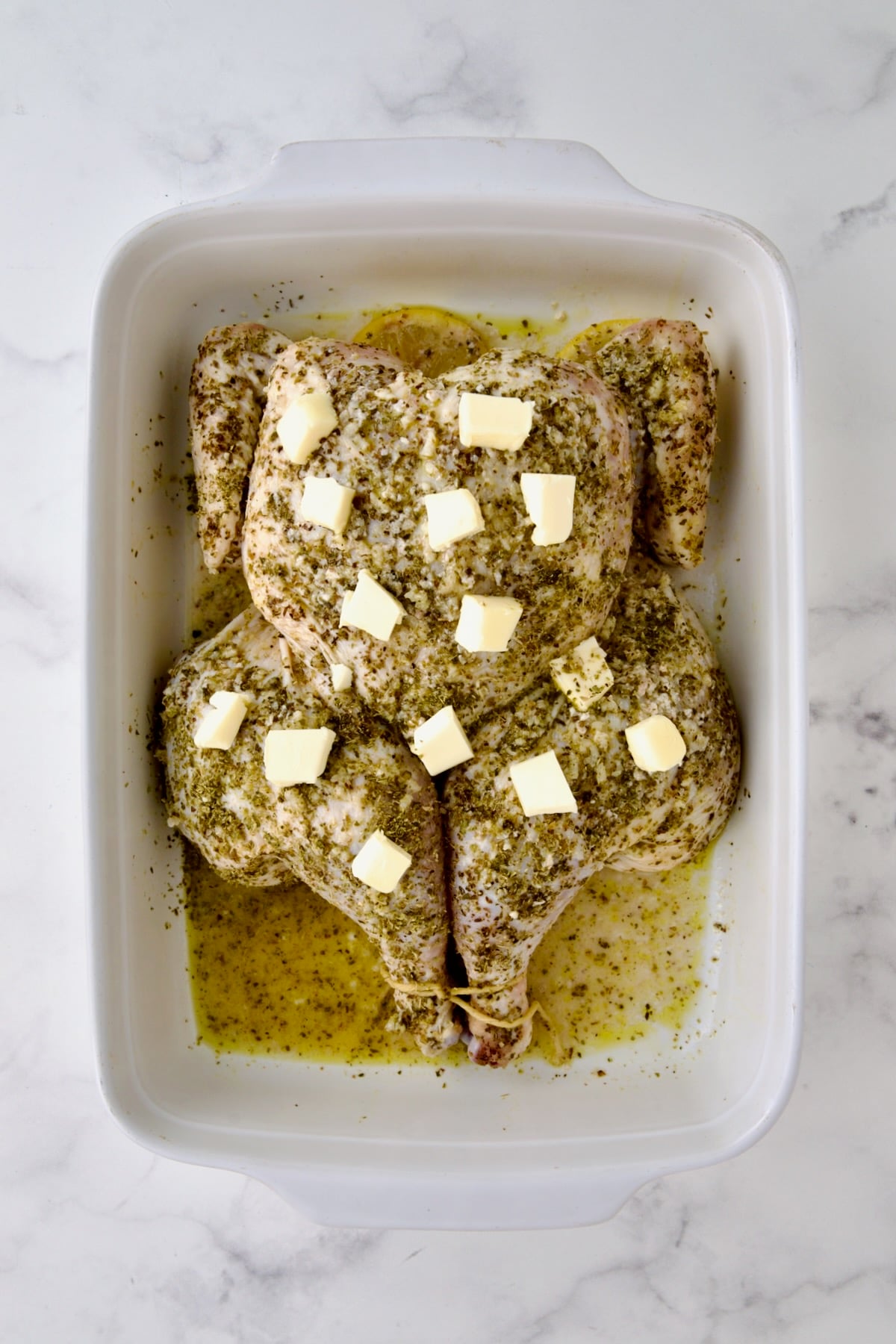
- Dot the top of the chicken with butter.
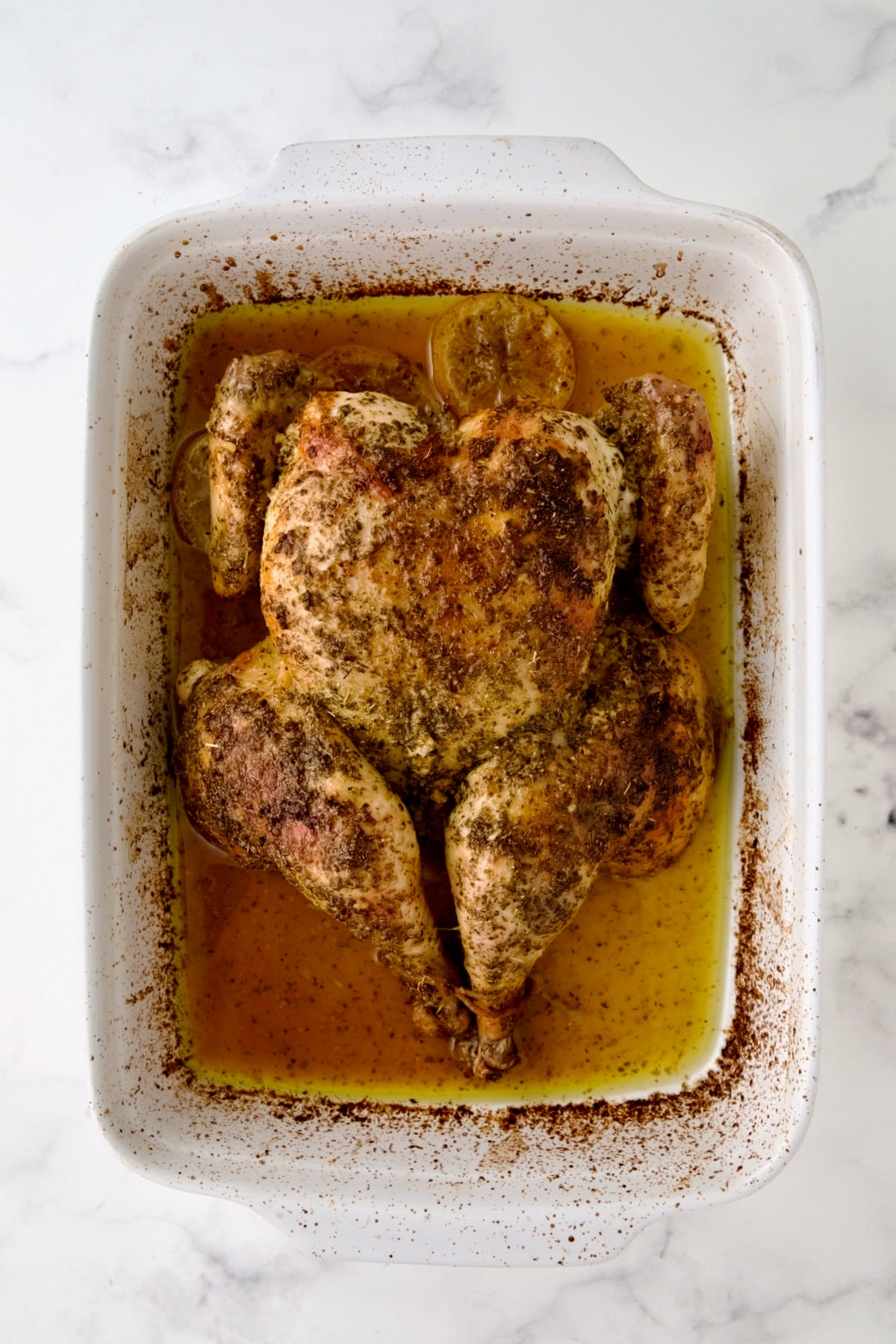
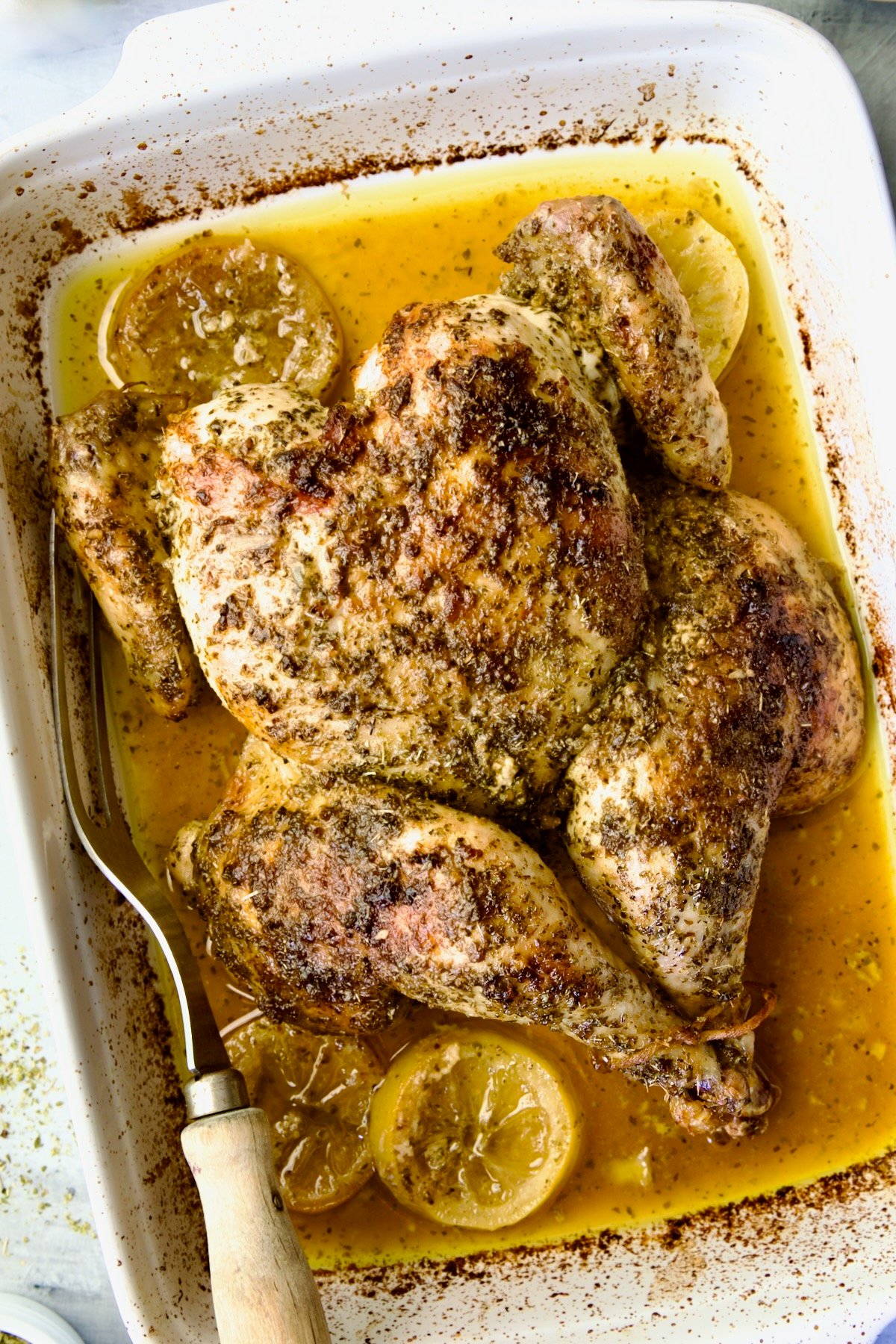
- Roast for 1 to 1 1/2 hours or until an instant-read thermometer registers 165 degrees when inserted into the thickest part of the thigh. Baste with the lemony juices once or twice while roasting. Let rest for 5 to 10 minutes then carve and serve.
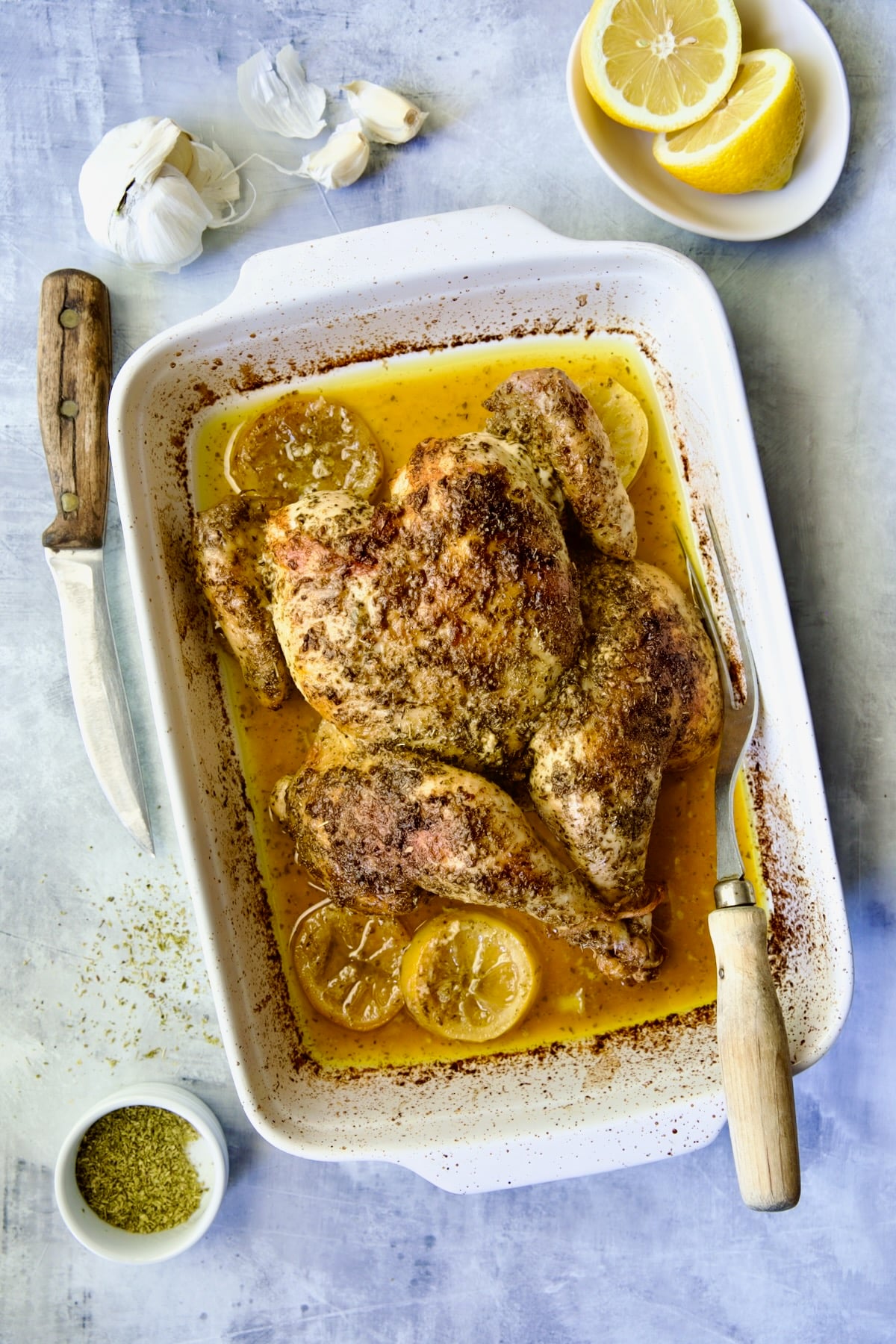
Chef Tips and Tricks:
- Spatchcocking the chicken ensures even roasting, faster cooking, and crispier skin.
- If you have time, let the chicken marinate for two hours or so. However, lemon juice is acidic and can actually “cook” the meat, so don’t let it sit in the marinade longer than 12 hours and definitely not overnight.
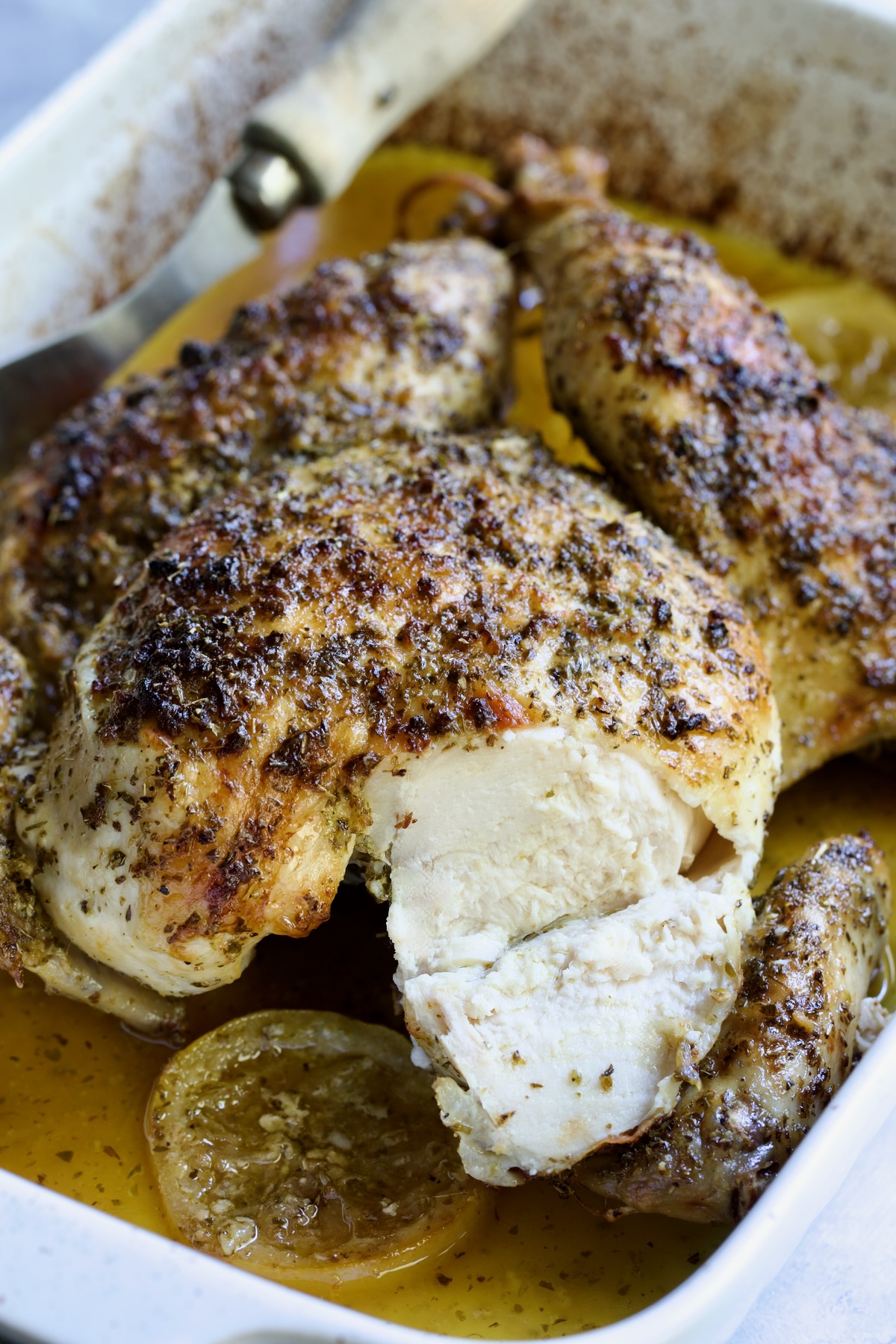
- Let the chicken rest for five to ten minutes before carving so the juices redistribute. Cutting right into it causes the juices to run out.
- Money-saving tip! After enjoying this Greek roast chicken, don’t toss the backbone or the chicken bones. Make broth and then make Chicken Vegetable Orzo Soup!
Recipe FAQs:
Spatchcocking means removing the chicken’s backbone so it lays flat. This helps it cook faster, more evenly, and with crispier skin.
Yes, you can use chicken pieces–thighs, drumsticks, or bone-in breasts work well. Adjust the cooking time as needed.
You can spatchcock the chicken up to two days in advance. The marinade can be poured over the chicken two hours ahead of time, but no more than 12 hours ahead.
You should use a meat thermometer. It should register 165 degrees in the thickest part of the breast and 175 degrees in the thigh, and all the juices should run clear.
VARIATION:
- Tuck potato slices around the chicken and let them roast along with the chicken.
Serve with:
More great ROAST CHICKEN recipes you’ll love!
- Roast Split Chicken Breasts
- Roast Chicken Half Recipe
- Garlic Herb Butter Roast Chicken
- Sheet Pan Roast Chicken
Get all my chicken recipes at Chicken and Turkey Recipes – From A Chef’s Kitchen.
Greek Roast Chicken (Spatchcock-Style)
Equipment
Ingredients
- 1 fryer chicken, 3 to 3 1/2 pounds
- 2 large lemons, 1 juiced (1/4 cup), 1 sliced with seeds removed
- 1/4 cup extra-virgin olive oil
- 4 cloves garlic, minced
- 2 teaspoons dried Greek oregano
- 1/2 teaspoon salt, or to taste (before pouring over chicken)
- 1/4 teaspoon freshly ground black pepper
- 2 tablespoons butter
Instructions
- Preheat oven to 350 degrees.
- Rinse the chicken and pat dry with paper towels. Place the chicken, breast side down, onto a plastic cutting board. Tuck the wings behind the chicken for a neat presentation and to prevent the tips from getting overly browned. (Can also be done after removing the backbone.)
- Starting at the neck, find the backbone. Cut along the backbone with good, sharp kitchen shears until you get to the tail.
- Repeat on the other side of the backbone until you've removed it. (One spot near the thigh will require a little extra effort, but it can still be cut with kitchen shears.) Discard or freeze for stock.
- Whisk together the lemon juice, olive oil, garlic, salt, and pepper in a small bowl.
- Pour over the chicken, ensuring the chicken is evenly covered with oregano.
- Place the lemon slices in the bottom of a 13 x 9-inch baking dish. Place the chicken–breast side up–over the lemon slices.
- Ensure the wings are still tucked under the back and arrange the legs to come together at the chicken's claw (or foot). Tie with butcher's twine to keep the legs together while roasting. (If your baking/roasting pan is large enough, you can leave the legs spread out.)
- Dot the top of the chicken with butter.
- Roast for 1 to 1 1/2 hours or until an instant-read thermometer registers 165 degrees when inserted into the thickest part of the thigh. Baste with the lemony juices once or twice while roasting.
- Let rest for 5 to 10 minutes then carve and serve.
Notes
- You can also use a roasting chicken, which is 3 1/2 pounds to 5 1/2 pounds, but you’ll need to add additional roasting time. Other options are a half roasting chicken or split chicken breasts.
- Spatchcock for success: Flattening the chicken helps it cook faster, more evenly, and with crispier skin.
- If you have time, marinate at least 2 hours, but no more than 12—too much lemon can “cook” the meat.
- Let the chicken sit 5–10 minutes so the juices stay in the meat, not on the cutting board.
- Stretch your dollars! Save the backbone and bones to make a flavorful homemade broth.
- Get the chicken prepped and combine the marinade. Refrigerate until ready to roast.
- See tips above if you have more time.
Nutrition
Nutritional values are automatically calculated using unbranded products and are estimates only. Actual results may vary based on ingredients used and portion sizes. Adjust as needed for dietary restrictions, allergies, or health concerns.
 Like this? Leave a comment below!