The Best Shrimp Creole Recipe

This Post May Contain Affiliate Links. Please Read My Disclosure

Sharing The Best Shrimp Creole recipe! I’ve been making this Shrimp Creole recipe for clients for as long as I’ve been a personal chef, and it’s always a hit! This beloved New Orleans dish is super easy to make, doesn’t require a roux, and can be on the table in about 45 minutes for a taste of the Big Easy any night!
“Delicious! I followed the recipe exactly, and also followed your recipe for the Creole/Cajun seasoning. This recipe is absolutely amazing! … I can’t wait to try another recipe of yours!”
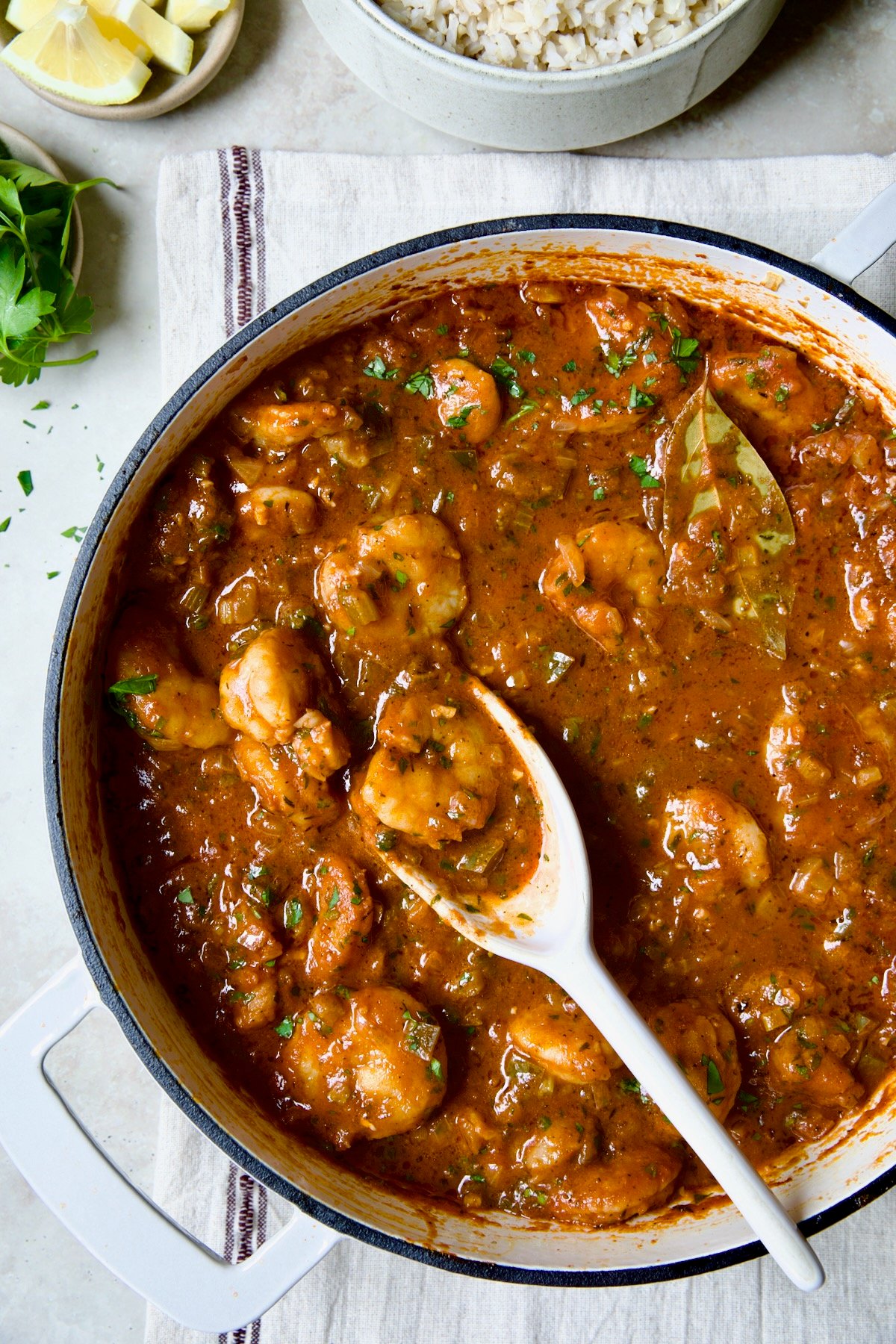
Why This Recipe is a Keeper!
Shrimp Creole is a vibrant and flavorful dish with roots deeply embedded in the rich culinary tapestry of Louisiana Creole cuisine, which draws on French, Spanish, and African influences. It has a tomato base, so it’s different from another famous New Orleans dish, shrimp etouffee, with a roux (fat plus flour) base. Both are usually served over rice.
Because of that deep and rich history, it’s always a little scary when you proclaim something to be…. The best! However, I’ve made this New Orleans Creole shrimp recipe a few hundred times over a 22-year career as a personal chef, and it’s always a hit. I first had Shrimp Creole in New Orleans, and this comes mighty close!
This Creole classic starts with onions, celery, and green bell pepper (called the “Holy Trinity”), which are sautéed until melty soft. Then, Creole seasoning is added, along with more herbs and spices, to take it up yet another notch. The savory tomato sauce simmers with all this goodness, ready for the shrimp to be added and cooked to perfection!
This Shrimp Creole recipe is:
- Easy!
- Quick! This classic shrimp creole recipe can be ready and on your table in about 45 minutes.
- Authentic! Be sure to check out the reviews from folks who know a thing or two about Shrimp Creole!

How to Make The Best Shrimp Creole!
Recipe Ingredients:
Here’s everything you’ll need to make this New Orleans Shrimp Creole recipe. See the recipe card below for the exact quantities.

Ingredient Notes and Substitutions:
- Oil and Butter: A little butter in this Shrimp Creole recipe adds a touch of richness. Because butter tends to burn, you want to combine it with oil. You could also use all ghee (clarified butter) because the milk solids (which burn) have been removed.
- Onion/Celery/Green Bell Pepper: This combination is known as the “holy trinity” in Cajun and Creole cuisine and is the backbone of many New Orleans-style recipes. It’s similar to a French mirepoix, which is onions, celery, and carrots; however, this combination is green bell pepper instead of carrots. With the “holy trinity,” you want to keep the ratio approximately the same as a mirepoix: 2 parts onion, 1 part celery, and 1 part green bell pepper.
- Cajun/Creole Seasoning: Though closely related, Cajun and Creole seasonings do differ. Cajun seasoning is a blend of ground peppers, such as cayenne, black pepper, and white pepper, while Creole seasoning leans towards herbs like paprika, oregano, and thyme. Some blends may include elements such as pepper in Creole seasonings or herbs in Cajun seasonings. The famous Tony Chachere’s brand calls it Creole seasoning.
- Tomato Sauce: Canned tomato sauce starts with fresh tomatoes or tomato puree, then is cooked and strained before additional seasonings are added. Because of the added seasonings, I prefer canned tomato sauce to crushed tomatoes or puree in my Shrimp Creole recipe.
- Shrimp: You can use any size, but I like to use large shrimp, 16-20 count (approximate number per pound). I also always use wild-caught shrimp. Farmed shrimp tends to be rubbery; if overcooked even a bit, it also gets tough. Wild-caught shrimp is much more resilient, and if you want to reheat this Shrimp Creole recipe, you’ll get much better results.
Step-By-Step Instructions:
- Gather and prep all the ingredients.

- Heat oil and butter over medium-high heat in a skillet or sauté pan. Add the onion, pepper, and celery. Reduce the heat to medium and cook for approximately 10 to 12 minutes, or until the vegetables are very soft, adjusting the heat as necessary to prevent burning.

- Add the garlic, Cajun/Creole seasoning, thyme, cayenne pepper, and bay leaf …

- … and stir briefly to get the spices to bloom.

- Add the tomato sauce, water, and Worcestershire. Bring to a boil. Reduce the heat to low and simmer uncovered for 8 to 10 minutes or until sauce thickens.

- Stir in the shrimp and cook for 1 to 2 minutes, or until just firm, flipping halfway through to cook evenly.

- Add hot sauce, salt, and black pepper to taste. Remove the bay leaf, sprinkle with parsley, and serve immediately with hot, cooked rice and lemon wedges.

Chef Tips and Tricks:
- The “holy trinity” of onions, celery, and bell peppers must be super-soft, so the flavor comes through.
- Adding the dry spices (Creole seasoning, cayenne, thyme, and bay leaf) directly to the hot fat in the pan rather than just adding them to the sauce helps them “bloom.”
- Don’t use shrimp smaller than 16/20 count. Larger shrimp are less likely to overcook.
- Shrimp cook quickly. They usually take 2 to 4 minutes, depending on their size. As soon as they’re pink, opaque, and curl into a loose “C,” they’re done.
- If you have shrimp shells, simmer them with a little water, onion, and celery for 20 to 30 minutes to make a quick shrimp stock. Use it in place of some or all of the water for an even richer, more authentic seafood flavor.
Recipe FAQs:
Yes, but to a point. Get the Shrimp Creole sauce done to the point of adding the shrimp. Cool it down completely and refrigerate. When ready to serve, bring the sauce to a simmer, then add the shrimp as directed and cook until cooked through.
Although shrimp dishes are best served immediately, you can freeze the leftovers. Thaw in the refrigerator, then gently reheat in a saucepan over low heat. You can also get the sauce made to the point of adding the shrimp. Cool completely, place in an airtight container, and freeze the sauce for 1-2 months. Then, get the sauce simmering on the stovetop and add the shrimp. (How great to have something like this in your back pocket for unexpected guests!)

How to Reheat Shrimp Creole:
- Place leftovers in a small saucepan to reheat, adding water or broth if the sauce has thickened.
- Gently reheat over low heat until steaming, stirring frequently until hot, being careful not to overcook the shrimp.
Serve with:
- Cooked rice or cauliflower rice
- Sauteed Kale with Andouille Sausage
- Cream Cheese Corn Casserole
- Creamy Cucumber Salad with Yogurt
More great shrimp recipes you’ll love!
Get all my fish and seafood recipes at Fish and Seafood Recipes – From A Chef’s Kitchen.

The Best Shrimp Creole Recipe
Video
Ingredients
- 2 tablespoons canola oil
- 2 tablespoons butter
- 1 medium onion, finely chopped
- 1 medium green bell pepper, seeds and membrane removed finely chopped
- 2-3 stalks (ribs) celery, chopped (you want about the same amount as green bell pepper)
- 4 cloves garlic, minced
- 1 tablespoon Cajun/Creole seasoning, or to taste
- 1 teaspoon dried thyme
- 1/2 teaspoon cayenne pepper
- 1 bay leaf
- 1 can (15-ounce) tomato sauce
- 1 cup water, about half the can to rinse it out
- 1 tablespoon Worcestershire sauce
- 1 1/2 pounds large shrimp, 16-20 count, peeled and deveined, tail removed
- Tabasco sauce, to taste
- Salt and freshly ground black pepper, to taste
- 2 tablespoons chopped fresh parsley plus sprigs for garnish
- Lemon wedges
- Cooked rice, for serving
Instructions
- Heat the oil and butter over medium-high heat in a skillet or saute pan. Add the onion, pepper, and celery.
- Reduce the heat to medium and cook for approximately 10-12 minutes, or until the vegetables are very soft, adjusting heat as necessary so they don't burn.
- Add the garlic, Cajun/Creole seasoning, thyme, cayenne pepper and bay leaf. Stir briefly.
- Add the tomato sauce, water and Worcestershire.
- Bring to a boil. Reduce the heat to low and simmer uncovered for 8-10 minutes or until sauce thickens.
- Stir in the shrimp and cook 1-2 minutes or until just firm, flipping halfway through so they cook evenly.
- Add hot sauce, salt and black pepper to taste.
- Remove the bay leaf, sprinkle with parsley, and serve immediately with hot, cooked rice and lemon wedges.
Notes
- Use ghee (clarified butter) in place of the oil-and-butter combination.
- Use clam juice or seafood stock in place of the water.
- Make a quick shrimp stock. Simmer the shells with water, onion, and celery for 20-30 minutes, then use the strained stock in place of the water for richer seafood flavor.
- Cook the onion, celery, and bell pepper until very soft. The vegetables should almost melt into the sauce to create the best flavor and texture.
- Adding the dry spices directly to the hot fat in the pan, rather than just to the sauce, helps them “bloom.”
- Use large shrimp. Choose 16/20-count shrimp or larger—they’re less likely to overcook and stay juicier.
- Don’t overcook the shrimp. Cook just until they’re pink, opaque, and curled into a loose “C,” about 2 to 4 minutes.
- Get the sauce prepared to the point of adding the shrimp. Cool and refrigerate.
- When ready to serve, get the sauce simmering on the stovetop, then add the shrimp and cook through.
- Place leftovers in a small saucepan and add a little water if the sauce has thickened. Gently reheat over low heat until steaming, stirring frequently until hot, being careful not to overcook the shrimp.
- Although any shrimp dish is best served immediately, you can freeze the leftovers. Thaw in the refrigerator, then gently reheat in a saucepan over low heat.
- You can also get the sauce prepared to the point of adding the shrimp. Cool completely, place in an airtight container, and freeze the sauce for 1-2 months. Then, get the sauce simmering on the stovetop and add the shrimp. (How great to have something like this in your back pocket for unexpected guests!)
Nutrition
Nutritional values are automatically calculated using unbranded products and are estimates only. Actual results may vary based on ingredients used and portion sizes. Adjust as needed for dietary restrictions, allergies, or health concerns.
 Like this? Leave a comment below!





Made this several times and it is the best shrimp creole I’ve ever made. Lots of flavor and simple.
Hi, Ernie, Thanks so much and happy you love this recipe!! Appreciate you taking the time to comment and rate.
Thank you. I enjoyed making this. I lost my mother’s recipe years ago. I’m 77, and her recipe changed over the years. In her last version, she used crushed Saltine crackers as a thickener and cooked with sliver-thin slices of lemon to get that little kick of acid and brightness. I didn’t have Saltines, but I did have Preserved Lemon, and I added about 2 tablespoons minced, and I think it was a good addition.
Hi, Brant. Thanks so much, and I’m happy you enjoyed it! I loved reading how your mother used crushed Saltine crackers and the meticulously sliced lemon! Preserved lemon is an intriguing idea; may not be traditional, but it’s an interesting twist. Thanks again and please keep in touch!
Hi, Ernie, Thanks so very much and happy you love this recipe! Thanks for taking the time to come back and comment and rate!
It was wonderful! Love Cajun/Creole food.
Hi, Terri, Thanks so very much and happy you enjoyed! Appreciate you trying my recipe out of so many others and for taking the time to comment and rate.